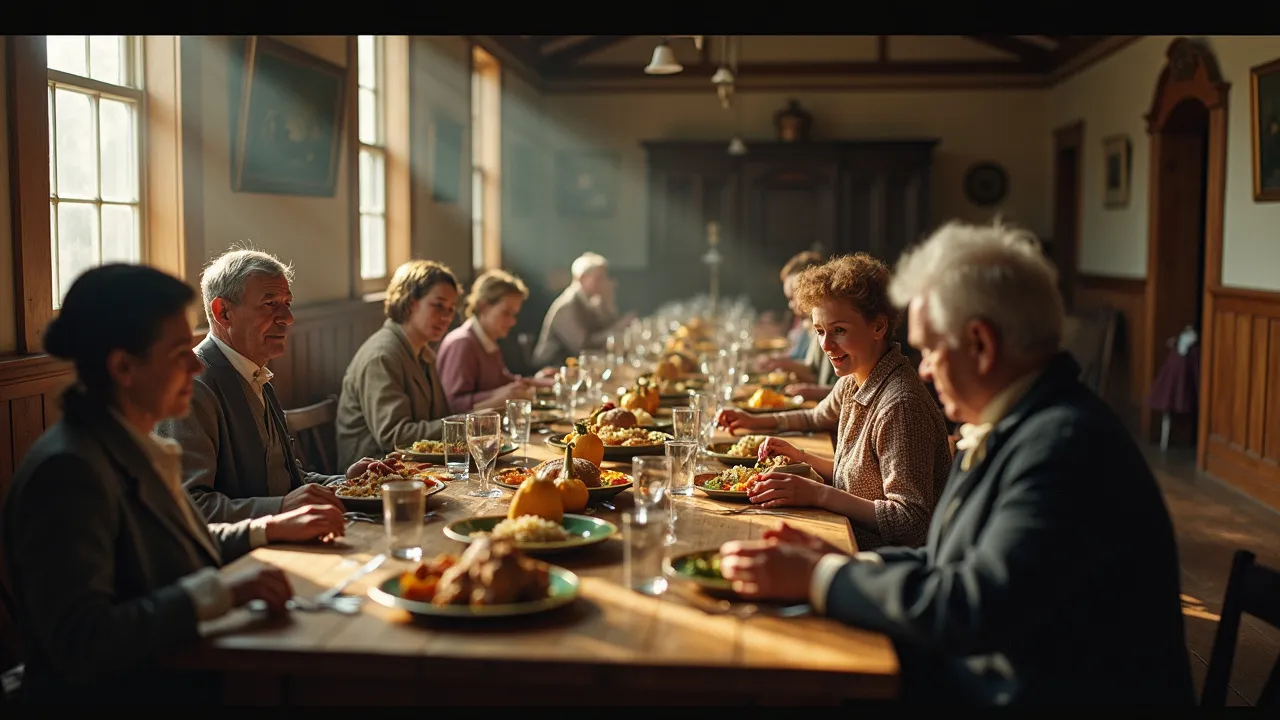
Schwenkfelder Thanksgiving, observed on September 24th, commemorates the 1734 arrival of Schwenkfelder refugees in Pennsylvania. It is a day of gratitude for religious freedom and community preservation.
The Historical Origins & Evolutionary Journey
Schwenkfelder Thanksgiving is a unique religious observance rooted in the harrowing journey of the Schwenkfelder people from persecution in Europe to religious freedom in colonial Pennsylvania. This day, celebrated annually on September 24th, marks the anniversary of their arrival in Philadelphia in 1734.
The Foundational Catalyst: Persecution in Silesia
The Schwenkfelders were followers of Caspar Schwenckfeld von Ossig, a 16th-century theologian who broke from both Catholicism and Lutheranism. Their beliefs emphasized inner spiritual experience over outward ritual, which led to severe persecution in Silesia (modern-day Poland). Throughout the 17th and early 18th centuries, Schwenkfelders faced confiscation of property, imprisonment, and forced exile. By 1726, many had fled to Saxony, but continuing pressure from the Habsburg monarchy forced them to seek refuge in the New World.
The Legislative/Official Adoption: A Voyage of Faith
In 1734, a group of Schwenkfelder families chartered the ship St. Andrew and sailed from Rotterdam to Philadelphia. After a treacherous two-month Atlantic crossing, they landed on September 22, 1734. However, the community later designated September 24th as their official day of thanksgiving—possibly to allow time for rest and organization after arrival. The first formal Thanksgiving service was held in the home of a fellow believer, and the tradition has been observed ever since. In 1998, the Schwenkfelder Church officially recognized September 24th as a denominational holiday.
Modern Global Legacy
Today, Schwenkfelder Thanksgiving is primarily celebrated by the approximately 3,000 members of the Schwenkfelder Church, centered in southeastern Pennsylvania. While not a public holiday, it remains a vital expression of gratitude for religious liberty and cultural heritage. The observance has also attracted interest from historians and genealogists studying early American religious minorities.
How to Celebrate Schwenkfelder Thanksgiving
Celebrating Schwenkfelder Thanksgiving involves both religious and community-oriented activities that honor the group's history and values. Below are detailed guidelines for individuals, families, and organizations.
For Individuals and Families
- Attend a Worship Service: Many Schwenkfelder churches hold special Thanksgiving services on September 24th, featuring hymns, scripture readings, and a sermon reflecting on deliverance and gratitude.
- Host a Traditional Meal: Prepare simple foods reminiscent of the 18th century, such as stewed meats, root vegetables, and homemade bread. Avoid lavish displays, as modesty is key.
- Share Stories: Read aloud historical accounts of the Schwenkfelder migration or share family genealogies to connect younger generations with their heritage.
For Schools and Educational Groups
- Teach the History: Use primary source documents like ship manifests and letters to illustrate the Schwenkfelder experience.
- Reenact the Landing: Organize a simple play depicting the arrival in Philadelphia, emphasizing themes of religious freedom.
- Cultural Fair: Display artifacts, traditional crafts, and foods associated with the Schwenkfelders.
For Organizations and Churches
- Ecumenical Services: Invite other denominations to join in a shared Thanksgiving service, promoting interfaith understanding.
- Historical Tours: Arrange visits to historic Schwenkfelder sites, such as the Old Schwenkfelder Meeting House in Worcester, Pennsylvania.
- Charity Drives: Collect donations for refugee assistance organizations, linking the historical struggle to modern displacement.
Core Values and Theological Significance
At its heart, Schwenkfelder Thanksgiving emphasizes gratitude, community, and religious liberty. Unlike the broader American Thanksgiving, which is tied to harvest and national mythos, Schwenkfelder Thanksgiving is a faith-based observance of deliverance from persecution.
Religious Liberty
The Schwenkfelders' journey was a direct response to state-imposed religion. Their Thanksgiving thus becomes a testimony to the principle of freedom of conscience, a value enshrined in the U.S. Constitution but first practiced by religious minorities like them.
Community Solidarity
The observance reinforces the tight-knit nature of the Schwenkfelder community. Shared meals, communal prayers, and collective memory strengthen bonds across generations.
Simplicity and Humility
Schwenkfelder spirituality shuns ostentation. Thanksgiving celebrations therefore avoid excess, focusing instead on quiet reflection and modest fellowship.
Traditional Customs and Rituals
Schwenkfelder Thanksgiving traditions have evolved over nearly 300 years but retain core elements from the colonial era.
Worship Service Elements
- Hymn Singing: Traditional hymns from the Schwenkfelder hymnal, including translations of Caspar Schwenckfeld's poetry.
- Scripture Reading: Passages emphasizing deliverance, such as Psalm 107 or the Exodus story.
- Testimonies: Members share personal stories of gratitude or recount family histories.
Food Traditions
- Potluck Meals: Families contribute dishes, often featuring recipes passed down from the 1700s.
- Apple Butter: A staple representing preservation and sweetness amid hardship.
- Shoofly Pie: A molasses-based pie that reflects Pennsylvania Dutch influence (though technically not Schwenkfelder in origin, it is common at gatherings).
Symbolic Acts
- Candle Lighting: Candles are lit to symbolize the light of faith shining through darkness.
- Reading the Charter: The original 1734 ship's charter or letters from the founders are read aloud.
Modern Observance and Challenges
In the 21st century, Schwenkfelder Thanksgiving faces the challenge of maintaining relevance among a small, aging denomination. Fewer than 3,000 members remain, and many younger Schwenkfelders have assimilated into broader American culture.
Efforts to Preserve the Tradition
The Schwenkfelder Church has embraced digital outreach, live-streaming services and posting historical content online. Educational programs in local schools and partnerships with historical societies help raise awareness. The annual Schwenkfelder Thanksgiving service is also open to the public.
Interfaith and Cultural Exchange
Some churches invite neighboring congregations to participate, fostering dialogue about religious persecution and asylum. This aligns with broader contemporary discussions on refugee resettlement.
Future Directions
Younger members are innovating by incorporating elements like social media campaigns (#SchwenkfelderThanksgiving) and virtual gatherings for those who cannot attend in person. The core message of gratitude for freedom remains unchanged.
Impact on Broader Society
Though small in numbers, the Schwenkfelder community has left a lasting mark on American religious history. Their Thanksgiving observance is one of the oldest continuous thanksgiving traditions in the United States, predating the national holiday by decades.
Historical Significance
Schwenkfelder Thanksgiving is a living link to the colonial era and the principle of religious liberty enshrined in the First Amendment. It serves as a case study for scholars of migration, persecution, and assimilation.
Cultural Contributions
Schwenkfelders have contributed to Pennsylvania's cultural tapestry, including architecture (their meeting houses), music (hymns), and food. Their emphasis on inner spirituality also influenced broader Christian mysticism in America.
Modern Relevance
In an era of renewed religious persecution globally, Schwenkfelder Thanksgiving offers a poignant reminder of the value of asylum and the resilience of faith communities.
Historical Timeline
Caspar Schwenckfeld von Ossig begins his reform movement in Silesia, emphasizing spiritual experience over ritual.
Intensified Habsburg persecution forces many Schwenkfelders to flee Silesia for Saxony.
First group of Schwenkfelder refugees arrives in Philadelphia aboard the ship St. Andrew.
The Schwenkfelders hold their first Thanksgiving service, marking the date for future observance.
Additional Schwenkfelder groups arrive, settling in what is now Montgomery County, Pennsylvania.
The Old Schwenkfelder Meeting House is built in Worcester, Pennsylvania, serving as a central gathering place.
The Schwenkfelder Church officially designates September 24th as Schwenkfelder Thanksgiving Day.
Digital outreach efforts begin, including live-streaming of services and social media campaigns to preserve the tradition.