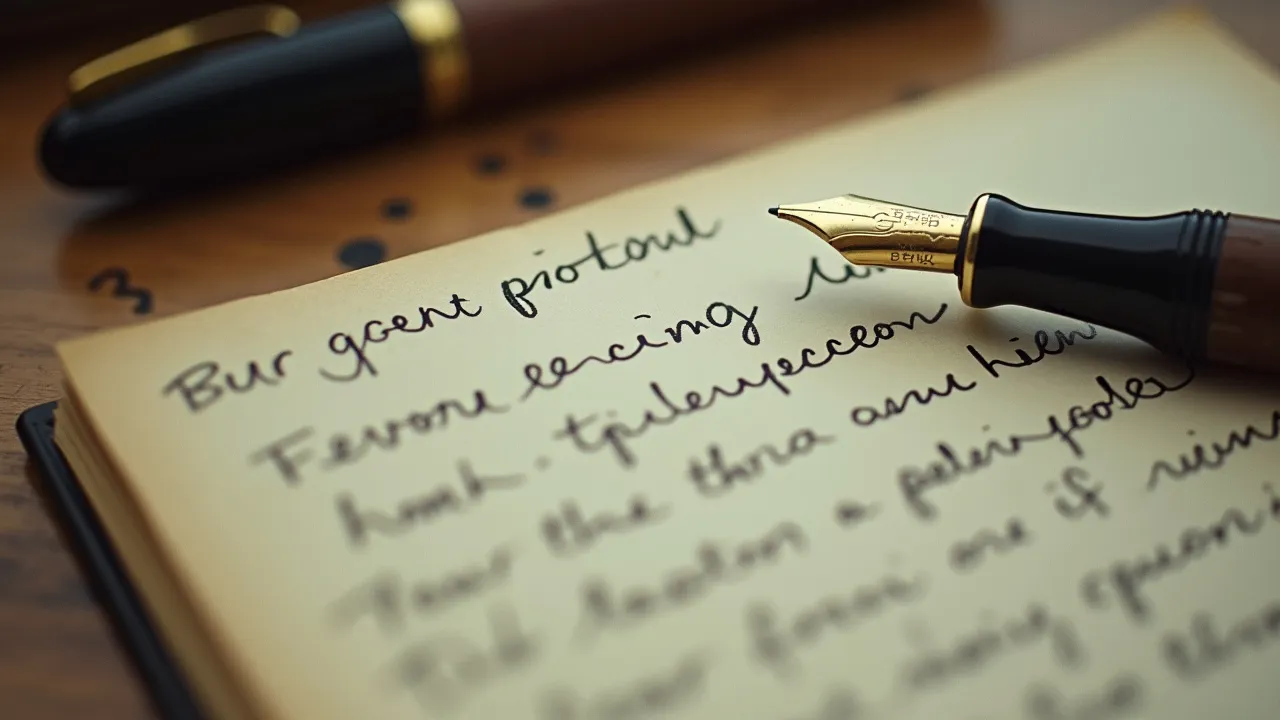
National Punctuation Day, observed on September 24th, celebrates the proper use of punctuation marks. Founded by Jeff Rubin, this day encourages clarity and correctness in written communication through fun activities and educational initiatives.
The Historical Origins & Evolutionary Journey
The Foundational Catalyst
National Punctuation Day was founded in 2004 by Jeff Rubin, a copyeditor and proofreader from San Francisco. Rubin recognized the declining appreciation for proper punctuation in everyday writing and sought to create a day dedicated to its celebration. The catalyst was his observation of rampant misuse in public signs, emails, and published works. He envisioned a playful yet educational observance that would remind people of the power of a well-placed comma or period. Rubin’s background in editing gave him firsthand insight into how punctuation errors could alter meaning and damage credibility. For example, the classic “Let’s eat, Grandma” versus “Let’s eat Grandma” illustrates the life-saving importance of a comma.
The Official Adoption and Early Growth
Rubin launched the first National Punctuation Day on September 24, 2004, with a small event in his hometown. The date was chosen arbitrarily but has since become fixed. He registered the day with national day registries and began promoting it through his website, punctuationday.com. Early celebrations involved punctuation-themed parties, grammar quizzes, and challenges to correct punctuation errors in public places. Media attention grew, with features in newspapers and radio shows. By 2005, schools and libraries started adopting the day, using it as a fun excuse to teach grammar. Rubin also created a Punctuation Day newsletter and encouraged people to send in photos of punctuation mistakes in the wild, fostering a community of grammar enthusiasts.
Modern Global Legacy
Today, National Punctuation Day is recognized by schools, libraries, and writing organizations across the United States and beyond. It has evolved into a global online phenomenon with social media campaigns using hashtags like #NationalPunctuationDay. Many educators incorporate it into their lesson plans, and businesses use it as an opportunity for staff training on professional writing. The day serves as a reminder that punctuation is not pedantic but essential for clarity. In 2020, virtual celebrations allowed broader participation, and the observance continues to grow. Rubin’s efforts have sparked conversations about language standards in the digital age, where texting and informal writing often abandon punctuation. The day now stands as a champion of written communication integrity.
How to Celebrate National Punctuation Day
For Individuals at Home
Celebrating National Punctuation Day at home can be both fun and educational. Here are some actionable ideas:
- Punctuation Hunt: Walk around your neighborhood or browse social media, looking for punctuation errors. Take photos and share them online with the hashtag #PunctuationMistake.
- Edit a Phrase: Take a sentence that lacks punctuation and see how adding different punctuation marks changes its meaning. For example, “I like cooking my family and my pets” becomes clear with commas: “I like cooking, my family, and my pets.”
- Punctuation Potluck: Host a dinner where each dish is named after a punctuation mark, like “Comma Coleslaw” or “Period Pie.” Guests can share their favorite punctuation rules.
- Write a Punctuation Poem: Compose a short poem that uses punctuation in creative ways, such as a poem that is only punctuation marks.
For Schools and Educators
Teachers can incorporate National Punctuation Day into their curriculum with engaging activities:
- Grammar Games: Create a punctuation bingo game where students identify correct usage in sentences.
- Mad Libs with Punctuation: Have students fill in blank punctuation marks in a story, then read aloud to see how meanings change.
- Classroom Decoration: Decorate the room with large cutouts of punctuation marks and display a “Wall of Fame” showcasing correctly punctuated student work.
- Peer Editing Session: Students exchange papers and mark punctuation errors, reinforcing learning through collaboration.
For Businesses and Organizations
Companies can use the day to improve internal and external communications:
- Email Etiquette Workshop: Hold a lunch-and-learn session on proper punctuation in professional emails.
- Punctuation Check Contest: Challenge employees to find and correct errors in company documents or marketing materials.
- Social Media Campaign: Post tips and quizzes on the company’s social media channels, inviting followers to participate.
Global Variations
While the day is primarily observed in the United States, many English-speaking countries participate. In the United Kingdom, some schools emphasize British punctuation differences, such as the use of single quotes versus double quotes. In Australia, community groups host punctuation trivia nights. In India, where English is widely used, universities organize punctuation workshops. The internet has democratized the celebration, with people from all over the world sharing their punctuation triumphs and frustrations.
The Importance of Punctuation in Communication
Punctuation is the silent hero of written language. Without it, text becomes a stream of ambiguous words. Consider the difference between “Woman without her man is nothing” and “Woman: without her, man is nothing.” Punctuation clarifies intent, conveys tone, and prevents misunderstandings. In legal contexts, a misplaced comma can cost millions of dollars. For instance, a 2018 case in Maine saw a dispute over overtime pay hinge on the presence of a comma in state law. In academic writing, proper punctuation ensures that research is taken seriously. Even in casual communication, punctuation signals pauses, questions, and emotions. Emoticons like :) are modern punctuation, but they don’t replace the function of periods and commas. National Punctuation Day reinforces these fundamentals, reminding us that punctuation is not optional—it’s essential.
Punctuation and Clarity
Clarity is the primary function of punctuation. Commas separate ideas, periods end them, question marks invite responses. Consider the sentence “I love cooking my family and pets.” Without commas, it implies you cook your loved ones. With commas, it becomes a list of things you love. Similarly, apostrophes distinguish possessive from plural: “The dogs toy” versus “The dog’s toy.” The apostrophe saves confusion. In technical writing, colons introduce lists, semicolons connect related clauses, and parentheses enclose supplementary info. All these marks guide the reader through the text smoothly.
Punctuation and Tone
Tone in writing often relies on punctuation. An exclamation mark conveys excitement; a period can seem abrupt. In text messaging, lack of punctuation can appear casual, while full stops may seem passive-aggressive. Punctuation also affects rhythm. A dash creates a dramatic pause, while ellipsis suggests trailing thought. Professional writers use punctuation to control pacing. National Punctuation Day encourages people to experiment with tone through punctuation choices, making writing more expressive.
Punctuation Around the World: Cultural Variations
Punctuation is not universal; different languages have unique rules and symbols. On National Punctuation Day, it’s enlightening to explore these differences. In Spanish, inverted question and exclamation marks ( ¿ and ¡ ) appear at the beginning of sentences. French uses guillemets (« ») for quotes and spaces before colons. German capitalizes nouns and uses the interrobang (a fusion of ? and !) occasionally. Chinese and Japanese punctuation includes marks like the 、 (ideographic comma) and 。 (ideographic period), which are placed in the center of the space. Arabic punctuation follows right-to-left scripts with mirrored marks. In India, languages like Hindi use a vertical bar (|) as a full stop. Understanding these variations fosters cross-cultural communication. National Punctuation Day can be a global conversation about how different cultures handle the same need: making written language clear.
Regional Adaptations in English
Even within English, there are differences. American English uses double quotes for direct speech, while British English often uses single quotes. The Oxford comma (serial comma) is standard in the US but optional in the UK. Date formats differ: American writes “September 24, 2024” with a comma, while British uses “24 September 2024” without. Punctuation inside quotes also varies: Americans place commas and periods inside closing quotes; Brits place them outside unless they are part of the quote. These nuances are important for global writers. National Punctuation Day can be an opportunity to learn and respect these conventions.
The Evolution of Punctuation in the Digital Age
The digital age has revolutionized punctuation usage. Social media, texting, and instant messaging have introduced new norms and challenges. On platforms like Twitter, character limits encourage omission of punctuation, leading to the rise of the “no-punctuation” style. Emojis often replace punctuation marks: a smiley face can end a sentence instead of a period. However, these practices can blur clarity. Texting without periods is common, but studies show that ending a text with a period can be perceived as insincere or angry. Such shifting conventions require adaptability.
The Rise of Informal Punctuation
Informal punctuation includes abbreviations like “lol” and “brb,” but also creative uses of punctuation. For example, ellipsis (...) indicates a trailing thought or hesitation. Exclamation marks are overused in marketing to create urgency. The interrobang (‽) has seen a resurgence in digital writing, blending a question and exclamation. Punctuation in usernames and hashtags often omits spaces, turning phrases into single units. While informal punctuation fosters speed and personality, it can create ambiguity. National Punctuation Day encourages a balance: adopting digital shorthand when appropriate, but preserving standard punctuation for formal contexts.
Digital Tools and Punctuation
Software like Grammarly and Microsoft Word’s spellcheck now offer real-time punctuation advice. These tools help users correct errors but also raise questions about over-reliance. Should we let algorithms dictate our style? National Punctuation Day promotes mindful punctuation: understanding the rules so that tools enhance rather than replace skill. Voice-to-text technology also introduces new punctuation challenges, as dictation often ignores commas and periods. Users must learn to speak punctuation commands. The day is a reminder that even in an automated world, human judgment in punctuation remains valuable.
Fun Facts and Common Errors
National Punctuation Day is a perfect time to learn entertaining trivia about punctuation. Did you know the semicolon was introduced by Venetian printer Aldus Manutius in 1494? The interrobang was invented in 1962 by Martin K. Speckter. The hashtag symbol (#) is officially called an octothorpe. Punctuation mistakes can be hilarious: a missing comma changed “Let’s eat, Grandma” into “Let’s eat Grandma.” The Oxford comma has its own fan base, with some people passionately defending its use.
Common Errors to Avoid
- Apostrophe misuse: Its vs. it’s, your vs. you’re. Remember: apostrophes indicate contractions or possession, not plurals.
- Comma splices: Joining two independent clauses with only a comma. Use a period or semicolon instead.
- Run-on sentences: Excessive use of “and” without proper punctuation.
- Missing commas in lists: The serial comma prevents ambiguity. Example: “I love my parents, Lady Gaga and Taylor Swift” vs. “I love my parents, Lady Gaga, and Taylor Swift.”
- Quotation marks for emphasis: Using quotes to highlight a word often implies sarcasm, not emphasis. Use italics or bold instead.
By recognizing these pitfalls, we can improve our writing and fully embrace the spirit of National Punctuation Day.
Historical Timeline
Jeff Rubin establishes National Punctuation Day, first celebrated on September 24.
First official celebrations in schools and libraries; media coverage begins.
National Punctuation Day gains recognition from educational organizations and is included in lesson plans nationwide.
Social media campaigns using #NationalPunctuationDay go viral, expanding global participation.
Virtual celebrations due to the pandemic, with online quizzes and webinars.
20th anniversary of National Punctuation Day, marked by special events and renewed focus on punctuation in the digital age.