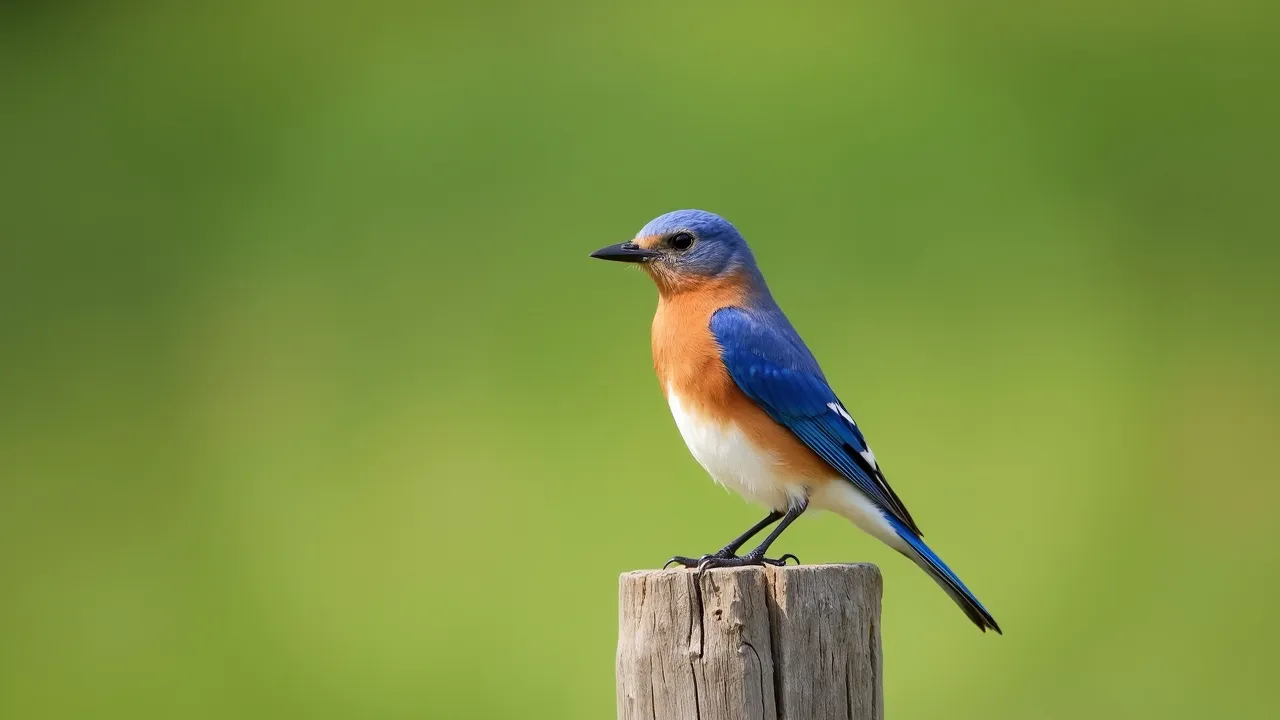
National Bluebird of Happiness Day, celebrated on September 24th, honors the vibrant bluebird as a symbol of joy and optimism. This day encourages people to appreciate nature and spread happiness by observing these beautiful birds.
The Historical Origins & Evolutionary Journey
The Foundational Catalyst
National Bluebird of Happiness Day traces its roots to the late 20th century when the Bluebird of Happiness Society was established to promote the conservation and symbolic appreciation of bluebirds. The society recognized the bluebird's long-standing role as a harbinger of joy in folklore and sought to create a dedicated day to celebrate this connection. The first official celebration took place in 1990, with small community events focused on birdwatching and habitat preservation.
The Legislative/Official Adoption
While never designated a federal holiday, National Bluebird of Happiness Day gained recognition through grassroots campaigns and partnerships with wildlife organizations. By the early 2000s, it was widely acknowledged in birding calendars and nature publications. Key milestones include the establishment of bluebird trails and educational programs in schools, which helped solidify September 24th as a date to focus on happiness and environmental stewardship.
Modern Global Legacy
Today, the day is celebrated across the United States and increasingly in other countries where bluebirds are native. It serves as a reminder of the simple pleasures found in nature and the importance of protecting avian habitats. The day has also inspired artistic expressions, with bluebird motifs appearing in music, literature, and visual arts.
How to Celebrate National Bluebird of Happiness Day
Celebrating National Bluebird of Happiness Day can be both personal and communal. Here are actionable strategies for individuals, schools, and organizations:
Individual Activities
- Go birdwatching in local parks or nature reserves. Bring binoculars and a field guide to identify bluebird species.
- Install a bluebird nest box in your backyard. Ensure it has proper dimensions and is placed away from predators.
- Read about bluebirds in literature, such as the classic poem "The Bluebird" by Charles Bukowski or folk tales.
- Share your sightings on social media using #BluebirdOfHappinessDay to spread joy.
School and Family Celebrations
- Organize a bluebird-themed art contest where children draw or paint bluebirds.
- Learn about bluebird conservation through documentaries or guest speakers from local Audubon societies.
- Build and decorate birdhouses as a family project.
- Read stories like The Bluebird of Happiness by Linda Sue Park.
Organizational Events
- Host a habitat cleanup in areas where bluebirds nest.
- Coordinate a community bluebird trail with multiple nest boxes monitored by volunteers.
- Partner with wildlife centers for educational workshops on bluebird ecology.
The Symbolism of the Bluebird in Culture
The bluebird has long been a symbol of happiness, hope, and renewal across various cultures. In Native American folklore, the bluebird is often associated with the sun and the arrival of spring. The myth of the bluebird of happiness, originating from an old Chinese proverb, suggests that happiness lies in one's own backyard. This concept was popularized in the West by Maurice Maeterlinck's 1908 play The Blue Bird, which became a symbol of the search for true contentment. Today, the bluebird appears in countless works of art, music, and poetry, reinforcing its role as an emblem of optimism.
Conservation Efforts and Bluebird Populations
Bluebird populations faced declines in the 20th century due to habitat loss and competition from invasive species like house sparrows and starlings. Conservation efforts, spearheaded by organizations such as the North American Bluebird Society (NABS), have helped stabilize numbers. Key initiatives include:
- Nest box trails: Volunteers install and monitor networks of boxes that provide safe nesting sites.
- Pesticide reduction: Encouraging organic gardening to protect insect prey.
- Habitat restoration: Planting native trees and shrubs that produce berries and attract insects.
Since the 1970s, Eastern Bluebird populations have rebounded significantly, a testament to successful conservation. National Bluebird of Happiness Day highlights these efforts and encourages public participation.
Educational Activities for Schools and Families
Schools and families can turn National Bluebird of Happiness Day into an educational experience. Suggested activities include:
Science and Nature
- Observe bluebird behavior through live nest cams available online.
- Conduct a bird count in the schoolyard and record data for citizen science projects.
- Learn about the life cycle of bluebirds from egg to fledgling.
Arts and Crafts
- Create bluebird masks or puppets for storytelling.
- Write poems about happiness inspired by bluebirds.
Literature
- Read children's books like Bluebird by Bob Staake or The Bluebird of Happiness by Maeterlinck.
Global Variations of Bluebird Celebrations
While National Bluebird of Happiness Day is primarily observed in the United States on September 24th, other cultures have similar traditions. In Japan, the blue-and-white flycatcher is celebrated in spring festivals as a symbol of happiness. In Europe, the common kingfisher (which has blue plumage) is sometimes associated with joy. However, the specific date of September 24th remains unique to the U.S. observance. Globally, bird enthusiasts may adopt this day to celebrate any blue-hued bird species, tailoring activities to local species.
Historical Timeline
The Bluebird of Happiness Society establishes National Bluebird of Happiness Day on September 24th, with initial community events and educational programs.
First bluebird nest box trail is created in collaboration with wildlife agencies, promoting citizen science.
National Bluebird of Happiness Day is featured in major birding magazines, increasing national awareness.
The day gains endorsement from the North American Bluebird Society, leading to broader participation across the U.S.
Social media campaigns using #BluebirdOfHappinessDay go viral, spreading international recognition.
Virtual celebrations are held due to the pandemic, including online webinars and live nest cams, reaching a global audience.