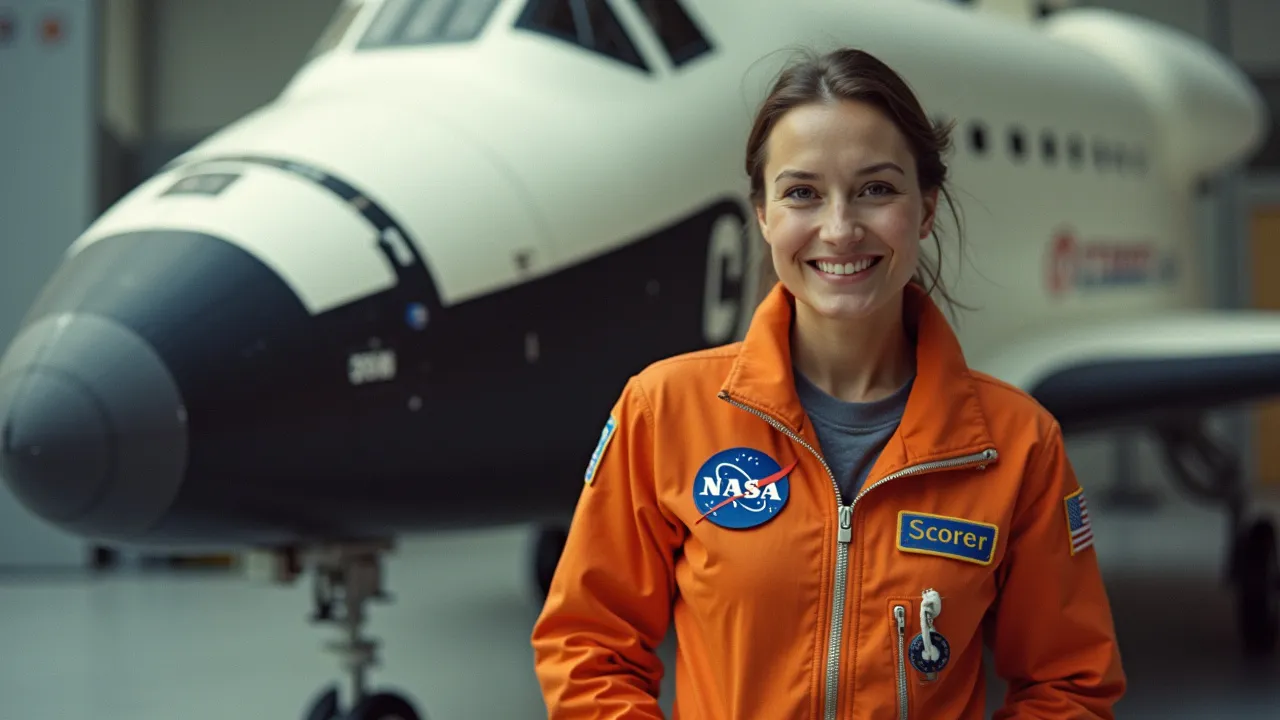
Sally Ride Day on May 26th honors the first American woman in space. Celebrate her legacy in STEM and inspire future generations of explorers.
The Historical Origins & Evolutionary Journey
Sally Ride Day is observed annually on May 26th, the birthday of Dr. Sally Ride, the first American woman to travel to space. This day was established by Sally Ride Science, a nonprofit organization founded by Ride herself in 2001 to inspire young people—especially girls—to pursue careers in science, technology, engineering, and math (STEM). The first official celebration took place in 2013, one year after her death from pancreatic cancer in 2012.
The Foundational Catalyst
Sally Ride’s groundbreaking journey on the Space Shuttle Challenger (STS-7) in June 1983 captured the world’s attention. She was not only a physicist and astronaut but also a dedicated educator. Her work with Sally Ride Science focused on creating engaging classroom materials and teacher training programs to encourage STEM education. The idea of a dedicated day arose organically from the community of educators, students, and space enthusiasts who saw the need to honor her legacy annually.
The Legislative/Official Adoption
While Sally Ride Day is not a federal holiday, it has been recognized by various state and local governments through proclamations. For example, in 2013, California declared May 26th as Sally Ride Day. The day is widely observed by NASA, schools, and science centers across the United States and increasingly around the world. The official designation by Sally Ride Science solidified the date as a time for reflection and action in promoting STEM.
Modern Global Legacy
Today, Sally Ride Day is celebrated with events ranging from classroom activities to public science fairs. It has grown into a global movement, with participation from countries that honor her contributions to space exploration and gender equality. The day also aligns with broader initiatives like Women’s History Month and International Day of Women and Girls in Science, reinforcing its importance in the ongoing effort to close the gender gap in STEM fields.
How to Celebrate Sally Ride Day
Sally Ride Day is a celebration of exploration, education, and empowerment. Whether you are an individual, a school, or an organization, there are many meaningful ways to honor Sally Ride’s legacy. Below is a definitive guide to celebrating this day effectively.
For Individuals
- Learn About Sally Ride: Read her biography or watch documentaries like Sally Ride: America’s First Woman in Space. Share facts on social media using #SallyRideDay.
- Engage in STEM: Participate in a citizen science project, visit a science museum, or try a DIY space experiment at home.
- Mentor a Young Girl: Encourage a girl you know to pursue her interests in math or science. Offer guidance or resources from Sally Ride Science.
For Schools and Educators
- Classroom Activities: Host a "Space Day" with hands-on projects like building model rockets or simulating a Mars mission. Use Sally Ride Science curricula available online.
- Guest Speakers: Invite local scientists or engineers, especially women, to speak about their careers. Virtual talks are also effective.
- Book Fair: Set up a display of books about space exploration and women in STEM. Include titles like Who Was Sally Ride?
For Organizations and Companies
- STEM Workshops: Offer free or discounted workshops for girls and underrepresented groups in your community.
- Social Media Campaign: Launch a campaign highlighting female scientists and engineers in your organization. Use the hashtag #SallyRideDay.
- Partnerships: Collaborate with local science centers or libraries to host public events. Provide scholarships for STEM programs in Sally Ride’s name.
Global Celebrations
In the United States, NASA centers often host open houses or special presentations. In Canada, the Canadian Space Agency participates with educational outreach. In Europe, space agencies and schools organize activities. In Australia, events focus on indigenous contributions to astronomy. Each region adapts the celebration to local culture, but the core message of innovation and equality remains universal.
Sally Ride's Legacy in STEM Education
Sally Ride understood that inspiring the next generation required more than just her story; it demanded active, hands-on engagement. Through Sally Ride Science, she developed innovative programs that have reached millions of students worldwide.
The Sally Ride Science Academy
Every year, the Sally Ride Science Academy trains thousands of teachers in effective STEM pedagogy. The academy emphasizes inquiry-based learning and real-world problem-solving. Teachers leave with ready-to-use lesson plans that align with national standards. Key topics include earth science, space exploration, and climate change.
SciGirls and Other Programs
The SciGirls initiative, co-founded by Ride, empowers middle school girls to explore science through after-school clubs. Research shows that participation in SciGirls significantly increases girls’ confidence and interest in STEM careers. The program is now used in over 100 countries.
Impact on School Curricula
Many school districts have incorporated Sally Ride’s missions into their science curricula. For example, the STAR (Science Teaching through its Astronomical Roots) program uses her work to teach physics and engineering. The California Science Center features a permanent exhibit on her life, visited by thousands of students annually.
Measurable Outcomes
- Over 2 million students have participated in Sally Ride Science programs.
- Teacher training reaches over 10,000 educators annually.
- Participating schools report a 30% increase in girls enrolling in advanced science courses.
Impact on Women in Space Exploration
Sally Ride’s journey to space broke a critical barrier for American women. Her success opened the door for many others. Since her flight, the percentage of women in NASA astronaut classes has risen from under 10% to over 40% in recent years.
Trailblazers After Ride
- Dr. Mae Jemison (1992) – First African American woman in space. She credits Ride as a role model.
- Eileen Collins (1995) – First female Space Shuttle pilot and commander.
- Dr. Peggy Whitson (2002) – First female commander of the International Space Station and record holder for most cumulative days in space by an American.
- Dr. Jessica Watkins (2022) – First Black woman to serve on the ISS crew.
Internationally, women like Valentina Tereshkova (USSR) and Liu Yang (China) continued the legacy. Ride’s example proved that space is for everyone.
Cultural Shift
Sally Ride’s public presence changed how society views women in science. She appeared on magazine covers, gave interviews, and wrote children’s books. Her message was simple: "Science is fun, and anyone can do it." This led to a surge in STEM enrollment among girls in the 1980s and 1990s.
Ongoing Challenges
Despite progress, women still hold only about 28% of STEM jobs globally. Sally Ride Day serves as a reminder to continue pushing for equity. Initiatives like NASA’s Artemis program, which aims to land the first woman on the Moon, directly honor her vision.
Educational Initiatives and Resources
Sally Ride Day is a prime opportunity to explore educational resources that keep her legacy alive. From lesson plans to scholarships, there is no shortage of ways to learn and teach.
Free Digital Resources
- Sally Ride Science website: Offers free downloads of classroom activities, posters, and reading lists.
- NASA’s Sally Ride page: Provides astronaut biographies, images, and educational video series.
- Library of Congress: Features her personal papers for research projects.
Scholarships and Contests
- Sally Ride Science Scholarship: Awarded annually to high school girls pursuing STEM degrees.
- STEM to Stars contest: Students submit space-themed projects for a chance to win a visit to a NASA center.
Museum Exhibits
Permanent exhibits at the National Air and Space Museum (Washington, DC) and the California Science Center (Los Angeles) offer immersive experiences. The Intrepid Sea, Air & Space Museum in New York often hosts Sally Ride Day events with astronaut panel discussions.
Virtual Events
Since 2020, many celebrations have moved online. The Sally Ride Science organization hosts a live streaming event every May 26th, featuring interviews with astronauts and scientists. Teachers can register their classes to attend virtually.
Global Recognition and Observance
While Sally Ride Day originated in the United States, its message resonates worldwide. Countries across every continent have adopted the day in various forms, adapting it to local contexts.
North America
In Canada, the Canadian Space Agency promotes Sally Ride Day with social media campaigns and school broadcasts. Mexico’s space agency (AEM) holds workshops for girls in rural areas.
Europe
The European Space Agency (ESA) marks the day by highlighting its female astronauts, such as Samantha Cristoforetti. In the UK, the Science Museum in London runs special programs.
Asia and Oceania
Japan’s JAXA includes Sally Ride’s story in its astronaut training materials. Australia’s Questacon science center hosts a "Day of Discovery" with family activities.
Africa and South America
In South Africa, the Astronomy for Development initiative uses the day to raise awareness. Brazil’s space agency (AEB) promotes STEM careers for girls through school partnerships.
UNESCO has recognized Sally Ride Day as an unofficial observance that supports Sustainable Development Goal 5 (gender equality) and Goal 4 (quality education). The day is a rallying point for global STEM advocacy.
Historical Timeline
Sally Kristen Ride is born on May 26 in Los Angeles, California.
Ride is selected as part of NASA's first astronaut class to include women, after responding to a newspaper ad.
On June 18, Ride launches aboard the Space Shuttle Challenger (STS-7), becoming the first American woman in space. She serves as mission specialist and operates the robotic arm.
Ride flies her second mission (STS-41-G) on Challenger, spending eight days in space. She is the only person to serve on both presidential commissions investigating the Challenger (1986) and Columbia (2003) accidents.
Ride leaves NASA to join Stanford University as a professor of physics, later serving as director of the California Space Institute.
Ride founds Sally Ride Science, a for-profit company (later nonprofit) that creates educational programs and materials to inspire young people, especially girls, in STEM.
Sally Ride dies on July 23 after a 17-month battle with pancreatic cancer. Her obituary reveals that she had been in a same-sex relationship for 27 years with partner Tam O'Shaughnessy, making her the first known LGBTQ astronaut.
First official Sally Ride Day celebrated on May 26. California Governor Jerry Brown proclaims the date as Sally Ride Day statewide. Sally Ride Science organizes events and classroom activities.
A statue of Sally Ride is unveiled at the California Science Center, the first statue of a woman astronaut on the West Coast.
Sally Ride Day gains global recognition as NASA and other space agencies host joint educational events. The US Postal Service issues a Sally Ride Forever Stamp.