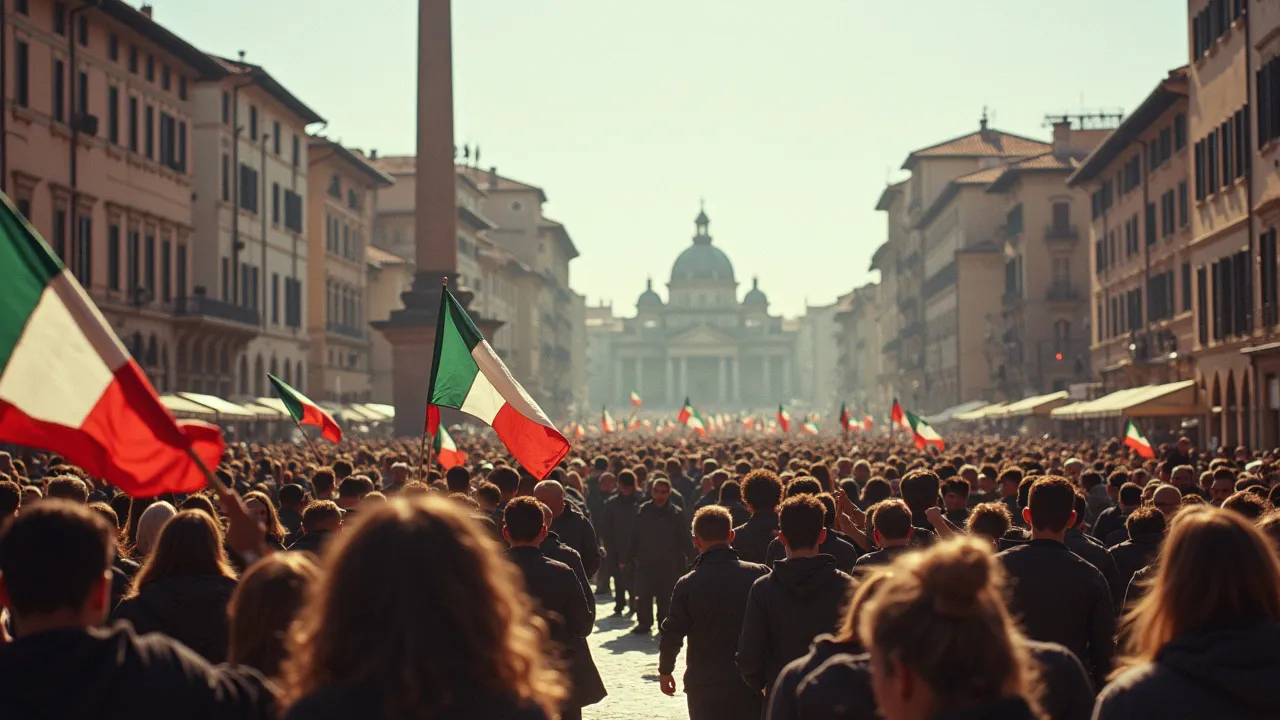
Republic Day (Italy) on June 2nd commemorates the 1946 referendum that abolished the monarchy and established the Italian Republic. It is marked by military parades, flag-raising ceremonies, and nationwide celebrations honoring Italy's democratic foundation.
Historical Origins & Evolutionary Journey
The birth of the Italian Republic is rooted in the tumultuous aftermath of World War II. On June 2, 1946, Italians voted in a landmark institutional referendum to decide the future form of their state: monarchy or republic. This pivotal moment ended the reign of the House of Savoy, which had ruled Italy since unification in 1861.
The Foundational Catalyst
Italy's defeat in World War II discredited the monarchy, which had been closely associated with Fascist dictator Benito Mussolini. King Victor Emmanuel III's complicity in the Fascist regime and his flight from Rome in 1943 eroded public trust. The post-war government, led by the National Liberation Committee, called for a referendum to let the people decide.
The Referendum and Official Adoption
On June 2-3, 1946, nearly 25 million Italians (women voted for the first time) went to the polls. The result was a victory for the republic: 12.7 million votes (54.3%) for a republic versus 10.7 million (45.7%) for the monarchy. The King abdicated and went into exile. The Constituent Assembly was elected simultaneously, tasked with drafting Italy's new constitution, which took effect on January 1, 1948.
Republic Day was formally established as a national holiday in 1949. The first celebration in 1947 featured a military parade in Rome. Over the decades, the event evolved from a strictly formal display of state power to a more inclusive celebration of national identity and democratic values.
Modern Global Legacy
Today, Republic Day symbolizes Italy's commitment to democracy and unity. The main event is the grand military parade along the Via dei Fori Imperiali in Rome, attended by the President of the Republic and other dignitaries. The day also includes the laying of a wreath at the Tomb of the Unknown Soldier and the opening of the Quirinal Palace gardens to the public. In recent years, the celebration has incorporated cultural performances, educational initiatives, and social media campaigns to engage younger generations.
How to Celebrate Republic Day (Italy)
Republic Day is a public holiday across Italy, but celebrations can be enjoyed by anyone, anywhere. Here is a definitive guide to observing the day with authenticity and respect.
Attend the Official Ceremonies in Rome
- Military Parade: Watch the parade along Via dei Fori Imperiali, featuring all branches of the Italian armed forces, police, and civil protection units. The Frecce Tricolori aerobatic team paints the sky with green, white, and red smoke.
- Wreath Laying: Visit the Altare della Patria to see the President lay a laurel wreath at the Tomb of the Unknown Soldier.
- Quirinal Palace: Explore the gardens and courtyards of the presidential residence, which are open to the public on this day.
- Flag Display: Hang the Italian flag outside your home or business. Many municipalities organize flag-raising ceremonies.
- Local Festivals: Towns and cities hold concerts, food fairs, and historical reenactments. For example, in the town of Gubbio, the Corsa dei Ceri is sometimes held nearby.
- Educational Events: Schools and cultural institutes host lectures, exhibitions, and workshops on the history of the republic.
- Social Media Sharing: Use hashtags like #FestaDellaRepubblica to join the national conversation.
Celebrate Across Italy and the World
For Diaspora Communities
Italian embassies and consulates abroad often host receptions, film screenings, and concerts. Local Italian clubs may organize dinners with traditional cuisine. Share a meal featuring regional specialties like pasta, pizza, and gelato while raising a glass of Prosecco to the republic.
Symbolism and National Identity
Republic Day is deeply intertwined with the symbols of the Italian state. The tricolor flag—green, white, and red—was adopted in 1797 but became the national flag of the republic. The Frecce Tricolori, the national aerobatic team, epitomize Italian pride. The day also reinforces the values enshrined in the Constitution: democracy, equality, and solidarity.
The Coin of the Republic
Every year, the Italian Mint issues a commemorative coin featuring the emblem of the republic. Collectors and citizens alike treasure these pieces. The state mint also produces medals for public officials.
Cultural Performances
Since 2011, the day has featured a special concert at the Quirinal Palace, broadcast live on national television. Performances range from classical opera to contemporary music, celebrating Italy's rich artistic heritage.
Economic and Social Impact
Republic Day is not just a ceremonial event; it has tangible economic and social effects. The holiday boosts tourism in Rome and other cities, with hotels and restaurants seeing increased business. In 2023, an estimated 1.5 million people attended the Rome parade alone. Moreover, the day fosters national unity, bridging regional divides between north and south. It also serves as a platform for the government to announce new policies or public works projects.
Corporate Involvement
Many Italian companies sponsor Republic Day events or give employees the day off. Brands often launch patriotic advertising campaigns, selling limited-edition products with flag motifs. However, some critics argue that commercialization risks trivializing the holiday's deeper meaning.
Controversies and Debates
Despite broad support, Republic Day has not been without controversy. Some monarchists and descendants of the House of Savoy still dispute the referendum's fairness, alleging irregularities. (The monarchy was officially banned from returning to Italy until 2002.) Others criticize the massive military parade as an outdated display of nationalism, advocating for a more civilian-focused celebration. In 2020, due to the COVID-19 pandemic, the parade was scaled down, sparking a discussion on whether the event should be modernized. Environmental groups have also raised concerns about the carbon footprint of large gatherings and fireworks.
Historical Timeline
Unification of Italy under the Kingdom of Italy, ruled by the House of Savoy.
Fascist regime under Benito Mussolini; King Victor Emmanuel III supports Mussolini.
June 2-3: Institutional referendum held; 54.3% vote for a republic. King Umberto II abdicates and goes into exile.
First official Republic Day celebration with a military parade in Rome.
New Constitution takes effect on January 1, solidifying the republic.
Republic Day (Festa della Repubblica) made a permanent public holiday by law.
The parade route shifts to Via dei Fori Imperiali, showcasing ancient Roman ruins as a backdrop.
Inauguration of the Quirinal Palace concert broadcast live on national TV.
Parade significantly reduced due to COVID-19 pandemic; includes a flyover by the Frecce Tricolori without public attendance.
Republic Day continues to evolve with increased digital engagement and regional cultural events.