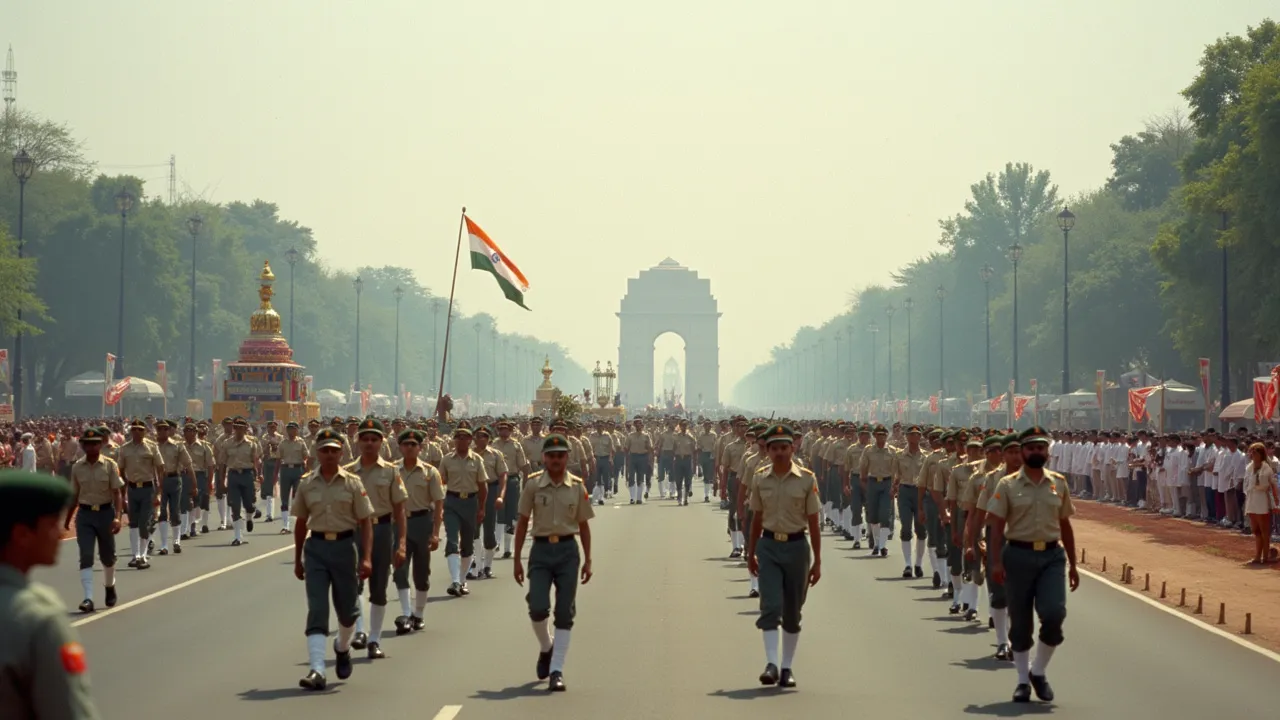
Republic Day of India is celebrated on January 26th, commemorating the adoption of the Constitution in 1950. It marks India's transition to a sovereign republic with grand parades and cultural festivities.
The Historical Origins & Evolutionary Journey
Republic Day, observed annually on January 26th, is one of India's three national holidays. It commemorates the date in 1950 when the Constitution of India came into effect, transitioning the country from a British Dominion to a sovereign, democratic republic. The journey to this momentous day was long and arduous, rooted in the Indian independence movement and the vision of its leaders.
The Foundational Catalyst
The demand for a constituent assembly was first raised by the Indian National Congress in 1934. The British government, through the August Offer of 1940 and the Cripps Mission of 1942, acknowledged the need for a constitution drafted by Indians. The Cabinet Mission Plan of 1946 finally paved the way for the Constituent Assembly, which held its first session on December 9, 1946. Dr. Rajendra Prasad was elected as its president, and Dr. B.R. Ambedkar served as the chairman of the Drafting Committee.
The Legislative/Official Adoption
The Constituent Assembly took nearly three years to draft the constitution, holding 11 sessions over 165 days. The final document was adopted on November 26, 1949, which is celebrated as Constitution Day. However, the chosen date for its enforcement was January 26, 1950, to honor the historic 1930 declaration of Purna Swaraj (complete independence) by the Indian National Congress on that same date. Thus, January 26th became doubly significant: it marked both the earlier demand for independence and the actual realization of a sovereign republic.
Modern Global Legacy
Since 1950, Republic Day has been celebrated with great fervor across India. The main event is a grand parade in New Delhi, showcasing India's cultural diversity, military might, and technological advancements. Over the decades, the celebrations have become a symbol of national pride and unity, watched by millions globally. The day also serves as a reminder of the constitutional values of justice, liberty, equality, and fraternity.
How to Celebrate Republic Day (India)
Republic Day offers numerous ways for individuals, schools, and organizations to participate in the national spirit. Here is a comprehensive guide to celebrating this important day.
For Individuals and Families
- Watch the Parade: Tune in to live telecasts of the Republic Day parade from New Delhi, featuring military displays, tableaus, and cultural performances.
- Flag Hoisting: Hoist the Indian flag at home or in your locality at sunrise, followed by singing the national anthem.
- Attend Local Events: Participate in community celebrations, cultural programs, and patriotic songs organized by local clubs or resident associations.
- Learn the Constitution: Read the Preamble and discuss fundamental rights and duties with family.
For Schools and Educational Institutions
- Flag Hoisting Ceremony: Conduct a formal flag hoisting followed by a speech on the significance of Republic Day.
- Cultural Programs: Organize patriotic songs, dances, skits, and quizzes related to Indian history and the Constitution.
- Art Competitions: Hold drawing and essay competitions on themes like 'My Constitution' or 'Unity in Diversity'.
- Guest Lectures: Invite local dignitaries or veterans to share their experiences and inspire students.
For Organizations and Corporates
- Celebrations at Workplace: Arrange a flag hoisting, distribute sweets, and organize a brief session on constitutional values.
- CSR Activities: Support initiatives that promote education about the Constitution or help underprivileged communities.
- Employee Engagement: Conduct quizzes and contests with patriotic themes to foster team spirit.
No matter how you celebrate, the essence lies in remembering the sacrifices of our freedom fighters and reaffirming our commitment to the democratic ideals enshrined in the Constitution.
Significance and Core Themes
Republic Day is not merely a date on the calendar; it embodies the foundational principles of India as a sovereign, socialist, secular, democratic republic. The day underscores the importance of the Constitution, which guarantees justice, liberty, equality, and fraternity to all citizens.
Constitutional Values
The Constitution of India is the longest written constitution in the world, containing 448 articles and 12 schedules. It establishes a parliamentary system of government and outlines the fundamental rights and duties of citizens. Republic Day serves as an annual reminder of these rights and the responsibility to uphold them.
Unity in Diversity
The parade and cultural events showcase India's rich diversity—different languages, religions, cuisines, and traditions—united under one flag. This theme of 'unity in diversity' is a core takeaway of the day.
National Pride and Patriotism
Republic Day instills a sense of pride and patriotism among citizens. It honors the armed forces, freedom fighters, and those who contributed to nation-building. The ceremony of awarding bravery medals and Padma awards recognizes exceptional service.
Republic Day Parade and Ceremonies
The centerpiece of Republic Day celebrations is the grand parade held in New Delhi along Rajpath (now Kartavya Path). It is a meticulously planned event that attracts dignitaries, including the President of India and a chief guest from a friendly nation.
Pre-Parade Ceremonies
- Prime Minister's Tribute: The day begins with the Prime Minister laying a wreath at the Amar Jawan Jyoti at India Gate, honoring fallen soldiers.
- President's Arrival: The President, as the constitutional head, arrives and is greeted by the Guard of Honour.
The Parade Sequence
- National Flag Hoisting: The President hoists the flag, followed by the national anthem and a 21-gun salute.
- Military Might Display: Regiments of the Army, Navy, and Air Force march in precision, showcasing weapons and equipment.
- Cultural Tableaus: States and union territories present thematic floats depicting their culture, heritage, and development.
- Children's Performances: Schoolchildren perform colorful dances and patriotic songs.
- Flypast: The Air Force performs a thrilling flypast over the parade venue.
Evening Ceremony: Beating Retreat
On January 29th, the Beating Retreat ceremony marks the official end of Republic Day celebrations. It is held at Vijay Chowk, featuring bands from the three armed forces performing stirring tunes.
Global Impact and Diaspora Celebrations
Republic Day is celebrated not only in India but also by the Indian diaspora worldwide. Embassies and cultural organizations host events to mark the occasion, fostering a sense of connection to the homeland.
Celebrations Abroad
- Flag Hoisting at Embassies: Indian embassies and consulates hoist the flag and organize cultural programs.
- Community Gatherings: Indian communities in countries like the USA, UK, Canada, and Australia hold parades, food festivals, and concerts.
- Educational Events: Workshops on Indian history, yoga, and cuisine are conducted to share India's heritage.
The Chief Guest Tradition
India invites a foreign head of state or government as the chief guest for Republic Day, underscoring diplomatic ties. Past guests include leaders from the USA, France, Japan, and many ASEAN nations. This tradition enhances India's global stature and soft power.
Modern Relevance and Contemporary Debates
In recent years, Republic Day has also become a platform for discussing contemporary issues such as constitutional amendments, secularism, and social justice. While the day is a celebration, it also invites introspection on how well the constitutional ideals are being realized.
Debates on National Identity
Questions around citizenship, freedom of speech, and minority rights often come to the fore on Republic Day. The day serves as a reminder of the need to balance tradition with progress.
Environmental and Social Initiatives
Many organizations use Republic Day to launch campaigns on environmental sustainability, education for all, and healthcare. The government often announces new schemes or initiatives aligned with the day's spirit.
Thus, Republic Day remains a living, evolving celebration that both honors the past and shapes the future.
Historical Timeline
The Indian National Congress, under Jawaharlal Nehru's presidency, passes the Purna Swaraj resolution, declaring January 26, 1930 as the first Independence Day.
The Constituent Assembly meets for the first time on December 9 to draft the Constitution of India.
India gains independence on August 15, but remains a British Dominion with King George VI as head of state.
The Constituent Assembly adopts the Constitution on November 26 (now Constitution Day).
The Constitution comes into effect on January 26, making India a sovereign republic. Dr. Rajendra Prasad becomes the first President.
The first Republic Day parade at Rajpath (now Kartavya Path) is held, with Pakistan's Governor-General Malik Ghulam Muhammad as chief guest.
The 50th Republic Day is celebrated with a grand parade and special commemorative events.
U.S. President Barack Obama becomes the first American president to be the chief guest at Republic Day celebrations.
Due to the COVID-19 pandemic, the parade is scaled down and held with strict social distancing measures.