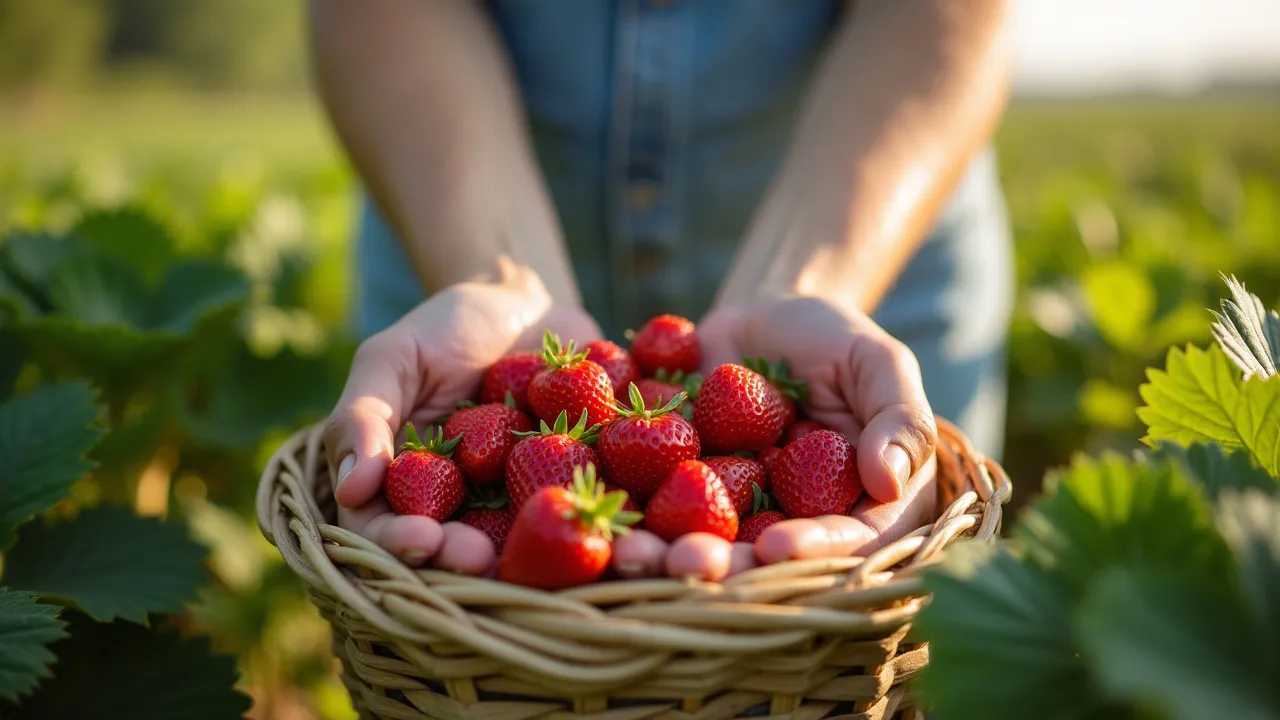
Celebrated on May 20th, Pick Strawberries Day honors the joy of strawberry picking and the fruit's rich history. It encourages families and communities to visit farms and enjoy fresh strawberries, highlighting agricultural traditions and healthy eating.
The Historical Origins & Evolutionary Journey
The Foundational Catalyst
Strawberries have been enjoyed for centuries, but the specific observance of Pick Strawberries Day emerged from the growing popularity of U-pick farms in the mid-20th century. As suburban families sought wholesome outdoor activities, strawberry patches became a favored destination. The day gained informal recognition through agricultural societies and local chambers of commerce, eventually solidifying on May 20th as a peak harvest time in many regions.
The Legislative/Official Adoption
While no federal proclamation exists, several U.S. states have declared May as Strawberry Month, with May 20th highlighted as a focal point. The day is now widely promoted by National Strawberry Month campaigns and berry councils worldwide.
Modern Global Legacy
Today, Pick Strawberries Day is celebrated across North America, Europe, and parts of Asia. It serves not only as a fun family activity but also as an educational tool about sustainable agriculture and seasonal eating. Social media has amplified its reach, with hashtags like #PickStrawberriesDay trending annually.
How to Celebrate Pick Strawberries Day
Plan a Farm Visit
- Search for local strawberry farms offering U-pick experiences. Call ahead to confirm ripeness and hours.
- Bring sunscreen, hats, and containers. Many farms provide buckets, but bringing your own is eco-friendly.
- Arrive early to avoid crowds and get the best berries. Morning picking ensures cooler temperatures and firmer fruit.
Host a Strawberry-Themed Party
- Set up a strawberry bar with chocolate sauce, whipped cream, and sliced berries.
- Make strawberry jam or pie with your fresh haul. Encourage guests to share recipes.
- Decorate with red and green themes, and play strawberry-themed games for children.
Educational Activities for Schools
Teachers can incorporate strawberry life cycle lessons, plant a classroom strawberry pot, or arrange a virtual field trip to a farm. The day aligns well with science and nutrition curricula.
Global Variations
In Japan, strawberry picking is a popular spring activity, often occurring in March and April. In Israel, the strawberry season peaks in February. While May 20th is the primary date, regions adjust based on local harvests.
Cultural Significance of Strawberries
Strawberries have held symbolic meaning across cultures for centuries. In ancient Rome, they were associated with Venus, the goddess of love, due to their heart shape and red color. During the Renaissance, strawberries featured in religious paintings as a symbol of righteousness. Today, they represent sweetness, summer, and nostalgia.
In Art and Literature
The strawberry motif appears in works by Shakespeare and in Flemish still-life paintings. Modern pop culture celebrates the fruit in songs, movies, and festivals.
Health Benefits of Strawberries
Strawberries are nutritional powerhouses. One cup provides over 100% of the daily vitamin C requirement, along with manganese, folate, and potassium. They are rich in antioxidants like ellagic acid and flavonoids, which reduce inflammation and heart disease risk.
- Heart Health: Regular consumption lowers LDL cholesterol and blood pressure.
- Blood Sugar Control: Low glycemic index and fiber help stabilize glucose levels.
- Skin Health: Vitamin C boosts collagen production for youthful skin.
Incorporating fresh, locally picked strawberries maximizes these benefits, as nutrients decline after harvest.
Strawberry Varieties and Growing Tips
Popular Varieties
- June-bearing: Produce a single large crop in spring (e.g., 'Honeoye', 'Chandler').
- Everbearing: Yield two main crops in summer and fall (e.g., 'Ozark Beauty').
- Day-neutral: Fruit continuously through the growing season (e.g., 'Albion').
Growing Your Own
- Plant in full sun with well-draining soil, pH 5.5-6.5.
- Space crowns 12-18 inches apart in rows; use raised beds for better drainage.
- Water consistently, mulch with straw to suppress weeds and keep berries clean.
- Renovate beds after harvest by mowing leaves and fertilizing.
Pick Strawberries Day is the perfect time to start your own patch.
Economic Impact of Strawberry Farming
Strawberry production is a multi-billion dollar industry worldwide. The United States is the largest producer, with California accounting for over 90% of domestic output. Major producers also include Mexico, Spain, and Florida.
U-pick farms have a unique economic role: they reduce labor and shipping costs while increasing tourism. A study by the University of Kentucky found that agritourism operations, including strawberry picking, boost local economies by 15-20% per season.
The day also supports small-scale farmers and promotes sustainable agriculture by connecting consumers directly to the source.
Historical Timeline
A French spy named Frézier brought strawberry plants from Chile to France, leading to the hybrid Fragaria × ananassa, the modern garden strawberry.
Commercial strawberry production began in the United States, especially in New York and Massachusetts.
U-pick farms emerged in the U.S. as a way for growers to cut labor costs and engage families.
Pick Strawberries Day started being informally celebrated in several U.S. communities, often linked to local harvest festivals.
May 20th was popularized as an unofficial date by agricultural extension services and online calendars.
Social media boosted the day's visibility, with influencers sharing photos of strawberry picking adventures.
Pick Strawberries Day trended globally on Twitter, with over 1 million posts featuring #PickStrawberriesDay.