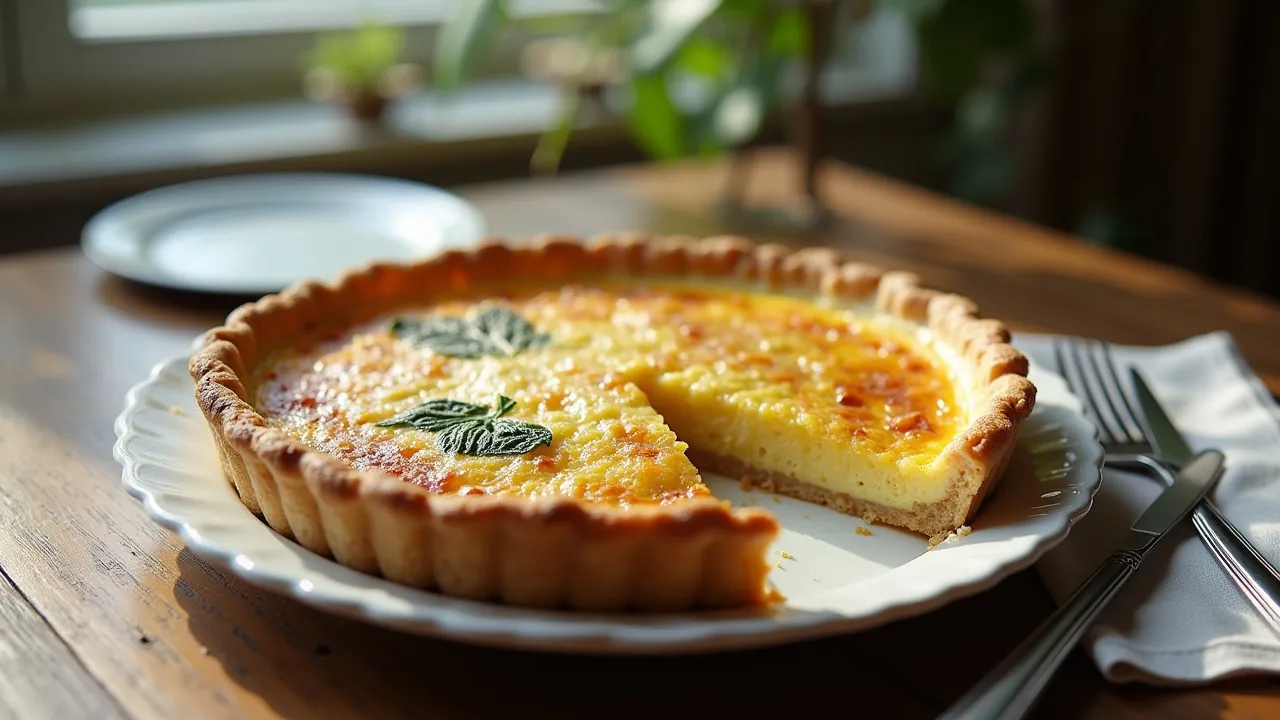
Celebrate National Quiche Lorraine Day on May 20th, a tribute to the classic French egg custard tart with bacon. Learn about its rich history, perfect preparation techniques, and how to enjoy this savory dish worldwide.
The Historical Origins & Evolutionary Journey
National Quiche Lorraine Day, observed annually on May 20th, honors one of the most iconic dishes in French cuisine. But to understand the day, we must first trace the origins of quiche Lorraine itself, a savory tart that has evolved over centuries from a humble rustic pie to a global comfort food.
The Foundational Catalyst
The earliest recorded ancestor of quiche Lorraine dates back to the 16th century in the medieval kingdom of Lothringen (now Lorraine, France). The original "quiche" was a simple open-faced tart made with bread dough and filled with a mixture of eggs, cream, and smoked bacon or lardons. The name "quiche" is derived from the German word "Kuchen," meaning cake, reflecting the region's Germanic influence. Unlike modern quiches, the first versions had no cheese and were often cooked over an open hearth. The dish remained a regional specialty for centuries.
The Legislative/Official Adoption
National Quiche Lorraine Day was established through grassroots foodie culture rather than government proclamation. It gained traction in the early 2010s as food holidays proliferated across social media and calendar websites. While no single individual or organization holds the official trademark, the day is recognized by multiple national day observances and culinary communities. Its purpose is to celebrate the dish's versatility and encourage home cooks to explore its traditional and modern adaptations.
Modern Global Legacy
Today, quiche Lorraine is a staple in bakeries, brunch menus, and home kitchens worldwide. It has spawned countless variations, from spinach and feta to mushroom and gruyere. The dish embodies the French culinary philosophy of using simple, quality ingredients. National Quiche Lorraine Day not only pays homage to its Lorraine roots but also highlights the dish's role in international gastronomy. The observance encourages chefs and home cooks alike to experiment with fillings, crust types, and regional flavors.
How to Celebrate National Quiche Lorraine Day
National Quiche Lorraine Day offers a perfect opportunity to indulge in this classic dish, whether you're a seasoned chef or a novice cook. Below are actionable strategies for individuals, schools, and organizations to celebrate authentically.
Individual Celebrations
- Bake a Traditional Quiche Lorraine: Use a classic recipe with a buttery shortcrust pastry, a filling of eggs, heavy cream, and lardons (or bacon). Avoid cheese to stay true to the original.
- Host a Quiche Brunch: Invite friends or family for a morning or midday meal featuring quiche Lorraine alongside fresh salads and fruit.
- Experiment with Variations: Try a gluten-free crust or a dairy-free custard using almond milk and tofu, adapting for dietary needs.
School and Educational Activities
- Cooking Class: Teach students the history of quiche and basic pastry skills. Emphasize the importance of baking ratios and egg coagulation.
- Cultural Lesson: Explore the region of Lorraine, its geography, and its culinary traditions. Connect to broader themes of French cuisine.
- Science of Custard: Demonstrate how eggs bind and thicken when heated—a practical chemistry lesson.
Corporate and Community Events
- Office Potluck: Encourage coworkers to bring quiche or quiche-inspired dishes. Award prizes for the most creative filling.
- Local Contest: Partner with a bakery or culinary school to host a quiche competition, judged by local chefs.
- Charity Bake Sale: Donate proceeds from quiche sales to a food-related nonprofit, tying the celebration to community support.
Internationally, the day is most prominent in the United States, but similar celebrations occur in France (though unofficial). In the UK, quiche Lorraine is a popular picnic item; in Australia, it's a café favorite. Adaptations reflect local produce—Japanese quiche may include miso or prawns, while Indian versions add spices like cumin and coriander.
The Culinary Significance of Quiche Lorraine
Quiche Lorraine is more than just a dish; it is a testament to the principles of French cuisine: balance, precision, and respect for ingredients. The custard—a simple emulsion of eggs and cream—must be carefully baked to achieve a silky texture without curdling. The addition of bacon provides a savory, smoky contrast to the rich egg custard. The pastry shell, whether pâte brisée or pâte feuilletée, adds a crisp, buttery counterpoint.
From a nutritional perspective, quiche Lorraine is a source of protein, calcium, and fat, making it a satiating meal. However, it is also relatively high in calories and saturated fat, which has led to lighter variations using low-fat milk, egg whites, and lean meats. The dish's versatility allows for endless customization: adding vegetables like leeks, spinach, or bell peppers boosts fiber and vitamin content.
Chefs emphasize that the key to a perfect quiche is not overbaking. The custard should be just set with a slight jiggle in the center. This delicate technique highlights the skill required even for a seemingly simple dish.
Quiche Lorraine in Popular Culture
Quiche Lorraine has made appearances in literature, film, and television as a symbol of French sophistication or homey comfort. In the 1982 book "The Quiche Lorraine Cookbook" by John O. P. Lang, it was praised as a versatile brunch option. The dish famously featured in an episode of "The Simpsons" where Marge bakes a quiche to impress guests. More recently, food bloggers and Instagram influencers have elevated quiche Lorraine to a trendy status, often pairing it with aesthetic plating.
Notably, the 1982 bestseller "Real Men Don't Eat Quiche" by Bruce Feirstein humorously stereotyped quiche as unmanly, sparking a backlash that ironically increased its popularity. Today, quiche is enjoyed by all genders and demographics, breaking old stereotypes.
Economic Impact of Food Holidays Like National Quiche Lorraine Day
Food observances like National Quiche Lorraine Day have a measurable effect on the economy, particularly in the retail and hospitality sectors. Grocery stores see a spike in sales of eggs, cream, bacon, and pie crusts. Bakeries and cafés often run specials, while food magazines and websites publish recipes, driving traffic and ad revenue.
In the United States, where food holidays are widely recognized (over 175 national food days exist), the cumulative economic impact is substantial. For example, National Quiche Lorraine Day aligns with spring produce, boosting sales of seasonal vegetables used in quiche variations. Small-scale producers of artisanal cheeses and cured meats also benefit from increased demand.
Internationally, the day is less commercialized but still offers opportunities for cross-cultural marketing. French export agencies might promote authentic Lorraine ingredients, while food bloggers leverage the day for sponsored content.
Controversies and Misconceptions About Quiche Lorraine
Despite its popularity, quiche Lorraine is often misunderstood. A common misconception is that authentic quiche Lorraine includes cheese. In reality, the traditional version from Lorraine contains no cheese; it is simply eggs, cream, and bacon (lardons). Adding cheese transforms it into a quiche au fromage, a different dish.
Another debate surrounds the crust: some purists insist on using pâte brisée (shortcrust), while others accept frozen or pre-made shells for convenience. The inclusion of vegetables is also controversial; traditionalists argue that any addition beyond bacon and egg custard creates a different quiche, while modernists embrace innovation.
There is also the issue of cultural appropriation: French chefs sometimes frown upon American variations that overcomplicate the dish. However, food evolution is natural, and quiche Lorraine itself is a product of cross-cultural exchange.
Historical Timeline
The earliest recorded quiche-like dish appears in the medieval kingdom of Lothringen (Lorraine). It is a simple bread dough tart filled with eggs, cream, and smoked bacon.
Quiche Lorraine becomes popularized in France during the Belle Époque, appearing in Parisian cookbooks as a refined version of the rustic dish.
American soldiers returning from WWII bring a taste for quiche, leading to its adaptation in US cuisine. Recipes appear in mainstream magazines.
The book 'Real Men Don't Eat Quiche' by Bruce Feirstein sparks a humorous cultural controversy, ironically increasing quiche's popularity.
National Quiche Lorraine Day begins to be recognized on social media and food holiday websites, with May 20th as the official date.
The day gains traction globally; online searches for quiche recipes spike every May 20th. Chefs experiment with global flavors, from Asian to Latin American.