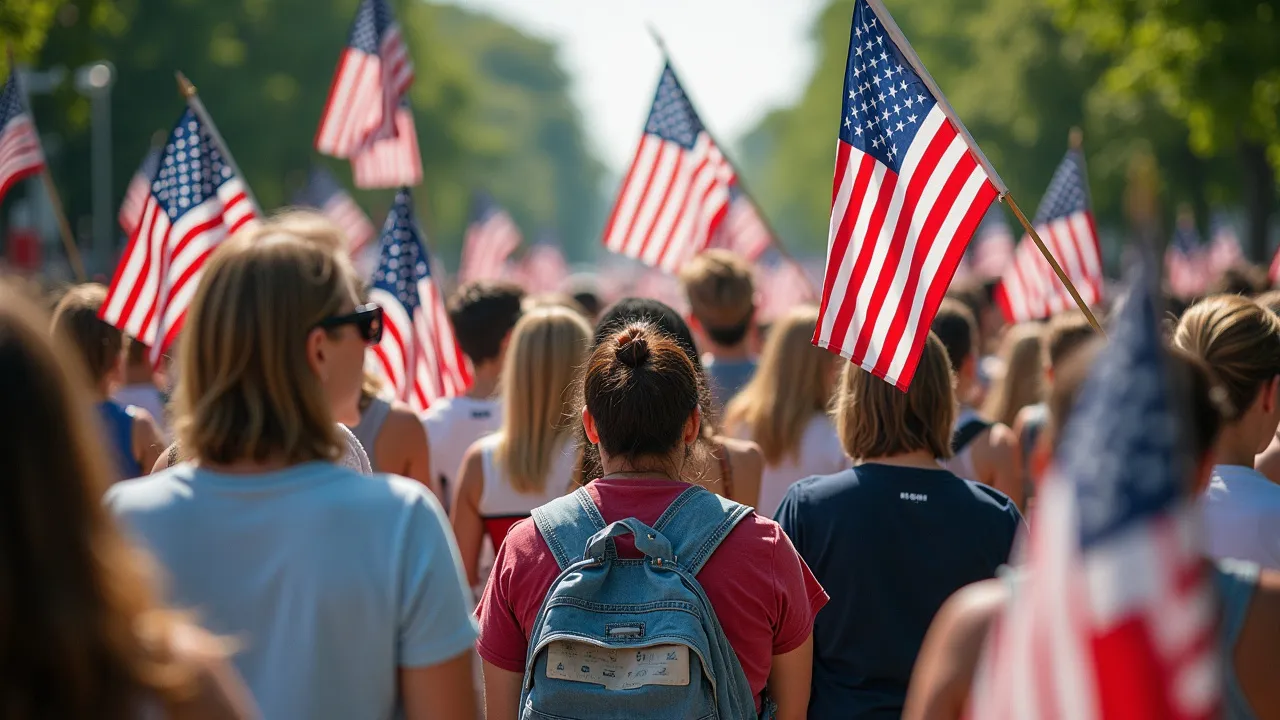
Pan American Day, observed on April 14th, celebrates the unity and solidarity of the nations of the Americas. It honors the establishment of the Organization of American States (OAS) and promotes peace, democracy, and cooperation across the hemisphere.
The Historical Origins & Evolutionary Journey
Pan American Day, observed annually on April 14th, traces its origins to the late 19th century when the idea of hemispheric unity began to take shape. The day commemorates the founding of the Pan American Union in 1910, which later evolved into the Organization of American States (OAS).
The Foundational Catalyst
The concept of Pan-Americanism emerged from the First International Conference of American States, held in Washington, D.C., from October 1889 to April 1890. This conference, convened by U.S. Secretary of State James G. Blaine, aimed to foster cooperation among the independent nations of the Western Hemisphere. The conference resulted in the establishment of the International Union of American Republics and its commercial bureau, which later became the Pan American Union.
The Legislative/Official Adoption
In 1930, the Pan American Union passed a resolution designating April 14th as Pan American Day. The first official observance took place on April 14, 1931, with celebrations across the Americas. In 1948, the Pan American Union was replaced by the Organization of American States (OAS) through the signing of the OAS Charter during the Ninth International Conference of American States in Bogotá, Colombia. The OAS reaffirmed Pan American Day as a key observance to promote solidarity, democracy, and human rights.
Modern Global Legacy
Throughout the 20th and 21st centuries, Pan American Day has expanded beyond its diplomatic origins to become a cultural celebration. Schools, governments, and community organizations use the day to highlight the diverse heritage of the Americas. The OAS continues to play a central role, often issuing statements on themes such as democracy, sustainable development, and regional security. Despite political shifts, the day remains a symbol of shared values and collective aspirations.
How to Celebrate Pan American Day
Pan American Day offers a unique opportunity to engage with the cultures, histories, and values of the Americas. Whether you are an individual, educator, or organization, there are meaningful ways to participate.
For Individuals and Families
Attend local events: Many cities host parades, cultural festivals, or flag-raising ceremonies. Check community calendars for activities.
Explore cultural cuisine: Cook a traditional dish from a Pan American country, such as arepas, ceviche, or pão de queijo.
Learn a language: Spanish, Portuguese, French, or indigenous languages are spoken in the Americas. Use online resources to start a basic lesson.
Watch documentaries: Films about Pan American history or regional challenges deepen understanding.
For Schools and Educators
Organize a cultural fair: Students can create exhibits on different countries, showcasing music, art, and geography.
Hold a mock OAS assembly: Simulate a diplomatic session where students debate regional issues like trade or environmental protection.
Art projects: Have students create flags or murals representing the unity of the Americas.
For Organizations and Businesses
Host a webinar: Invite experts to discuss Pan American cooperation, trade, or social development.
Promote diversity: Share employee stories about their heritage or organize a potluck featuring dishes from American nations.
Support local causes: Donate to organizations that work on Pan American issues, such as education or disaster relief.
The Significance of Hemispheric Unity
Pan American Day serves as a reminder of the shared history, geography, and values that bind the nations of the Americas. The hemisphere stretches from Canada to Argentina, encompassing diverse cultures, languages, and political systems. Yet, common challenges—such as climate change, economic inequality, and migration—require collective action.
Promoting Democracy and Human Rights
The OAS has long championed democratic governance through mechanisms like the Inter-American Democratic Charter. Pan American Day provides a platform to reflect on progress and shortcomings in protecting fundamental freedoms. Many countries use the day to reaffirm commitments to rule of law and transparent elections.
Fostering Economic Cooperation
Trade agreements, such as the United States-Mexico-Canada Agreement (USMCA) and Mercosur, illustrate the economic interdependence within the Americas. Pan American Day highlights opportunities for cross-border trade, investment, and sustainable development. Small businesses and entrepreneurs can leverage the day to network and explore partnerships.
Celebrating Cultural Diversity
The Americas are a mosaic of indigenous, European, African, and Asian influences. Pan American Day celebrates this multiculturalism through music, dance, art, and literature. For example, the tango from Argentina, salsa from Cuba, and samba from Brazil are expressions of this rich heritage. Cultural exchanges during this day foster mutual respect and understanding.
Pan American Day in Education and Culture
Educational institutions across the Americas incorporate Pan American Day into their curricula to teach students about hemispheric relations and cultural appreciation.
Curriculum Integration
Schools may dedicate lessons to the geography, history, and political systems of Pan American nations. Topics include the Monroe Doctrine, the Panama Canal, and the role of the OAS. Classroom activities often emphasize critical thinking about regional conflicts and cooperation.
Cultural Events and Festivals
Many cities host Pan American Day festivals featuring folkloric performances, art exhibitions, and food markets. For instance, in the United States, the Pan American Games are sometimes celebrated in conjunction with the day, but the cultural aspect remains central. Libraries and museums offer special exhibitions on Pan American heritage.
Digital and Media Engagement
Social media campaigns, like #PanAmericanDay, encourage people to share stories, photos, and videos celebrating their cultures. The OAS and other organizations provide educational resources online, including lesson plans and fact sheets. These digital tools amplify the reach of the observance beyond physical gatherings.
Modern Observances and Global Impact
In the 21st century, Pan American Day has adapted to contemporary issues while retaining its core mission of unity. The observance now extends beyond traditional diplomatic circles to include grassroots movements, environmental activism, and social justice campaigns.
Theme-Based Observances
Each year, the OAS selects a theme for Pan American Day. Recent themes have included "Our America: A Shared Future" and "Building Resilience through Cooperation." These themes guide discussions and events, addressing challenges like climate change, public health, and human trafficking.
Regional Variations
While April 14th is the primary date, some countries have adopted alternative dates or extended celebrations. For example, in Honduras and Guatemala, Pan American Day is integrated into local festivities. In Canada, the day is less prominent but still recognized by diplomatic missions. In South America, it is often associated with the founding of the OAS.
Impact on International Relations
Pan American Day serves as an informal diplomatic platform. Foreign ministers and ambassadors use the occasion to strengthen bilateral ties and announce cooperative initiatives. The observance also reinforces multilateralism, encouraging nations to work together on cross-border issues such as drug trafficking, disaster response, and immigration.
The Role of the Organization of American States
The Organization of American States (OAS) is the principal intergovernmental organization behind Pan American Day. Founded in 1948, the OAS has 35 member states from the Americas. Its four pillars—democracy, human rights, security, and development—provide the framework for the day’s observances.
Democratic Governance
The OAS actively monitors elections in member states, deploys observer missions, and advises on democratic reforms. Pan American Day offers a moment to reflect on the health of democratic institutions and to recommit to electoral integrity.
Human Rights Protection
The Inter-American Commission on Human Rights (IACHR) and Inter-American Court of Human Rights are OAS bodies that safeguard fundamental rights. On Pan American Day, these organizations often highlight cases of progress or concern, urging governments to uphold international standards.
Multidimensional Security
Regional security issues, including terrorism, transnational crime, and cyber threats, fall under OAS purview. Pan American Day includes discussions on security cooperation, such as the Inter-American Convention against Terrorism. The day also addresses natural disaster preparedness and response, as many nations face hurricanes, earthquakes, and floods.
Comprehensive Development
The OAS promotes sustainable development through programs on education, poverty reduction, and environmental protection. Pan American Day showcases initiatives like the Inter-American Program for the Preservation of Cultural Heritage and the Plan of Action for the Decade of the Americas. These efforts aim to reduce inequalities and improve quality of life across the hemisphere.
Historical Timeline
First International Conference of American States convenes in Washington, D.C., laying the groundwork for inter-American cooperation.
The Pan American Union is established as a permanent organization to promote hemispheric unity.
The Pan American Union resolves to celebrate April 14th as Pan American Day.
First official Pan American Day observed on April 14th with ceremonies across the Americas.
The Organization of American States (OAS) is founded, replacing the Pan American Union. The OAS Charter is signed in Bogotá, Colombia.
Pan American Day observances expand to include cultural festivals and educational programs, reflecting growing diversity.
The OAS adopts the Inter-American Democratic Charter, reinforcing democratic governance as a central tenet.
Pan American Day focuses on the centennial of the Pan American Union, highlighting 100 years of cooperation.
Pan American Day theme emphasizes post-pandemic recovery and regional solidarity in addressing health and economic challenges.