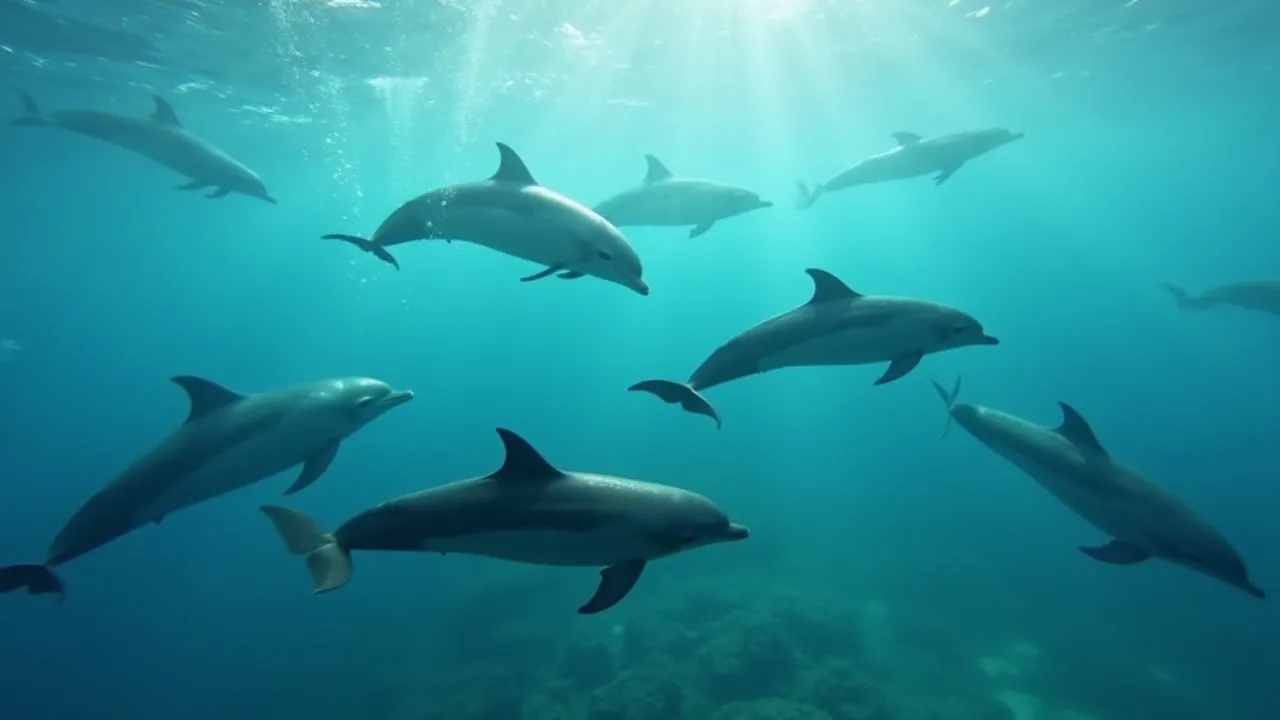
Observed annually on April 14th, National Dolphin Day celebrates the intelligence, playfulness, and ecological importance of dolphins. It also serves as a crucial platform to raise awareness about conservation threats and promote responsible marine stewardship.
The Historical Origins & Evolutionary Journey
National Dolphin Day, observed annually on April 14th, was established to honor one of the ocean's most intelligent and charismatic species. The day traces its roots to the grassroots efforts of marine conservationists and animal welfare organizations, particularly the Dolphin Project, which formally inaugurated the observance in 2010. However, the cultural reverence for dolphins dates back millennia, from ancient Greek myths of dolphins rescuing sailors to the indigenous traditions of the Amazon.
The Foundational Catalyst
The modern push for a dedicated dolphin day gained momentum in the early 2000s, following high-profile exposés on dolphin captivity and the brutality of dolphin hunting (e.g., the Taiji dolphin drive hunts in Japan). Activists recognized the need for a unified global event to educate the public about dolphins' complex social structures, communication skills, and the threats they face from bycatch, pollution, and climate change.
The Legislative & Official Adoption
While National Dolphin Day is not a federally recognized holiday in the United States, it has been embraced by numerous wildlife organizations, aquariums, and marine parks. The Dolphin Project petitioned the United Nations to consider an International Dolphin Day, but to date, April 14th remains the primary date for national (US) and many international celebrations. Several countries, including Australia and the United Kingdom, have adopted similar observances on different dates.
Modern Global Legacy
Today, National Dolphin Day serves as a catalyst for conservation funding, educational programs, and anti-captivity campaigns. It is also a day of celebration—dolphin watching tours, beach cleanups, and social media campaigns all mark the occasion. The day has evolved from a single-issue awareness campaign into a holistic celebration of marine biodiversity, emphasizing the interconnected health of our oceans.
How to Celebrate National Dolphin Day
National Dolphin Day offers myriad opportunities for individuals, families, schools, and organizations to participate in meaningful ways. The key is to combine enjoyment with education and active conservation. Below are actionable strategies categorized by audience.
For Individuals & Families
- Watch from a Distance: Go on a responsible dolphin watching tour. Choose operators that follow wildlife-viewing guidelines (maintain distance, limit time, no feeding).
- Educate Yourself: Read books or watch documentaries about dolphin intelligence and captivity issues. Highly recommended: The Cove and Blackfish (though the latter focuses on orcas, the lessons apply).
- Adopt a Dolphin: Symbolically adopt a dolphin through reputable organizations like the Dolphin Project or WWF, which fund research and rescue.
- Reduce Plastic Use: Participate in a local beach cleanup or commit to reducing single-use plastics that often entangle dolphins.
For Schools & Educational Groups
- Classroom Activities: Host a dolphin-themed science day with lessons on echolocation, pod behavior, and marine food webs.
- Art Projects: Have students create dolphin masks or paintings to display in community centers.
- Fundraising: Organize a bake sale or charity run to raise funds for dolphin rescue organizations.
For Organizations & Businesses
- Employee Engagement: Offer a paid volunteer day for staff to assist at local marine conservation groups.
- Corporate Sponsorship: Sponsor a dolphin research vessel or a satellite tag for a wild dolphin.
- Social Media Campaign: Launch a campaign with the hashtag #NationalDolphinDay, sharing facts and encouraging followers to share their own dolphin encounters.
Note: Avoid activities that harm dolphins, such as swimming with captive dolphins or purchasing tickets to dolphin shows. Instead, support ethical alternatives like virtual reality experiences or documentaries.
The Biology & Intelligence of Dolphins
Dolphins belong to the family Delphinidae, encompassing around 40 species, including the well-known bottlenose dolphin. Their remarkable intelligence stems from a large, complex brain relative to body size, with a neocortex that rivals that of humans. Key features include:
Echolocation & Communication
Dolphins use biosonar to navigate and hunt, emitting clicks that bounce off objects. They also produce whistles that act as individual signatures—each dolphin has a unique whistle that functions like a name. Studies show they can understand syntax and even learn rudimentary artificial languages.
Social Structures
Dolphins live in pods that can range from a few individuals to hundreds. They exhibit altruistic behavior, such as helping injured pod members or even rescuing humans from sharks. They also engage in play, forming bonds through physical contact and cooperative hunting strategies.
Conservation Status
Many dolphin species are threatened. The International Union for Conservation of Nature (IUCN) lists several species as vulnerable or endangered, including the Irrawaddy dolphin and the Hector's dolphin. Main threats include entanglement in fishing gear, habitat degradation, ship strikes, and pollution.
Threats Facing Dolphins Today
Despite their intelligence and cultural significance, dolphins face numerous anthropogenic threats. National Dolphin Day highlights these challenges to spur action.
- Bycatch: Dolphins often get caught in gillnets and trawls intended for fish. An estimated 300,000 cetaceans die this way annually.
- Captivity & Performance: Thousands of dolphins are kept in marine parks for entertainment, leading to stress, shortened lifespans, and aggression. Campaigns like Empty the Tanks have led to some parks phasing out dolphin shows.
- Pollution: Chemical pollutants like PCBs accumulate in dolphin blubber, causing reproductive issues and immune suppression. Microplastics also pose a growing risk.
- Noise Pollution: Sonar from naval exercises and shipping can cause hearing loss, strandings, and disruption of communication.
- Climate Change: Warming waters shift prey distributions, forcing dolphins to travel farther for food, impacting reproduction.
Addressing these threats requires international cooperation. Treaties like the Convention on International Trade in Endangered Species (CITES) regulate dolphin trade, but enforcement remains weak.
Global & Regional Observances
While April 14th is the primary date for National Dolphin Day in the United States, other regions celebrate dolphins on different days, reflecting local cultural priorities and conservation needs.
United States
Observed on April 14th since 2010, with focus on ending captivity and stopping dolphin hunting. Many aquariums host open houses with educational talks. Social media trends with #NationalDolphinDay.
Australia
Australia celebrates World Dolphin Day on September 12th, coinciding with the end of the whale shark season. Events include dolphin-spotting cruises and beach cleanups along the Great Barrier Reef.
Europe
The European Cetacean Society promotes European Dolphin Day on July 14th, emphasizing protection in the Mediterranean. Some countries have additional local events, like Spain's Día del Delfín in the Canary Islands.
Asia
Japan, despite controversies over dolphin drives, has local awareness days in coastal towns. The Taiji Dolphin Day on September 1st protests the annual hunt. In the Philippines, Dolphin Day is celebrated on June 22nd with conservation boat trips.
These regional variations underscore that while the date may differ, the spirit of celebration and conservation is universal.
The Role of Policy & Advocacy
National Dolphin Day is not only a celebration but a call to action for stronger policies. Over the years, advocacy efforts have led to significant legal victories:
- Marine Mammal Protection Act (1972): This US law prohibits the taking of marine mammals, including dolphins, except under strict permits. It has been instrumental in reducing bycatch.
- Dolphin-Safe Tuna Labeling: After public outcry in the 1990s, tuna companies adopted practices to avoid netting dolphins. The label now requires independent observers on boats.
- International Whaling Commission (IWC): Although primarily for whales, the IWC also oversees dolphin conservation and sets quotas for aboriginal subsistence hunting.
- Recent Bans on Captivity: Several countries (e.g., France, India, Costa Rica) have banned dolphin captivity outright or phased out performances. The US is considering the Dolphin Rights Act to end breeding for captivity.
On National Dolphin Day, activists often rally to pressure governments to strengthen protections and enforce existing laws. Public engagement is crucial—voters and consumers can drive change by supporting eco-friendly brands and voting for conservation-minded leaders.
Historical Timeline
The US Marine Mammal Protection Act is signed into law, providing federal protection for dolphins and other marine mammals from harassment, hunting, capture, or killing.
The 'dolphin-safe' tuna label is introduced in the United States after widespread public concern over dolphin deaths in tuna purse-seine nets. The label requires independent observation to ensure no dolphins were killed or injured.
The documentary 'The Cove' is filmed secretly in Taiji, Japan, exposing the brutal annual dolphin drive hunts. The footage later sparks international outrage and accelerates anti-captivity movements.
The Dolphin Project officially establishes National Dolphin Day on April 14th, aiming to channel public admiration for dolphins into concrete conservation actions.
The film 'Blackfish' premieres, highlighting the suffering of captive orcas. Though focusing on orcas, it spurs widespread calls to end dolphin captivity in marine parks worldwide.
France becomes one of the first countries to ban the use of dolphins in circuses and marine parks, setting a precedent for other European nations to follow.
The US House of Representatives introduces the 'Dolphin Rights Act,' which would end the breeding and import of dolphins for public display, signaling a policy shift toward ethical treatment.
National Dolphin Day sees record participation, with over 500 events globally, including virtual reality dolphin encounters and large-scale beach cleanups in 30 countries.