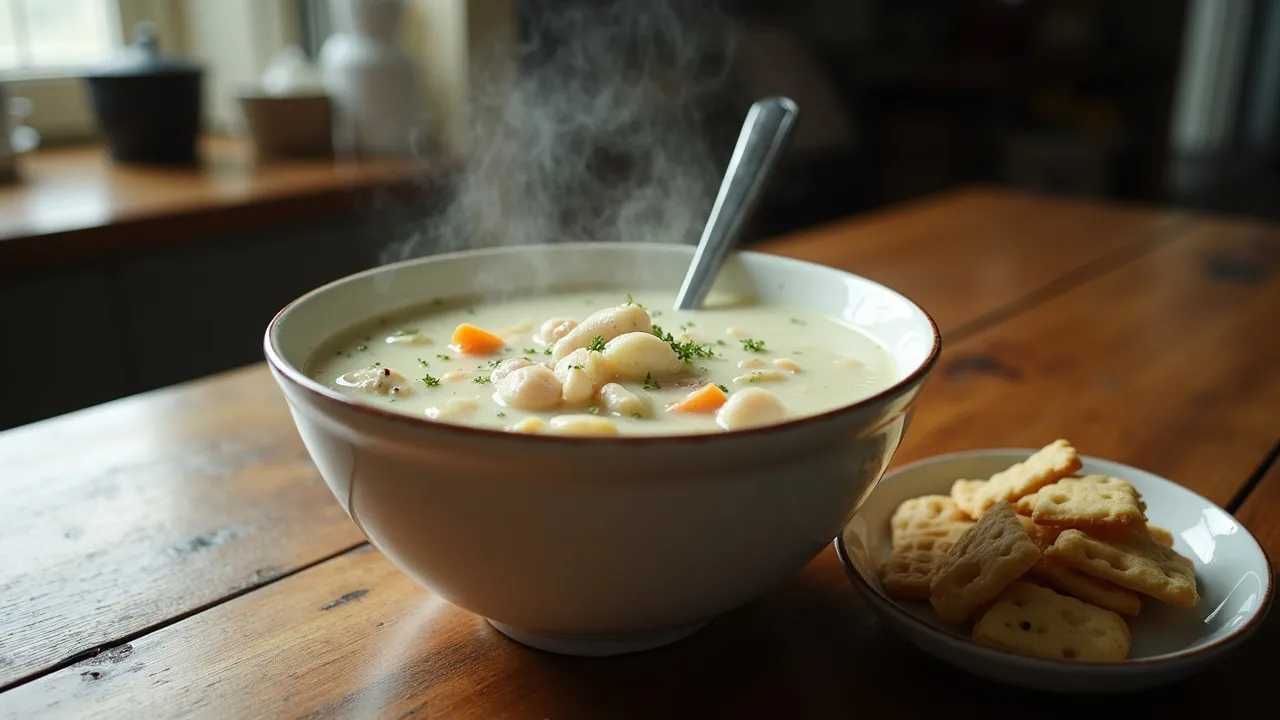
New England Clam Chowder Day on January 21st celebrates the creamy, hearty soup that defines coastal cuisine. Discover its origins, variations, and how to enjoy this comforting classic.
The Historical Origins & Evolutionary Journey
New England Clam Chowder is a beloved dish with roots tracing back to early colonial America. Its evolution from a simple fisherman's stew to a cultural icon is a story of adaptation and pride.
The Foundational Catalyst
The earliest known chowder recipes appeared in the 18th century. The word chowder likely derives from the French chaudière (cauldron). Colonial cooks combined clams, salt pork, onions, and ship's biscuit in a pot. Over time, milk and cream replaced water, creating the signature white broth. By the 19th century, New England style was distinct from Manhattan's tomato-based version.
The Legislative/Official Adoption
While no official proclamation established January 21st as New England Clam Chowder Day, it emerged in the late 1990s or early 2000s through food enthusiasts and regional organizations. The day gained traction via social media and restaurant promotions, particularly in coastal states like Massachusetts, Maine, and Rhode Island.
Modern Global Legacy
Today, New England clam chowder is served worldwide, from casual diners to Michelin-starred restaurants. The day is celebrated with cooking competitions, charitable chowder fests, and countless home cooks perfecting their recipes.
How to Celebrate New England Clam Chowder Day
Celebrating this day is all about enjoying authentic chowder and spreading the love. Whether you're a seasoned chef or a curious beginner, here are actionable ways to join the festivities.
For Individuals
- Cook from scratch: Use fresh clams, quality bacon, and heavy cream. Follow a classic recipe from a trusted source.
- Host a chowder night: Invite friends over for a tasting party. Pair with sourdough bread and local craft beer.
- Visit a local eatery: Support restaurants that serve traditional New England clam chowder.
- Share on social media: Post your chowder creation using hashtags like #ClamChowderDay.
For Schools and Organizations
- Educational sessions: Teach students about the history of chowder and New England's maritime heritage.
- Chowder cook-off: Organize a friendly competition with categories (best classic, most creative).
- Charity event: Sell bowls of chowder to raise funds for local food banks.
Across Different Countries
In the United States, the day is heavily observed in New England states. In Canada, Maritime provinces often join in. In the United Kingdom, some pubs offer their take. In Australia, seafood lovers adapt the recipe with local clams. Global variation includes using coconut milk (Pacific style) or spicy additions (Louisiana influence).
Regional Variations and Culinary Debates
While New England clam chowder is defined by its creamy base, regional interpretations spark passionate discussions.
Thick vs. Thin
Some purists insist on a thick, roux-based chowder, while others prefer a brothier consistency. Maine-style often has more clams and less potato. Rhode Island chowder is clear (no cream) and sometimes uses quahogs.
Manhattan vs. New England
Manhattan clam chowder uses tomatoes, creating a red broth. New England fans often disdain this as a "pasta sauce" misstep. The rivalry dates back to at least the 1930s when a Maine state senator introduced a bill to outlaw Manhattan chowder in the state—which failed.
Worldwide Adaptations
French bisque: Similar but often pureed and richer.
Japanese style: Lighter, using dashi and miso.
Brazilian moqueca: Coconut milk and palm oil for a tropical twist.
Nutritional Profile and Health Benefits
New England clam chowder offers a mix of nutrients, but also key considerations for health-conscious eaters.
Key Ingredients
- Clams: Rich in iron, vitamin B12, and selenium; low in fat.
- Potatoes: Provide vitamin C, potassium, and fiber.
- Bacon or salt pork: Adds flavor but contains saturated fat and sodium.
- Dairy: Cream and butter contribute calcium and vitamin D, but can be high in calories.
Health Tips
To make a healthier version, use turkey bacon, low-fat milk, and extra vegetables like celery or carrots. Gluten-free versions substitute flour with cornstarch. Dairy-free options use almond milk and coconut cream.
The Cultural Impact of New England Clam Chowder
Beyond the bowl, clam chowder has left a mark on American culture and beyond.
In Literature and Film
From Herman Melville's Moby-Dick (where chowder is mentioned) to the 1998 film You've Got Mail (where chowder is a comforting motif), this soup appears as a symbol of New England warmth.
Tourism and Economy
Coastal towns host annual chowder festivals drawing thousands. The Newport Mansions Chowder Day in Rhode Island and the Boston Chowderfest are major events. Restaurants in tourist areas often report that chowder orders spike in winter, especially around January 21st.
Social Media Movement
The hashtag #NationalClamChowderDay generates millions of impressions on Instagram and Twitter annually. Food bloggers release recipe comparisons, and celebrities often share their favorite spots.
Industry Transformations and Trends
The clam chowder industry has evolved with changing tastes and sustainability concerns.
Sustainable Sourcing
Overfishing of clam stocks prompted farms along the Atlantic coast to adopt aquaculture. Sustainable clam harvesting ensures the ingredient remains available for future generations. Look for MSC-certified clams.
Frozen and Canned Innovations
Major brands like Campbell's and Snow's offer canned versions, while gourmet frozen options appear in upscale grocery stores. Vegan versions use jackfruit or hearts of palm for a plant-based alternative.
Restaurant Chains
Clam chowder is a staple at chains like Legal Sea Foods and Union Oyster House in Boston. Beyond New England, chains like P.F. Chang's and Red Lobster offer their interpretations. Recent trend: chowder bread bowls (sourdough bowl) have become a signature presentation.
Historical Timeline
The first published recipe for clam chowder appears in <em>The Frugal Housewife</em> by Lydia Maria Child.
The distinction between New England (creamy) and Manhattan (tomato) chowder becomes popularized in cookbooks.
A Maine state senator proposes a bill to make it illegal to serve Manhattan clam chowder in the state, highlighting regional pride.
Chowder festivals begin in coastal New England towns, such as the annual Boston Chowderfest.
The internet age boosts awareness of food holidays, and January 21st emerges as a date for New England Clam Chowder Day on various food calendars.
A petition to make New England clam chowder the official state soup of Massachusetts gains support but does not pass.
During the COVID-19 pandemic, many restaurants promote chowder takeout and DIY kits for home cooks, increasing the day's visibility.