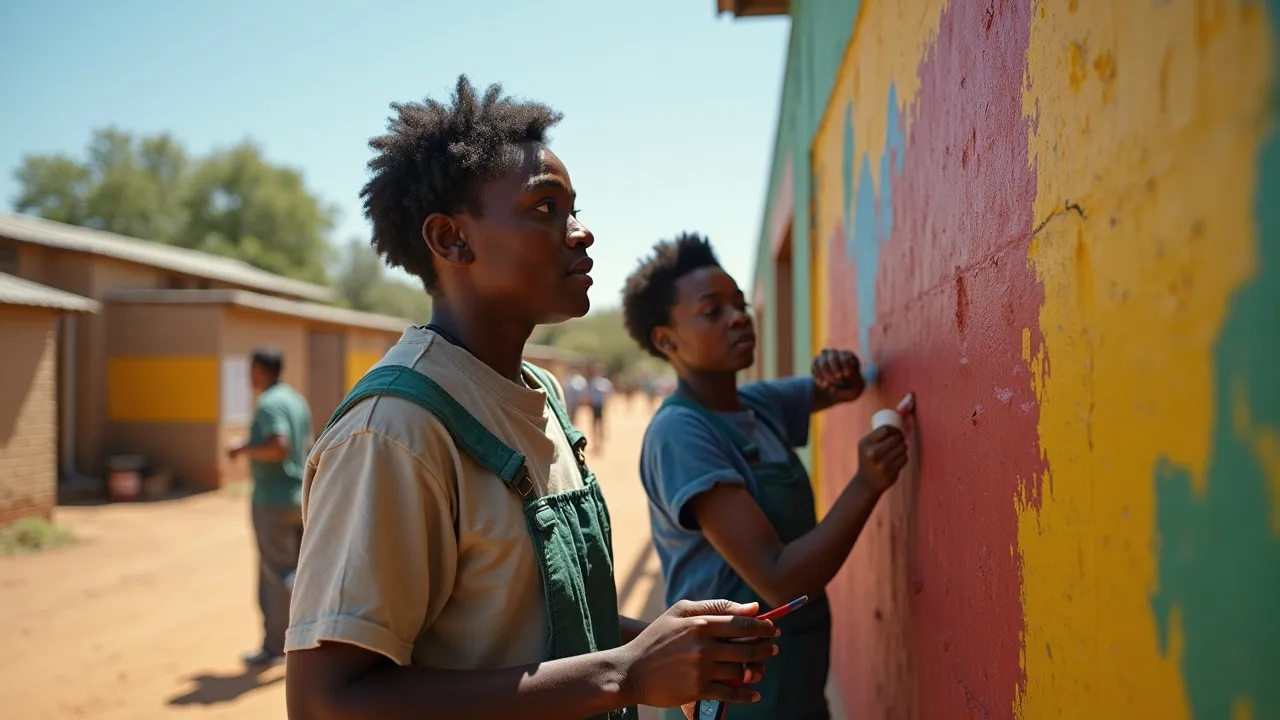
Nelson Mandela International Day, observed on July 18th, honors the legacy of Nelson Mandela through global service and community action. It inspires individuals to dedicate 67 minutes to helping others, reflecting Mandela's 67 years of activism.
The Historical Origins & Evolutionary Journey
Nelson Mandela International Day (also known as Mandela Day) was officially declared by the United Nations General Assembly in November 2009, with the first global observance taking place on July 18, 2010. The date was chosen to coincide with Nelson Mandela's birthday, celebrated worldwide as a day of public service and community engagement. The foundational catalyst for this observance emerged from the global recognition of Mandela's extraordinary contributions to peace, reconciliation, and human rights.
The Foundational Catalyst
The idea of dedicating a day to Mandela's work was initially proposed by the Nelson Mandela Foundation in 2009. The campaign, '46664' (Mandela's prison number), aimed to mobilize people to take action against HIV/AIDS, but it soon expanded to encompass broader social issues. The UN resolution recognized Mandela's values and his dedication to the service of humanity through his work in conflict resolution, race relations, promotion and protection of human rights, reconciliation, gender equality, and the rights of children and other vulnerable groups.
The Legislative/Official Adoption
On November 10, 2009, the UN General Assembly adopted resolution A/RES/64/13, which declared July 18 as 'Nelson Mandela International Day'. The resolution was co-sponsored by over 140 member states, reflecting universal acclaim. It called upon individuals, communities, and organizations to devote 67 minutes of time to public service—one minute for each year of Mandela's public service. The first official celebration in 2010 saw millions participate in volunteer activities, from building homes to teaching children, spanning every continent.
Modern Global Legacy
Since its inception, Mandela Day has evolved into a global movement that transcends political and cultural boundaries. In 2015, the UN expanded the observance to include the Nelson Mandela Rules (the UN Standard Minimum Rules for the Treatment of Prisoners), reinforcing Mandela's lifelong advocacy for prisoner rights. Today, July 18 is not only a day of service but also a moment to reflect on the ongoing struggle against poverty, inequality, and injustice. The day emphasizes that each person has the power to make a difference, echoing Mandela's famous words: 'It is in your hands to create a better world.'
How to Celebrate Nelson Mandela International Day
Celebrating Mandela Day goes beyond mere commemoration; it demands active engagement in service and community upliftment. The core concept is to spend 67 minutes doing good for others—an amount symbolizing the 67 years Mandela devoted to public service. Below are detailed ways individuals, schools, and organizations can participate effectively.
Actionable Celebration Strategies
- Volunteer Locally: Identify a local charity, school, or hospital that needs assistance. Offer to clean, paint, tutor, or cook. Use platforms like MandelaDay.org to find registered projects.
- Organize a Community Drive: Collect food, clothing, books, or school supplies for disadvantaged communities. Partner with local businesses to maximize impact.
- Support Environmental Causes: Plant trees, clean up parks or rivers, or start a community garden. This honors Mandela's belief in sustainable development.
- Promote Education: Volunteer as a reader at a library, mentor a student, or donate to educational programs. Mandela famously said, 'Education is the most powerful weapon.'
- Advocate for Social Justice: Write to your local representatives about issues like prison reform or child welfare. Host a discussion forum on racial equality or economic justice.
Global Celebration Variations
- South Africa: The epicenter of activities, with the Nelson Mandela Foundation leading large-scale service projects. Many citizens wear Mandela's signature Madiba shirts and participate in nationwide clean-ups.
- United States: Schools and non-profits often organize '67-minute events', from building playgrounds to serving meals. The UN headquarters in New York holds a special ceremony.
- United Kingdom: Charities like Mandela Day UK coordinate volunteer opportunities. Some celebrities host fundraising galas.
- India: Recognized with community service drives focusing on education and health, often in partnership with UNICEF.
- Australia: Businesses encourage employees to take paid leave for volunteering, and indigenous reconciliation projects are highlighted.
Regardless of location, the spirit of Mandela Day is about taking action against poverty and promoting peace. Every contribution, no matter how small, perpetuates Mandela's legacy.
The Global Impact of Mandela Day on Volunteerism
Since 2010, Nelson Mandela International Day has catalyzed a significant increase in structured volunteerism worldwide. The 67-minute model lowered the barrier for participation, making service accessible to busy individuals. According to the United Nations, over 100 million people have participated in Mandela Day activities, contributing billions of volunteer hours. This phenomenon has shifted the narrative around annual holidays from passive observance to active contribution.
Institutionalization of Service
Mandela Day inspired other institutions to create similar service days, such as International Youth Day and World Humanitarian Day. Corporations have integrated the day into their CSR (Corporate Social Responsibility) calendars, embedding volunteerism into workplace culture. The #67Minutes campaign on social media became a global trend, with celebrities and politicians sharing their acts of service.
Long-Term Community Benefits
Local communities have seen tangible benefits from sustained Mandela Day projects. For example, in Johannesburg, the Nelson Mandela Bridge area now hosts annual maintenance drives. In rural Kenya, Mandela Day projects have built schools and provided clean water. The day also fosters intergenerational connections, as older volunteers share stories of the anti-apartheid struggle with younger participants.
However, critics note that one day of service cannot replace systemic change. In response, the Nelson Mandela Foundation emphasizes that Mandela Day should be a catalyst for ongoing commitment, not a one-off event. Many organizations now use the day to launch year-long volunteer programs.
Education and Youth Engagement on Mandela Day
Education is a pillar of Mandela Day, as Mandela himself was a lifelong learner and advocate for universal access to schooling. Schools worldwide use July 18 to teach students about his life, the struggle against apartheid, and the importance of active citizenship. The day provides a curriculum-rich opportunity for experiential learning.
School Activities
- Classroom Lessons: Teachers dedicate time to discuss Mandela's biography, the film 'Invictus', or the concept of Ubuntu ('I am because we are').
- Student-led Service Projects: Students organize book drives, write letters to elders, or clean school grounds. Many schools partner with local NGOs.
- Art and Essay Contests: Competitions encourage creative expression of Mandela's values. Winning entries are often displayed at community centers.
Youth Leadership
Mandela Day also empowers young people to take leadership roles. The Nelson Mandela Youth Leadership Academy offers workshops on conflict resolution and public speaking. In 2020, amid the pandemic, youths pivoted to digital volunteerism, raising funds for COVID-19 relief via online campaigns. The day emphasizes that every child can be a 'Mandela' in their own community.
Universities often host panels with activists and former political prisoners. The Mandela Day Marathon in South Africa attracts thousands of young runners, blending sport with social consciousness.
The Symbolism of 67 Minutes and Mandela's Sacrifice
The 67 minutes of service on Mandela Day is not arbitrary. It represents the 67 years Nelson Mandela dedicated to fighting for justice—from his early activism in the African National Congress (ANC) to his presidency and post-retirement humanitarian work. This symbolic time frame turns a birthday into a global act of gratitude and solidarity.
Mandela's Journey in Decades
- 1940s-1950s: Mandela co-founded the ANC Youth League, leading peaceful protests against apartheid.
- 1962-1990: Imprisoned for 27 years, yet he became a symbol of resistance and forgiveness.
- 1994-1999: First democratically elected president of South Africa, championing reconciliation.
- 1999-2013: Continued activism via the Nelson Mandela Foundation, focusing on HIV/AIDS, education, and peace.
Why 67, Not 70?
While Mandela lived to 95, the 67-year mark captures his active years of service from age 22 (1940) until his retirement from public life in 2004. The number also aligns with the 67th anniversary of his joining the ANC in 1944. Thus, each minute is a tribute to a year of struggle and triumph.
As participants engage in volunteer work, they are reminded that Mandela endured immense personal sacrifice—separation from family, physical hardship in prison—to secure freedom for millions. The 67 minutes are a modest but meaningful way to pay forward the debt humanity owes to him.
Mandela Day in a Digital Age: Virtual Volunteering and Social Media
With the rise of digital connectivity, Mandela Day has adapted to include virtual volunteerism, especially post-2020. The 67-minute service can now be performed online, expanding its reach to billions who otherwise might not participate. The Mandela Day Network provides a digital hub for registering activities and sharing resources.
Digital Service Ideas
- Online Tutoring: Use platforms like Zoom to tutor students in under-resourced areas.
- Fundraising Campaigns: Start a GoFundMe or Facebook fundraiser for a cause aligned with Mandela’s values.
- Digital Storytelling: Create videos or blog posts about Mandela's impact, using #MandelaDay.
- Data Entry for Non-profits: Volunteer with organizations like the United Nations to digitize records.
Social Media as a Force for Good
On July 18, Twitter and Instagram are flooded with posts using the hashtag #MandelaDay. Celebrities like Oprah Winfrey and Barack Obama often share messages. In 2022, the Nelson Mandela Foundation launched the 'Do What You Can' campaign, encouraging people to share their 67-minute activity with the world. Social media not only amplifies awareness but also creates a global sense of unity.
Nevertheless, digital participation risks being superficial. The foundation urges genuine commitment rather than just posting a photo. To counter this, many campaigns require proof of service or tie digital actions to real-world donations.
Historical Timeline
Nelson Rolihlahla Mandela is born on July 18 in Mvezo, South Africa.
Mandela joins the African National Congress (ANC) and co-founds the ANC Youth League, beginning his anti-apartheid activism.
Mandela is arrested and later sentenced to life imprisonment for conspiracy to overthrow the state.
After 27 years in prison, Mandela is released on February 11, becoming a global icon for freedom.
Mandela is elected as South Africa's first black president, serving until 1999 and championing reconciliation.
The United Nations General Assembly officially declares July 18 as Nelson Mandela International Day, beginning in 2010.
First global observance of Mandela Day on July 18; millions participate in 67 minutes of service.
Nelson Mandela passes away on December 5, but his legacy continues through Mandela Day.
The UN General Assembly adopts the 'Nelson Mandela Rules' on International Mandela Day, setting standards for prisoner treatment.
Mandela Day marks 13 years; over 100 million people have participated in volunteer activities globally.