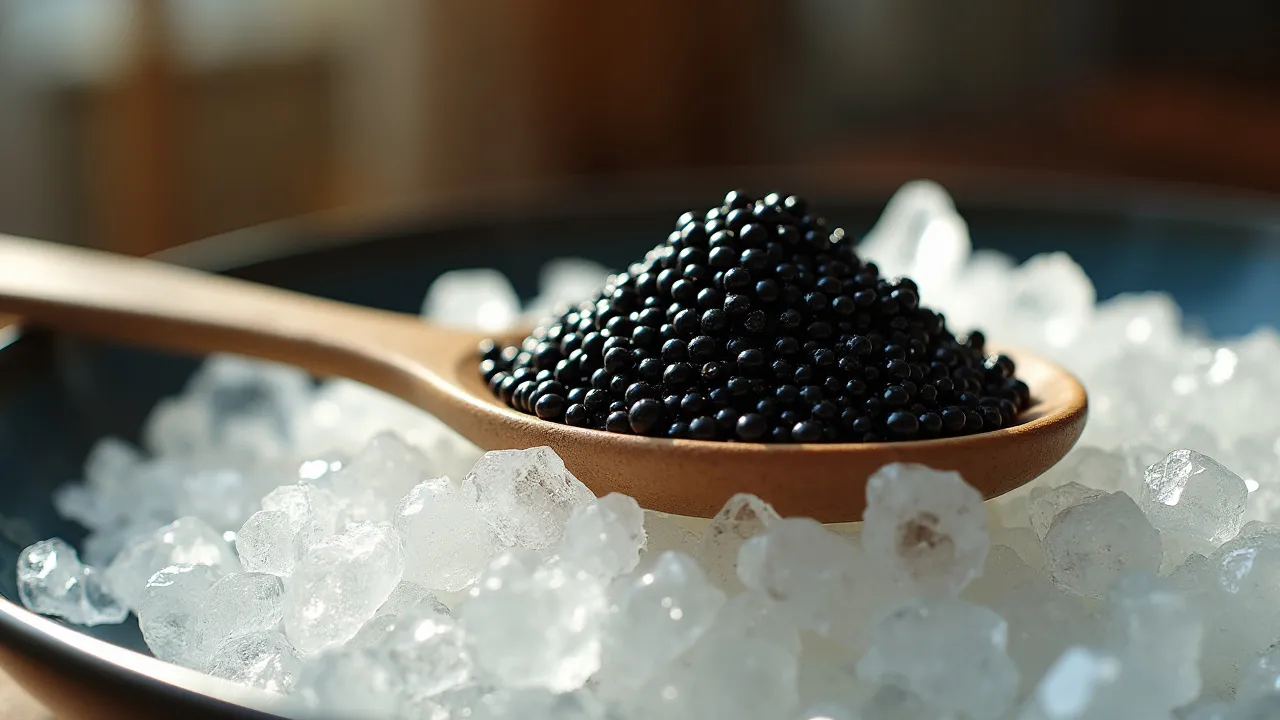
National Caviar Day, observed each July 18th, celebrates the luxurious delicacy of sturgeon roe. From its royal Russian origins to modern sustainable farming, this day honors caviar's rich history and global culinary impact.
The Historical Origins & Evolutionary Journey
The Foundational Catalyst
Caviar—the salt-cured roe of sturgeon—was savored by Persian, Greek, Roman, and Russian elites for millennia. The term itself derives from the Persian khavyar ("egg-bearing"). In tsarist Russia, sturgeon fisheries were imperial monopolies, and caviar was a symbol of power and wealth. The modern version of National Caviar Day emerged in the early 2000s as an unofficial promotional holiday, likely created by American caviar merchants to boost consumption during summer months. It gained traction via online food calendars and enthusiast communities.
The Legislative/Official Adoption
Unlike federally recognized observances, National Caviar Day never received congressional or presidential proclamation. Instead, it was embraced by the seafood industry, gourmet retailers, and food bloggers as a de facto celebration. The date July 18th was chosen to align with peak summer grilling and entertaining periods, making caviar a versatile appetizer for backyard parties. The day remains unofficial but is widely listed on food holidays such as NationalDayCalendar.com and numerous culinary databases.
Modern Global Legacy
Today, National Caviar Day highlights both luxury indulgence and urgent sustainability. Overfishing of wild sturgeon—especially beluga (Huso huso)—decimated populations in the Caspian Sea, leading to CITES Appendix II protections. In response, aquaculture operations in France, Uruguay, China, and the United States now produce over 90% of the world's caviar. The holiday now serves as a platform to educate consumers about ethical sourcing, species identification, and flavor diversity. Restaurants run special tastings, chefs create pairings with vodka or blinis, and social media campaigns use hashtags like #NationalCaviarDay to celebrate this "black gold."
How to Celebrate National Caviar Day
For Individuals
- Purchase sustainably farmed caviar from reputable producers—look for the label of origin (e.g., Acipenser transmontanus from California white sturgeon).
- Host a tasting flight with three varieties: classic osetra, creamy sevruga, and nutty kaluga. Serve chilled on a glass plate over crushed ice.
- Pair caviar traditionally with mother-of-pearl spoons (metal impairs flavor), blini points, crème fraîche, and a glass of iced vodka or Blanc de Blancs Champagne.
For Schools & Educational Groups
- Organize a virtual field trip live-streamed from a sustainable caviar farm in Uruguay or France.
- Host a marine biology workshop discussing sturgeon life cycles, overfishing history, and CITES regulations.
- Conduct a taste test (using jelly beans or vegetarian roe alternative) to simulate caviar's pop texture and explain sensory evaluation.
For Restaurants & Retailers
- Create a special tasting menu featuring caviar across courses (e.g., oyster with caviar mignonette, caviar-topped deviled eggs, dessert with caviar-infused crème brûlée).
- Offer caviar tins at a discount and include educational pamphlets on sustainability.
- Launch a social media contest asking patrons to share their best caviar pairing—awarding a gift basket to the winner.
Regional Variations
In Russia and Iran (Caspian Sea nations), caviar is still consumed as a daily delicacy, often unseasoned on fresh bread with butter. In Japan, caviar appears in sushi rolls topped with gold leaf. In Western Europe, the trend leans toward caviar as a finishing touch on pasta or eggs. For July 18th, the American style dominates: casual luxury.
Global Impact of the Caviar Industry
Economic Significance
The global caviar market was valued at approximately $3.5 billion in 2023 and is projected to grow at a CAGR of 8% through 2030. Key producing nations—China, Italy, France, Uruguay, and Poland—dominate supply. The Caspian region (Russia, Iran, Kazakhstan) now contributes less than 20% of wild-sourced caviar under strict quotas. National Caviar Day boosts seasonal sales by 15–20% among gourmet retailers.
Cultural Reverence
In the Middle East, caviar remains a staple of royal banquets. In Europe, it is synonymous with high society. In America, it has democratized from exclusivity to everyday luxury (e.g., Costco sells farmed caviar). The day also highlights the ethical awakening: consumers increasingly demand traceability and eco-certifications from the Aquaculture Stewardship Council (ASC).
Sustainability & Ethical Sourcing (A Core Theme)
From Wild Overfishing to Farmed Revolution
Before the 1990s, 95% of caviar came from wild sturgeon in the Caspian Sea. Overfishing, poaching, and habitat destruction pushed species like the beluga to near extinction. The 1998 CITES listing forced drastic reductions in wild harvests, creating a market vacuum. Entrepreneurs worldwide invested in recirculating aquaculture systems (RAS) to raise sturgeon in controlled environments. Today, farmed caviar accounts for 85% of global production, and some farms have achieved zero-discharge operations.
How to Identify Sustainable Caviar
- Look for ASC certification on the tin.
- Check the Country of Origin—farms in France (Sturgeon de France), Uruguay (Calvisius Caviar), and the U.S. (Tsar Nicoulai) are praised for best practices.
- Avoid wild caviar unless it bears an official CITES export permit.
Nutritional Profile & Health Implications
Rich in Omega-3s
One ounce (28g) of caviar provides over 1,000mg of EPA and DHA omega-3 fatty acids—beneficial for heart and brain health. It is also a good source of vitamin B12, selenium, and iron. However, it is high in sodium (420mg per ounce) and cholesterol (129mg), so moderation is key.
Debates on Raw Consumption
Health authorities recommend consuming pasteurized caviar for immunocompromised individuals. Most farmed caviar is low in contaminants (mercury, PCBs) compared to wild fish.
Industry Innovations & Future Trends
Alternative Caviar
Beyond sturgeon, makers are producing affordable roe from paddlefish, bowfin, and salmon. Vegan caviar—made from seaweed or algae—is gaining traction. Companies like Caviart and Mylne produce plant-based pearls that mimic the pop and salinity, targeting flexitarians and ethical consumers.
Technological Advances in Farming
Land-based RAS facilities in landlocked countries (e.g., Kazakhstan’s Caspian Caviar) use geothermal water to replicate sturgeon spawning conditions. Genetic improvements shorten maturation from 12 years to 4 years for species like Russian sturgeon. This allows more supply without wild extraction.
Historical Timeline
Greek historians document sturgeon fishing and roe usage among Scythian tribes in the Black Sea region.
Genghis Khan’s grandson Batu Khan establishes a sturgeon fishery on the Volga River, supplying caviar to Mongol and Russian elites.
Tsar Alexander I of Russia claims exclusive rights to Caspian sturgeon fisheries, cementing caviar's status as an imperial luxury.
The first commercial caviar export from Russia to the United States occurs, introducing beluga and osetra to American palates.
Iran and the Soviet Union establish a joint commission to regulate Caspian sturgeon catches, but quotas are rarely enforced.
CITES (Convention on International Trade in Endangered Species) places beluga sturgeon on Appendix II, drastically limiting wild caviar trade.
Italy’s Caviar de France (now Sturgeon de France) pioneers commercial RAS farming of white sturgeon, achieving consistent year-round harvests.
China surpasses Russia as the world’s largest farmed caviar producer, supplying 35% of global volume via operations in Yunnan and Zhejiang.
Aquaculture Stewardship Council (ASC) releases its first sturgeon-specific standard, providing third-party certification for sustainable caviar farms.
California legalizes commercial farming of green sturgeon, a native species, offering a new domestic supply for the U.S. market.