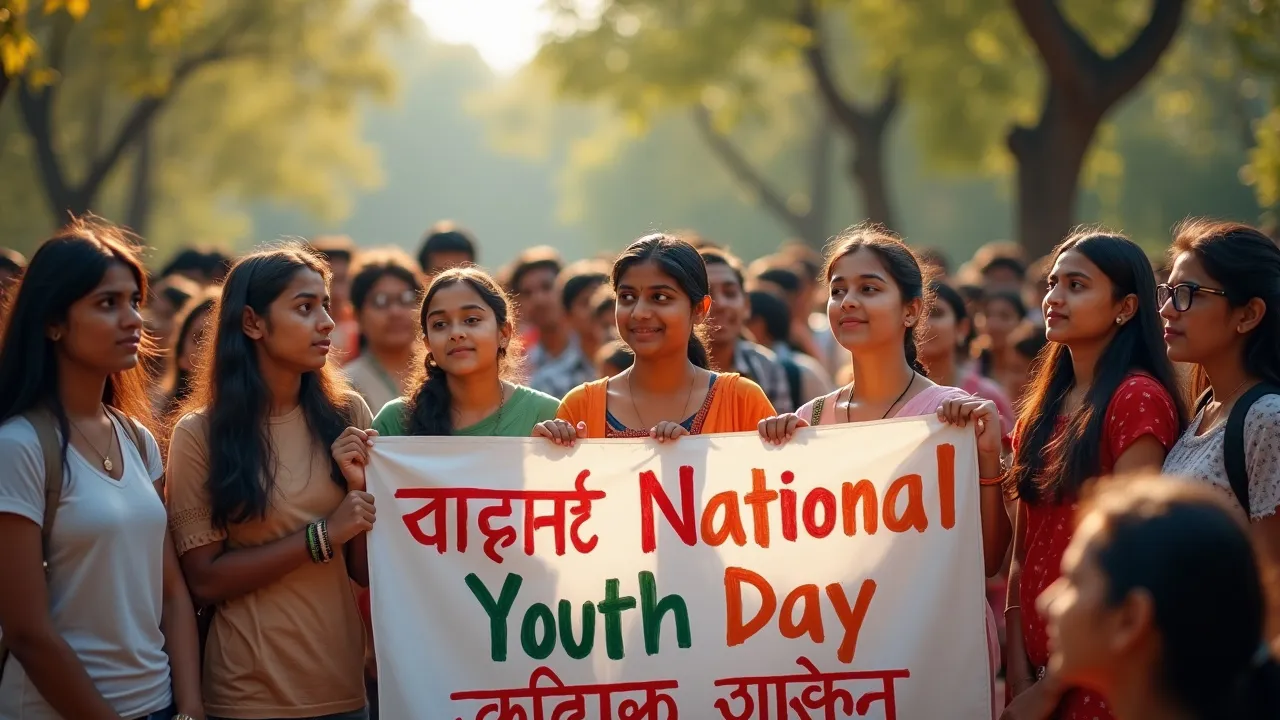
National Youth Day in India is celebrated on January 12th, the birth anniversary of Swami Vivekananda. It aims to inspire the youth with his ideals and philosophy.
The Historical Origins & Evolutionary Journey
The Foundational Catalyst
The genesis of National Youth Day is deeply intertwined with the life and teachings of Swami Vivekananda (born Narendranath Datta on January 12, 1863). A key figure in the introduction of Indian philosophies of Vedanta and Yoga to the Western world, Vivekananda emerged as a powerful spiritual leader and social reformer. His electrifying speech at the World's Parliament of Religions in Chicago in 1893 brought him global recognition, but his core mission remained the upliftment of India's youth. He famously said, "Arise, awake, and stop not till the goal is reached." This call to action resonated deeply with generations, emphasizing self-reliance, courage, and service to humanity.
The Legislative/Official Adoption
In 1984, the Government of India declared January 12 as National Youth Day, effective from 1985. The decision was driven by the understanding that Vivekananda's ideas could guide the nation's young population toward constructive nation-building. The choice of his birth anniversary symbolized a dedication to channeling youthful energy into positive social change. Over the decades, the day has been institutionalized across states, with schools, colleges, and government bodies organizing events aligned with Vivekananda's philosophy of man-making education and character development.
Modern Global Legacy
Today, National Youth Day is not just an Indian observance but a global inspiration. The International Yoga Day, proposed by India and adopted by the UN in 2014, echoes Vivekananda's emphasis on holistic well-being. His teachings have influenced youth movements worldwide, promoting interfaith dialogue, mental strength, and altruism. In contemporary India, the day serves as a platform to address youth issues such as unemployment, mental health, and skill development, aligning with the government's initiatives like Skill India and Digital India.
How to Celebrate National Youth Day (India)
Individual and Community Traditions
- Reading and Reflection: Dedicate time to read Swami Vivekananda's works like "Raja Yoga" or "Karma Yoga". Reflect on his message of selflessness and inner strength.
- Volunteer Service: Engage in community service such as cleaning public spaces, teaching underprivileged children, or donating to charities. This embodies his principle of "Service to man is service to God."
- Yoga and Meditation: Practice yoga and meditation sessions, ideally in groups, to promote mental and physical well-being as advocated by Vivekananda.
School and Institutional Activities
- Essay and Debate Competitions: Organize competitions on topics like "Relevance of Swami Vivekananda in Modern India" to encourage critical thinking.
- Cultural Programs: Host skits, songs, and dances depicting his life and teachings. Include patriotic performances to inspire national pride.
- Workshops on Leadership: Conduct seminars focusing on youth leadership, innovation, and entrepreneurship, linking modern skills with his vision.
Corporate and Organizational Celebrations
Many companies observe the day by arranging guest lectures from motivational speakers, launching youth-centric CSR projects, or holding mindfulness sessions. Non-profits often use the day to launch campaigns on education, health, and skill development. Social media plays a key role, with hashtags like #NationalYouthDay trending, encouraging youth to share their commitments to societal betterment.
Global Adaptations: Outside India, Indian diaspora communities celebrate with cultural events and interfaith dialogues. In countries like the USA and UK, universities with Indian student associations host Vivekananda-themed symposiums. The day is also marked by the Ramakrishna Mission centers worldwide through prayer meetings and philanthropic activities.
Impact on Indian Youth & Society
National Youth Day has catalyzed a national discourse on the role of youth in India's development. It has inspired millions to pursue selfless service, education, and social justice. The day has become a platform to highlight issues like youth unemployment, mental health, and gender equality. Government and non-government organizations launch schemes and campaigns on this day to address these challenges. For instance, the National Youth Corps and Youth Apprenticeship Training Schemes often announce new initiatives around January 12. The day also strengthens the connection between India's ancient wisdom and modern aspirations, encouraging youth to take pride in their cultural heritage while embracing innovation.
Statistical Relevance
With over 65% of India's population under the age of 35, the youth demographic dividend can be harnessed through the ideals promoted on National Youth Day. Studies show that youth engagement in community activities increases by 30% during the month of January, attributed to the awareness generated by the day.
Relevance of Swami Vivekananda's Teachings Today
Swami Vivekananda's teachings offer timeless solutions to modern challenges. His emphasis on fearlessness and self-confidence helps youth combat anxiety and social pressure. His concept of Practical Vedanta encourages integrating spiritual values into daily life. In the digital age, his call for character building over mere academic achievement resonates strongly. The government's National Education Policy 2020 aligns with his vision of holistic education, focusing on critical thinking, ethics, and experiential learning. Vivekananda's message of universal brotherhood is particularly relevant in fostering tolerance and unity in a diverse society. Social media campaigns often retell his stories of resilience and compassion, making him a relatable icon for the younger generation.
Observances Across India
Major Cities and States
- Kolkata: The birthplace of Swami Vivekananda sees grand celebrations at Belur Math, the headquarters of Ramakrishna Math. Events include devotional music, discourses, and cultural performances.
- Chennai and Bengaluru: Universities and colleges host youth festivals with contests, workshops, and exhibitions on Vivekananda's life.
- Delhi: The National Rajya Sainik Boards and youth organizations conduct rallies, seminars, and skill development camps.
Rural and Tribal Areas
In remote areas, the day is celebrated through grassroots programs focusing on education and health. NGOs distribute books, organize health check-ups, and hold motivational talks. The National Service Scheme (NSS) and Nehru Yuva Kendra Sangathan coordinate with local communities to ensure widespread participation.
Digital Celebrations
With the rise of digital platforms, virtual events such as webinars, online quizzes, and social media campaigns have gained popularity. The Ministry of Youth Affairs often launches a National Youth Day portal with resources, pledge forms, and live-streamed events.
Global Perspective and Influence
Though not officially recognized beyond India, National Youth Day has inspired similar initiatives in other countries. The United Nations' International Youth Day (August 12) acknowledges the importance of youth, but India's National Youth Day uniquely roots its philosophy in the teachings of a single spiritual leader. Many countries with significant Indian diaspora, such as Mauritius, Fiji, Trinidad and Tobago, and the UK, hold events on January 12. The Ramakrishna Math and Mission centers around the world organize meditation sessions, charity drives, and interfaith discussions. This day also contributes to global conversations on youth empowerment, mental health, and sustainable development, reflecting Vivekananda's universal vision.
Historical Timeline
Swami Vivekananda is born as Narendranath Datta in Kolkata, India.
Vivekananda delivers his historic speech at the World's Parliament of Religions in Chicago, gaining international fame.
He founds the Ramakrishna Mission, dedicated to social service and spiritual growth.
Swami Vivekananda passes away, leaving a lasting legacy for Indian youth.
The Government of India announces that January 12 will be celebrated as National Youth Day, starting in 1985.
First official observance of National Youth Day across India.
On the 150th birth anniversary of Vivekananda, the Indian government launches special youth programs and scholarships.
The Ministry of Youth Affairs launches the 'Yuva Sankalp' campaign on National Youth Day to encourage youth participation in nation-building.
National Youth Day is celebrated with a focus on 'Azadi Ka Amrit Mahotsav' (75 years of independence), highlighting youth contribution to freedom and development.