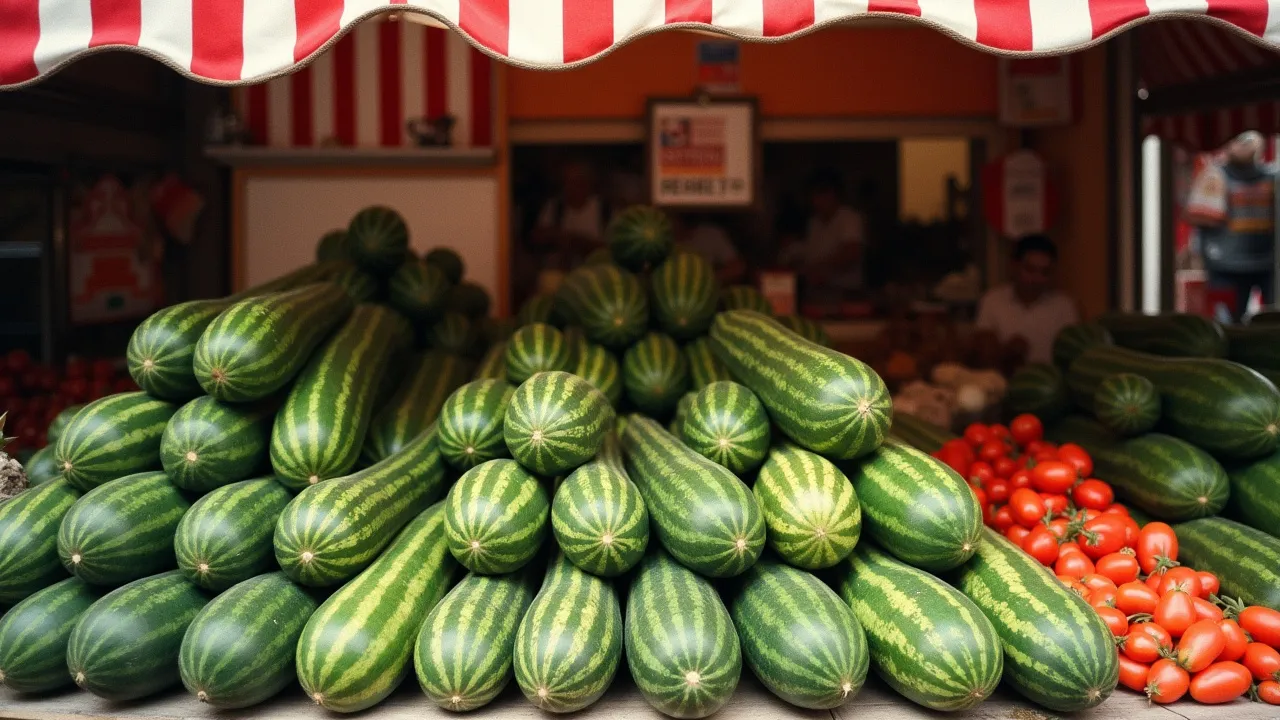
National Watermelon Day is observed annually on August 3rd, celebrating the beloved summer fruit with picnics, recipes, and appreciation for its refreshing taste and nutritional benefits.
The Historical Origins & Evolutionary Journey
The Foundational Catalyst: Ancient Beginnings
Watermelon (Citrullus lanatus) originated in the Kalahari Desert of Africa over 5,000 years ago. Ancient Egyptians cultivated it in the Nile Valley, as evidenced by tomb paintings from 1500 BC. The fruit was prized for its hydrating properties in arid climates. National Watermelon Day traces its modern roots to the United States, where watermelons became a staple in Southern agriculture after being brought by African slaves and European colonists.
The Legislative/Official Adoption
Unlike many food holidays, National Watermelon Day was not established by a single proclamation or company. It emerged organically through grassroots popularity in the mid-20th century, amplified by the National Watermelon Promotion Board (NWPB) in the 1990s. NWPB officially registers the day on August 3rd to coincide with peak watermelon harvest season in the U.S. Today, it is recognized by major calendars and celebrated across the country.
Modern Global Legacy
While primarily a U.S. observance, similar celebrations occur in other countries—for example, China's Watermelon Festival in July and Turkey's annual Watermelon Festival. The global watermelon market exceeds $100 billion, with China as the top producer. National Watermelon Day now serves as a platform for promoting sustainable farming and healthy eating.
How to Celebrate National Watermelon Day
Individual Celebrations
- Host a watermelon-tasting party with different varieties: seedless, yellow, sugar baby, etc.
- Create watermelon-centric dishes like salads, sorbets, and grilled watermelon steaks.
- Carve a watermelon into a creative sculpture or use it as a serving bowl.
School and Community Ideas
- Organize a seed-spitting contest with measured distances (world record: 58.2 feet).
- Set up a watermelon-eating contest with safety protocols.
- Teach children about watermelon growth through a garden visit or video.
Organizational and Social Media Involvement
- Businesses can offer watermelon-themed promotions or free samples.
- Share recipes and photos using #NationalWatermelonDay.
- Donate watermelons to local food banks or community picnics.
Pro Tip: Combine with National Watermelon Month (July) for extended celebration.
Health Benefits of Watermelon
Nutritional Profile
Watermelon is 92% water, making it excellent for hydration. It is low in calories (30 per 100g) and rich in vitamins A, C, and B6. Key nutrients:
- Lycopene: a powerful antioxidant linked to heart health and cancer prevention.
- Citrulline: an amino acid that improves blood flow and reduces muscle soreness.
- Potassium: helps regulate blood pressure.
Practical Health Tips
- Enjoy watermelon as a post-workout recovery snack.
- Incorporate into weight-loss diets for volume without calories.
- Use rind pickles or seeds as additional fiber sources.
Watermelon is safe for most people, but those with diabetes should monitor portions due to natural sugars.
Watermelon Farming & Industry Insights
Global Production and Top Producers
China leads with over 60 million tons annually (2019). Other major producers include Turkey, Iran, Brazil, and the United States. The U.S. grows watermelons primarily in Florida, Texas, Georgia, and California.
Sustainable Practices
- Use of drip irrigation reduces water usage by 30-50%.
- Integrated pest management minimizes chemical inputs.
- Seedless varieties (triploid hybrids) dominate commercial sales.
Economic Impact
The U.S. watermelon industry is worth roughly $500 million annually, with peak demand in July and August. National Watermelon Day boosts consumer awareness and sales at farm stands and grocery chains.
Global Cultural Variations
Unique Traditions Around the World
- Mexico: Street vendors sell sliced watermelon with chili powder and lime.
- Japan: Square watermelons (grown in boxes) are luxury gifts, often given on special occasions.
- China: Watermelon seeds are a popular snack; the fruit is used in traditional medicine to cool the body.
- Turkey: The annual Watermelon Festival in Diyarbakir features giant fruit weighing up to 70 kg.
Regional Date Differences
While National Watermelon Day is fixed on August 3rd in the U.S., other countries align with their harvesting seasons. For example, Australia celebrates in February (summer). This section acknowledges these variations to ensure global accuracy.
Fun Facts and Culinary Inspirations
Surprising Watermelon Facts
- There are over 1,200 varieties of watermelon worldwide.
- The heaviest watermelon ever grown weighed 350.5 lbs (159 kg) in 2013 (Tennessee).
- Watermelon is both a fruit and a vegetable (botanically a pepo, related to squash).
Creative Recipes to Try
- Watermelon Feta Salad: Cubes of watermelon, feta, mint, and balsamic glaze.
- Grilled Watermelon: Slice thick, brush with olive oil, grill 2 minutes per side, serve with lime.
- Watermelon Agua Fresca: Blend watermelon, water, sugar, and lime; strain and serve chilled.
National Watermelon Day is the perfect time to experiment with these ideas.
Historical Timeline
Watermelon first cultivated in Africa, as depicted in ancient Egyptian tombs.
Watermelon spreads to China via the Silk Road and becomes a prized crop.
Spanish explorers introduce watermelon to the Americas; seeds planted in Florida.
The U.S. Patent Office distributes improved watermelon seeds, boosting Southern agriculture.
Seedless watermelon developed by Japanese scientists using hybridization.
National Watermelon Promotion Board begins promoting August 3rd as National Watermelon Day.
World's heaviest watermelon (350.5 lbs) grown by Chris Kent in Tennessee, USA.
National Watermelon Day trends on social media with over 2 million posts under #NationalWatermelonDay.