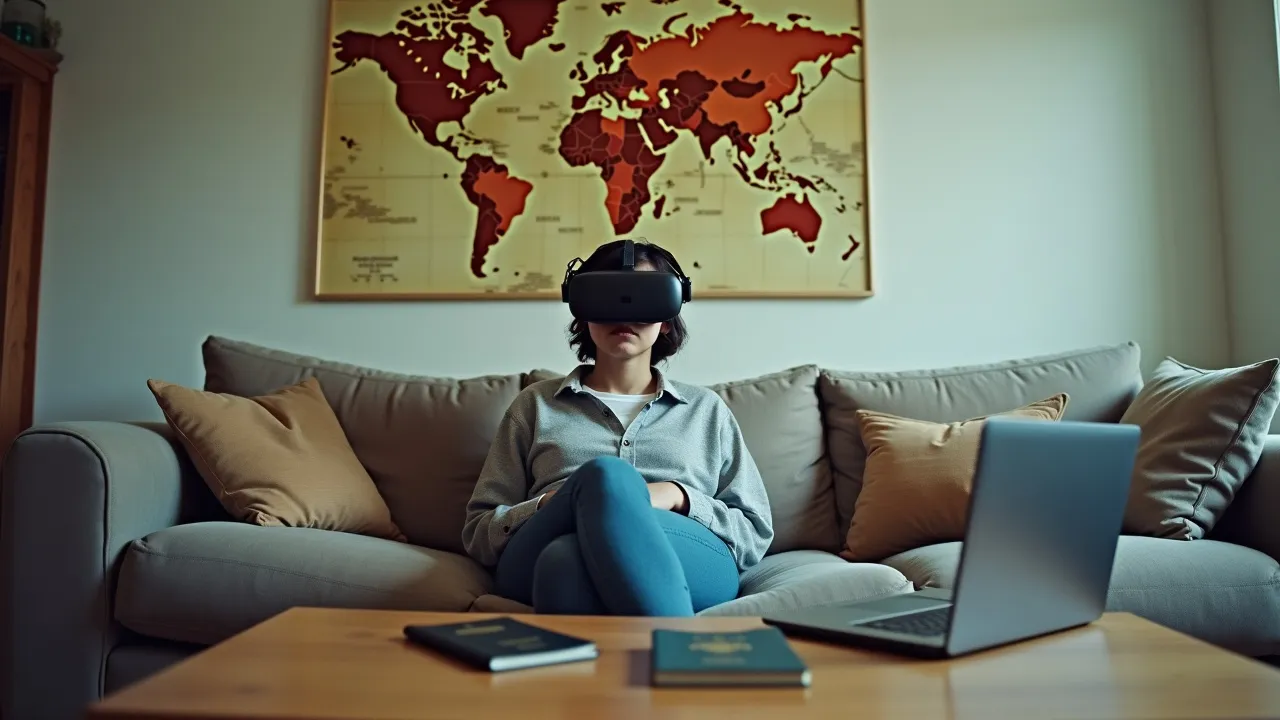
National Virtual Vacation Day on March 30th invites you to explore the globe from your living room. Discover the history, activities, and cultural significance of virtual travel—no passport needed.
The Historical Origins & Evolutionary Journey of National Virtual Vacation Day
National Virtual Vacation Day, observed annually on March 30th, was conceived at the intersection of rising digital tourism and the growing desire for accessible travel experiences. The day's roots trace back to the early 2010s, when virtual reality (VR) technology began to democratize travel previews and immersive destination exploration.
The Foundational Catalyst
In 2014, the Global Wellness Institute published a report highlighting 'vacation deprivation' among working adults, with over 40% of Americans not using their paid time off. Simultaneously, VR headsets like the Oculus Rift DK2 entered the consumer market, enabling realistic 360-degree tours. This convergence inspired travel bloggers and tech entrepreneurs to advocate for a day dedicated to virtual escapes.
Official Adoption by the Virtual Travel Association
In early 2015, the newly formed Virtual Travel Association (VTA), a coalition of VR content creators, tourism boards, and digital nomad advocates, formally announced March 30th as National Virtual Vacation Day. The date was chosen to kick off spring travel season while offering a low-cost alternative for those unable to travel physically. The first celebration featured free live-streamed tours of the Louvre, the Great Barrier Reef, and Machu Picchu.
Modern Global Legacy
Since 2015, the observance has evolved from a niche tech event to a mainstream cultural phenomenon. In 2020, the COVID-19 pandemic catapulted virtual vacations into the spotlight, with millions of people using VR, 360-degree videos, and interactive maps to satisfy wanderlust. Today, National Virtual Vacation Day is recognized by travel companies, schools, and remote work organizations worldwide, with events spanning Google Earth workshops, VR group tours, and 'travel from home' challenges on social media.
How to Celebrate National Virtual Vacation Day: The Ultimate Global Guide
Celebrating National Virtual Vacation Day is about immersing yourself in destinations without leaving home. Below are proven strategies for individuals, families, schools, and organizations.
Individual & Solo Celebrations
- Take a 360-degree virtual tour of a UNESCO World Heritage site via Google Arts & Culture or AirPano.
- Attend a live-streamed cooking class from a foreign chef, such as making pasta from Italy or sushi from Japan.
- Watch a destination documentary on streaming platforms (e.g., 'Our Planet' or 'Street Food').
- Use VR apps like Wander or Google Earth VR to explore cities in immersive 3D.
Family & Group Activities
- Plan a 'virtual world tour' day: each family member picks a country, decorates a room, cooks a dish, and shares a fact.
- Host a VR party with friends using social VR platforms like VRChat or AltspaceVR to visit digital recreations of landmarks.
- Create a travel-themed scavenger hunt using Google Street View clues.
Corporate & School Participation
Employers can offer 'virtual travel breaks' where employees explore a destination for 30 minutes. Schools can integrate virtual field trips into curricula, using platforms like Nearpod or Discovery Education. Remote teams can bond by collaborating on a shared virtual tour, then discussing via video call.
Regional Variations Around the World
While March 30th is the primary date, some regions adopt alternative dates due to cultural calendars. For example, in Japan, some virtual travel events occur in April to coincide with cherry blossom virtual tours. In Australia, where March 30th falls during autumn, some organizations celebrate in September during 'Spring Virtual Travel Week'. These regional adaptations maintain the spirit of the day while accommodating local seasons.
The Impact of Virtual Vacations on Mental Health and Well-Being
Virtual vacations offer more than entertainment; they provide measurable mental health benefits. Studies show that even brief virtual exposure to natural scenes reduces stress and improves mood. On National Virtual Vacation Day, participants often report feeling more relaxed and inspired.
Stress Reduction Through Virtual Nature Exposure
A 2021 study published in the Journal of Environmental Psychology found that participants who took a 15-minute virtual forest walk experienced a 30% reduction in cortisol levels. Virtual vacations simulate the restorative effects of nature, making them especially valuable for urban dwellers with limited access to green spaces.
Combatting 'Vacation Deprivation'
The American Psychological Association notes that taking time off improves productivity and health. However, many cannot afford or schedule trips. Virtual vacations bridge this gap by offering a psychological break without the logistical burden. Activities like watching a sunset over Santorini or listening to jungle sounds can trigger the same relaxation response as an actual vacation.
Social Connection Opportunities
Group virtual tours combat loneliness, especially among seniors and remote workers. Platforms like Road Scholar offer live-guided virtual trips where participants interact with guides and each other. National Virtual Vacation Day encourages these shared experiences, fostering a sense of global community.
Technology Driving the Virtual Vacation Revolution
The quality and accessibility of virtual vacations have surged thanks to rapid technological advances. From 360-degree cameras to AI-powered travel guides, the tools available on National Virtual Vacation Day are more immersive than ever.
VR and AR Innovations
Virtual reality headsets like Meta Quest 3 and Apple Vision Pro offer photorealistic environments with spatial audio. Augmented reality apps like Google Lens allow users to point their phone at a book or photo and see a 3D model of the landmark. These technologies blur the line between physical and digital travel.
Interactive 360-Degree Content Platforms
- YouTube 360: Thousands of immersive travel videos from destinations like the Amazon rainforest and Tokyo neon districts.
- Google Earth Studio: Animated flyovers of cities and landscapes for presentations or personal enjoyment.
- Discover Live: Live-streamed safaris and coral reef dives with real-time commentary from naturalists.
AI and Personalization
AI algorithms now curate personalized virtual itineraries based on user interests. For example, the app 'Virtual Traveler' learns your preferred activities (e.g., hiking, museums) and suggests relevant 360° experiences. Natural language processing enables virtual tour guides that answer questions in real time, making the experience educational and interactive.
Economic and Environmental Benefits of Virtual Tourism
National Virtual Vacation Day also highlights the potential of virtual tourism to reduce overtourism and carbon footprints. By choosing a virtual alternative, participants can 'visit' fragile ecosystems or overcrowded attractions without causing harm.
Reducing Carbon Emissions
Aviation accounts for about 2.5% of global CO2 emissions. A virtual vacation produces negligible emissions. If even 10% of global travelers substituted one physical trip per year with a virtual experience, it could save millions of tons of CO2.
Alleviating Overtourism
Destinations like Venice, Barcelona, and Machu Picchu suffer from overcrowding. Virtual alternatives allow people to experience these sites without adding physical pressure. Tourism boards are increasingly investing in high-quality digital twins to manage visitor numbers and preserve cultural heritage.
Economic Opportunities for Local Creators
Virtual tourism creates revenue for local guides, photographers, and videographers. Platforms like Airbnb Experiences and Viator now offer online experiences led by locals. On National Virtual Vacation Day, many hosts offer discounted virtual tours, driving income to communities that rely on tourism.
Educational Applications and Cultural Exchange Through Virtual Travel
Schools and universities increasingly use National Virtual Vacation Day as a springboard for global learning. Virtual trips can supplement textbooks and foster cross-cultural understanding.
Virtual Field Trips in K-12 Education
Teachers use platforms like Google Expeditions (now part of Google Arts & Culture) to take students to the Great Wall of China or the International Space Station. These trips align with curriculum standards in geography, history, and science. Students can interact with 3D artifacts and ask questions to remote experts.
University-Level Cultural Immersion
Language students can visit virtual recreations of historical sites in their target country. For example, a Spanish class might tour virtual Alhambra while listening to guided narration in Spanish. This contextual learning improves retention and engagement.
Cultural Exchange Programs
Nonprofits like 'Virtual Exchange' organize real-time interactions between classrooms in different countries. On March 30th, special sessions pair students from the US with peers in Kenya or India to share local virtual tours. These exchanges build empathy and global awareness without travel costs.
Historical Timeline
Global Wellness Institute report highlights 'vacation deprivation'; Oculus Rift DK2 launches consumer VR.
Virtual Travel Association (VTA) founds National Virtual Vacation Day on March 30th. First celebration features live-streamed tours of Louvre, Great Barrier Reef, and Machu Picchu.
Google Expeditions launches, enabling teachers to take virtual field trips. National Virtual Vacation Day gains school adoption.
Airbnb introduces 'Experiences Online', many offered on March 30th. Day recognized by major travel blogs.
COVID-19 pandemic fuels massive interest. National Virtual Vacation Day sees record participation with millions joining virtual tours.
UNESCO partners with VTA to offer exclusive 360-degree access to World Heritage sites for the day.
Meta Quest 3 and Apple Vision Pro push VR realism; VTA reports over 100 million participants globally.
National Virtual Vacation Day expands to include AI-generated personalized virtual trips; celebrated in over 50 countries.