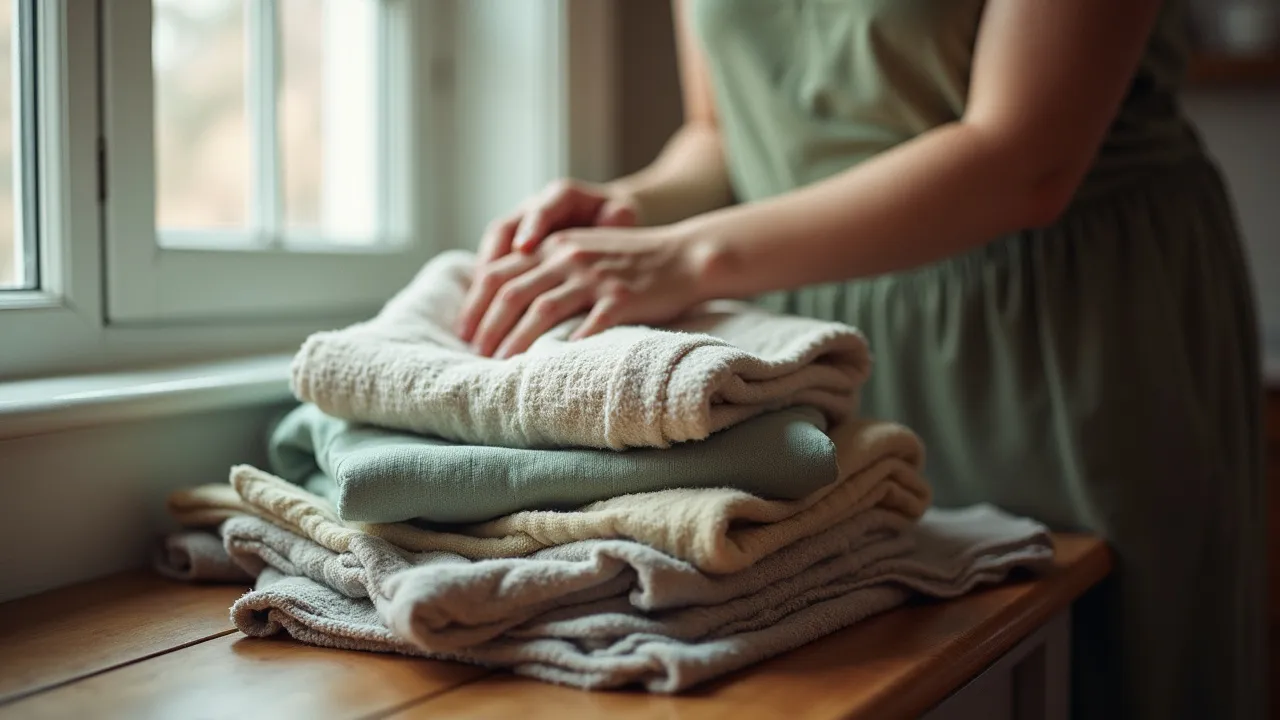
National Folding Laundry Day on March 30th celebrates the simple yet satisfying chore of folding laundry. It's a day to find mindfulness in everyday tasks and appreciate the order they bring to our lives.
The Historical Origins & Evolutionary Journey
The Foundational Catalyst
The origins of National Folding Laundry Day are rooted in the desire to elevate mundane household tasks into mindful rituals. While the exact catalyst is obscure, it likely emerged from early online lifestyle communities in the 1990s and 2000s that promoted domestic mindfulness. Blog posts and forums began referencing a 'National Folding Laundry Day' as a playful way to encourage people to tackle the chore with intention.
The Legislative/Official Adoption
Unlike government-recognized holidays, National Folding Laundry Day was never officially legislated. Instead, it was adopted organically by social media users, cleaning enthusiasts, and mental health advocates who saw the value in turning a routine task into a celebration of order and calm. By 2010, the day gained traction on platforms like Pinterest and Instagram, with hashtags such as #FoldWithPurpose and #LaundryDay.
Modern Global Legacy
Today, March 30th is recognized in many English-speaking countries as a day to practice mindful folding. The observance has expanded beyond mere chore completion; it now includes community events, corporate wellness programs, and even charitable campaigns where folded laundry is donated to shelters. The day symbolizes the intersection of domestic work and self-care, highlighting the psychological benefits of repetitive, orderly tasks.
How to Celebrate National Folding Laundry Day
Celebrating National Folding Laundry Day involves more than just folding clothes—it's about embracing the process. Follow these steps for a fulfilling celebration:
Prepare your space: Clear a large, clean surface like a table or bed. Put on calming music or a podcast.
Sort and prioritize: Group items by type (shirts, towels, socks) to streamline folding.
Master basic folds: Use the KonMari method or military rolls for efficiency. Watch tutorials if needed.
Involve family: Turn it into a game—who can fold the fastest or most neatly? Award small prizes.
Mindfulness practice: Focus on each fold, breathe deeply, and appreciate the fresh scent of clean laundry.
Share on social media: Post a photo of your neatly folded stack using #NationalFoldingLaundryDay.
For Schools and Organizations
Host a 'laundry folding contest' with categories for speed, neatness, and creativity.
Organize a donation drive: collect gently used clothing, wash, fold, and donate to local shelters.
Invite a professional organizer to give a workshop on efficient folding techniques.
The Psychology of Laundry Folding: Mindfulness and Satisfaction
Folding laundry is often described as meditative. Psychologists note that repetitive, low-stakes tasks can induce a flow state, reducing anxiety and increasing feelings of control. The visible progress—from a messy pile to an organized stack—provides immediate gratification and a sense of accomplishment. This is why National Folding Laundry Day has been embraced by mental health advocates who recommend it as a grounding exercise.
The Neuroscience of Neatness
Research indicates that orderly environments lower cortisol levels and improve focus. Folding laundry activates the brain's reward system as we complete each stack, releasing dopamine. The ritualistic nature of folding can also serve as a transition between work and relaxation, making it an ideal wind-down activity.
On this day, participants are encouraged to fold with intention, turning a chore into a self-care practice. Many therapists now recommend laundry folding as a coping tool for stress or overwhelm.
Global Laundry Traditions and Variations
While National Folding Laundry Day is primarily observed in the United States, folding laundry is a universal task with cultural variations. Here are some regional differences:
- Japan: The KonMari method, popularized by Marie Kondo, emphasizes folding clothes into small, upright rectangles to save space and increase visibility.
- India: Laundry is often air-dried on rooftops and folded in large batches. Traditional folding styles vary by region, with some using specific techniques for saris and dhotis.
- Scandinavia: Efficiency is key—many use folding boards to create uniform squares for all items.
- Italy: Ironing and folding are combined; clothes are often folded after being ironed, with a strong emphasis on crisp lines.
On March 30th, people worldwide share their unique methods online, fostering cross-cultural exchange of the simple art of folding.
Innovations in Laundry Folding Technology
Technology has revolutionized laundry folding, though the manual task remains central to the day. Several innovations aim to automate folding:
Folding Robots
Robots like the FoldiMate and Laundroid can fold a basket of laundry in minutes, using AI to identify garment types. However, these are expensive and not yet widespread. On National Folding Laundry Day, tech enthusiasts often demo their gadgets or reflect on how far automation has come.
Folding Boards and Kits
For manual folding, products like the FlipFold help users achieve uniform folds quickly. These tools are popular among those who want to speed up the chore without sacrificing neatness. The day encourages trying out such aids to see if they improve the experience.
Despite technological advances, the day emphasizes the human touch—the satisfaction of a well-folded T-shirt by hand remains unmatched.
Environmental Impact and Sustainable Laundry Practices
National Folding Laundry Day also serves as a reminder of the environmental footprint of laundry. From water usage to microplastics, how we wash and fold matters. Here's how to celebrate sustainably:
- Wash in cold water: Saves energy and prevents fibers from breaking down.
- Air-dry when possible: Skip the dryer to reduce energy consumption and extend garment life.
- Use eco-friendly detergents: Choose biodegradable, plant-based options.
- Fold responsibly: Proper folding reduces wrinkles, minimizing the need for ironing and additional energy.
Many communities organize clothing swaps on this day, where participants bring folded, gently used items to exchange, promoting circular fashion.
Historical Timeline
Online lifestyle forums begin discussing the concept of a 'Laundry Day' as a mindfulness practice.
First known blog post explicitly referencing 'National Folding Laundry Day' appears on a personal blog.
Social media hashtag #NationalFoldingLaundryDay gains traction on Instagram and Pinterest.
Marie Kondo's book 'The Life-Changing Magic of Tidying Up' popularizes the KonMari folding method, boosting interest in the day.
FoldiMate unveils a consumer folding robot, sparking discussions about automation and the future of laundry.
During the COVID-19 pandemic, the day sees a surge in participation as people find comfort in domestic routines.
Several U.S. cities issue proclamations recognizing March 30th as 'National Folding Laundry Day' in their communities.