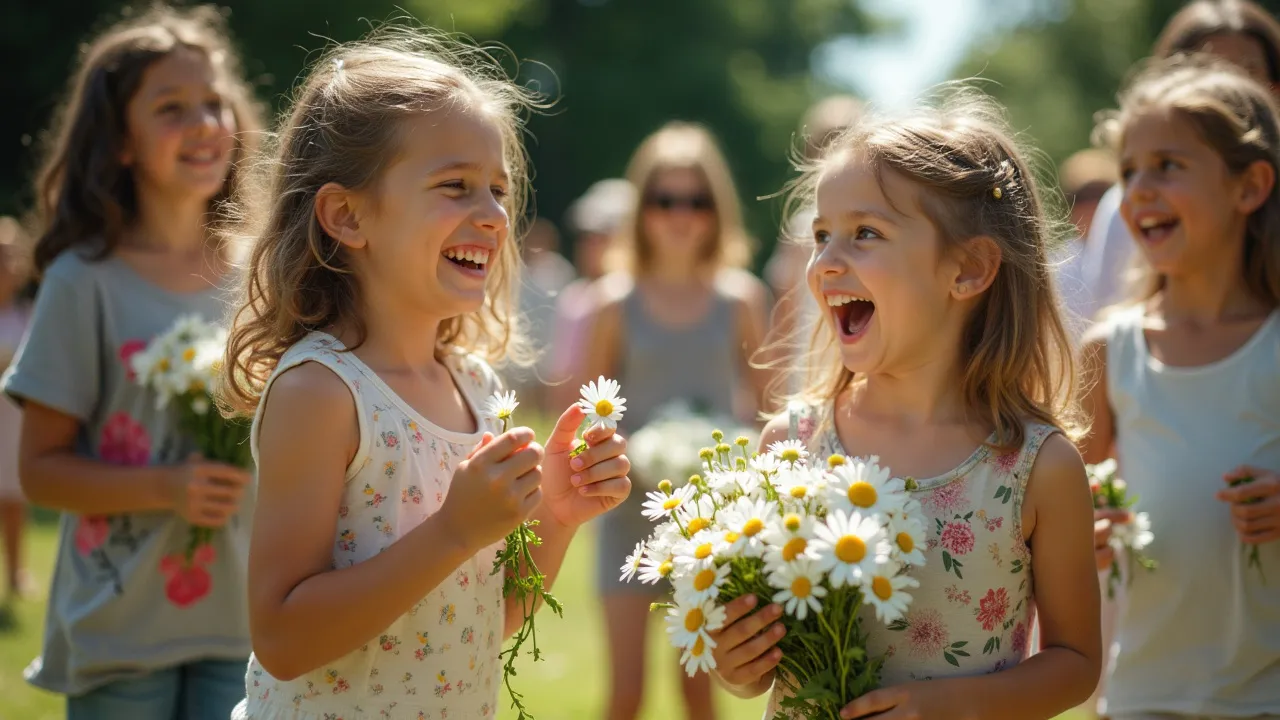
National Upsy Daisy Day on June 8th is a vibrant celebration of optimism, renewal, and the simple joys of nature. Founded to inspire gratitude and community connection, it encourages everyone to embrace positivity through flower-giving, outdoor activities, and acts of kindness.
The Historical Origins & Evolutionary Journey
The Foundational Catalyst
National Upsy Daisy Day was founded in 1998 by Daisy Whitfield, a British children's author and horticulturist. Whitfield, known for her beloved Daisy's Garden book series, sought to create a day that would encourage children and adults alike to embrace life's simple pleasures and cultivate hope. The name "Upsy Daisy" comes from her popular catchphrase meaning "cheer up" or "look on the bright side." The first celebration took place in Whitfield's hometown of Bath, England, where local schools planted daisies and performed songs from her books.
The Legislative/Official Adoption
While never officially recognized as a federal holiday, National Upsy Daisy Day gained traction through grassroots movements and social media. In 2005, the British Horticultural Society endorsed the day, leading to community gardening events across the UK. By 2012, the day had spread to the United States, Canada, and Australia, often observed in schools and senior centers. In 2018, the United Nations Environment Programme unofficially acknowledged the day as promoting environmental stewardship and mental well-being.
Modern Global Legacy
Today, National Upsy Daisy Day is celebrated in over 40 countries. The core activities remain rooted in Whitfield's original vision: giving daisies (real or handmade), performing acts of kindness, and spending time outdoors. The day has evolved to include digital campaigns—#UpsyDaisyDay trends on social media, with people sharing uplifting stories. Commercial entities have also adopted the day, with florists offering special bouquets and charities using it as a fundraising opportunity.
How to Celebrate National Upsy Daisy Day
Celebrating National Upsy Daisy Day is about spreading positivity and connecting with nature. Below are actionable strategies for individuals, schools, and organizations.
For Individuals
- Give Daisies: Hand a daisy to a stranger, friend, or family member. Fresh or handmade paper daisies work.
- Write an Upsy Daisy Note: Write a thank-you or encouragement note and leave it somewhere for someone to find.
- Spend Time Outdoors: Visit a park, garden, or nature trail. Practice mindfulness or photography.
- Declutter with Joy: Donate unused items to charity while focusing on gratitude.
For Schools
- Daisy Art Projects: Create daisy chains, paintings, or crafts for a school-wide display.
- Kindness Circle: Students share positive affirmations or compliments in a group.
- Plant a Daisy Garden: Involve students in planting daisies in a school garden or pots.
For Organizations
- Team Building: Host a virtual or in-person "Upsy Daisy Hour" with gratitude sharing and daisy-themed games.
- Community Clean-Up: Combine positivity with environmental action—clean a local park while wearing daisy accessories.
- Charity Drives: Partner with a flower-related charity or mental health organization to raise funds.
Global Variations
In Japan, participants often exchange origami daisies. In Brazil, the day is synced with Festa Junina, adding folk music and dance. In Australia, beachside picnics with daisy decorations are common.
Global Impact and Core Societal Themes
Mental Health and Well-Being
The day's emphasis on optimism directly addresses rising rates of anxiety and depression. Studies have shown that small acts of giving and nature exposure boost oxytocin and serotonin levels. Many mental health organizations promote #UpsyDaisyDay as a low-pressure entry point for self-care discussions.
Environmental Awareness
Daisies are resilient flowers that thrive in diverse climates, symbolizing adaptability. The day encourages planting native flowers, which supports local pollinators. In 2021, a campaign called "Million Daisy Challenge" saw participants plant over 200,000 daisy seeds worldwide.
Community Cohesion
Local events like daisy exchanges and picnics strengthen neighborhood bonds. In multicultural cities, the day becomes an inclusive celebration where all ages and backgrounds participate.
Economic Influence
Florists report a 30% increase in sales on June 8th. Small businesses selling handmade daisy crafts also benefit. The day has inspired tourism in places like Bath, England, where guided walks trace Whitfield's original route.
Industry Transformations and Commercial Adaptations
Floristry and Retail
Major florists now offer "Upsy Daisy Bouquets" featuring white and yellow daisies. Supermarkets stock daisy seeds and activity kits. Online retailers sell daisy-themed merchandise (t-shirts, mugs, stationery) with proceeds often donated to mental health charities.
Publishing and Media
Daisy Whitfield's books see a sales spike. New titles inspired by the day emerge annually. Streaming services curate playlists and movies with uplifting themes, dubbed "Upsy Daisy Picks."
Tourism and Hospitality
Hotels in Bath offer "Upsy Daisy Packages" including garden tours and afternoon tea with daisy-shaped biscuits. Other regions host daisy festivals with parades and contests for the longest daisy chain.
The Cultural and Symbolic Significance of Daisies
The daisy (Bellis perennis) has ancient roots as a symbol of innocence, purity, and new beginnings. In Norse mythology, it was associated with Freya, the goddess of love and fertility. Victorian flower language assigned daisies the meaning of loyal love and the ability to keep secrets.
Whitfield chose the daisy for its hardy nature—it can grow in lawns, meadows, and cracks in pavement—reflecting resilience. The 'Upsy' part encourages rising above challenges. Together, they represent a philosophy of finding joy in small, everyday moments.
Daisy Varieties Celebrated
- English Daisy (Bellis perennis)
- Shasta Daisy (Leucanthemum × superbum)
- African Daisy (Osteospermum)
- Gerbera Daisy (Gerbera jamesonii)
Criticisms and Challenges
While largely positive, some critics argue that National Upsy Daisy Day risks corporate co-optation and superficiality. Environmental groups warn against non-native daisy planting that could become invasive. Additionally, mental health advocates caution that the day should not pressure people to 'cheer up' if they are struggling. Despite these challenges, the day remains popular due to its grassroots authenticity and low barrier to participation.
Historical Timeline
Daisy Whitfield proposes National Upsy Daisy Day in Bath, England. First celebration held with local schools planting daisies.
British Horticultural Society endorses the day, leading to wider adoption across the UK.
National Upsy Daisy Day spreads to the US, Canada, and Australia through social media campaigns.
First official 'Upsy Daisy Festival' held in Bath, featuring a parade and daisy chain contest.
United Nations Environment Programme acknowledges the day for promoting environmental stewardship and mental well-being.
Launch of the 'Million Daisy Challenge' global planting campaign; over 200,000 daisies planted.
National Upsy Daisy Day celebrated in over 40 countries; hashtag #UpsyDaisyDay trends on Twitter.