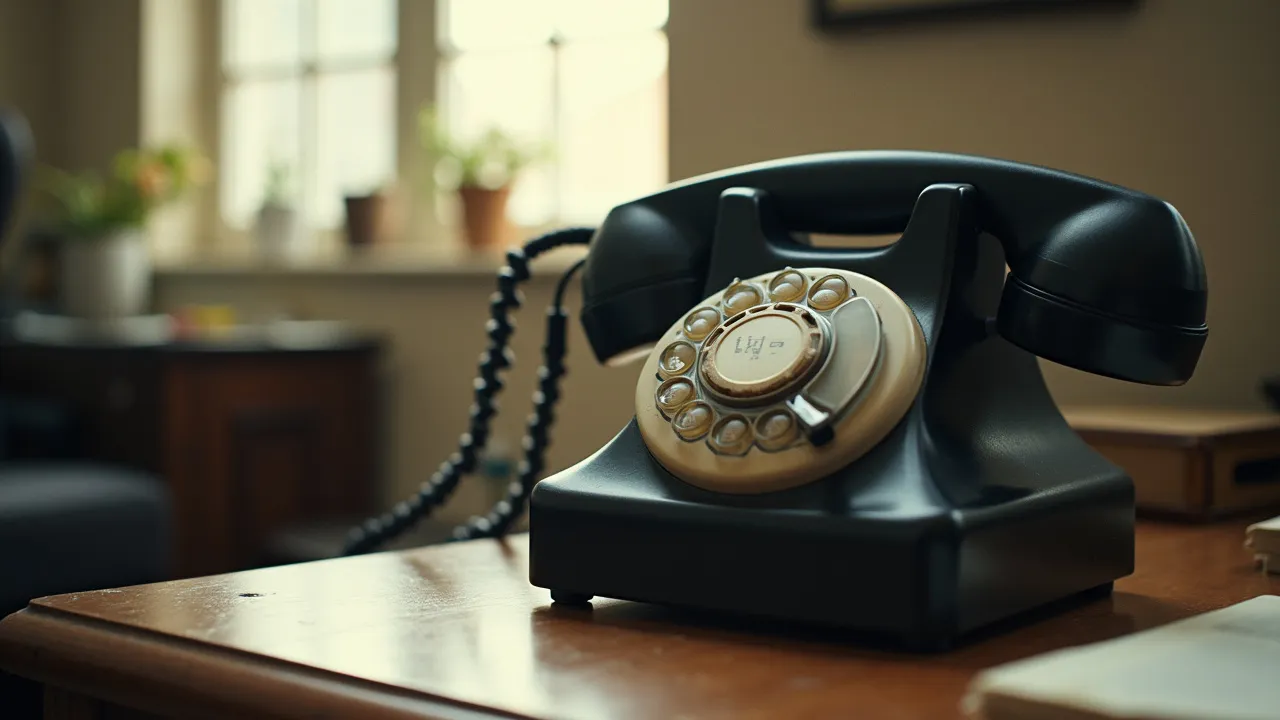
Celebrate National Telephone Day on April 25th by honoring Alexander Graham Bell's invention that revolutionized communication. Learn about the history and how to celebrate this iconic device.
The Historical Origins & Evolutionary Journey
National Telephone Day, observed annually on April 25th, commemorates the invention of the telephone and its profound impact on global communication. The day was established to honor the work of Alexander Graham Bell and subsequent innovators who transformed the way we connect.
The Foundational Catalyst
The telephone was invented by Alexander Graham Bell in 1876, with his famous first words spoken to his assistant, Thomas Watson: 'Mr. Watson, come here; I want to see you.' Bell's patent for the telephone was granted on March 7, 1876, and the first successful demonstration took place on March 10. However, the choice of April 25th as the observance day remains somewhat obscure; it may coincide with the birth of Bell's father or the date of an early public demonstration. In reality, National Telephone Day originated in the early 20th century as a grassroots celebration among telephone operators and enthusiasts, later codified by telecom historians.
The Legislative/Official Adoption
Unlike many federally recognized holidays, National Telephone Day has never been formally legislated. Instead, it gained traction through telecommunications companies, museums, and hobbyist groups. The day is now promoted by organizations like the Telecommunications History Group, which encourages people to explore the history of the phone and to appreciate modern communication conveniences.
Modern Global Legacy
Today, National Telephone Day is celebrated in the United States and informally around the world. It serves as a reminder of how far communication technology has come—from landlines to smartphones—and the enduring role of the telephone in daily life.
How to Celebrate National Telephone Day
There are many meaningful ways to observe National Telephone Day, whether you are an individual, a family, or an organization. Below are actionable ideas structured for maximum engagement.
For Individuals and Families
- Make a Voice Call: Pick up your phone and call a loved one instead of texting. Experience the personal touch of hearing a voice.
- Visit a Museum: Explore telecommunications exhibits at local history museums or the Smithsonian National Museum of American History.
- Reenact Bell's Experiment: Build a simple telephone using two tin cans and a string to teach kids about sound transmission.
- Write a Letter: While not a call, the day also honors the broader theme of communication; a handwritten note can be a nostalgic touch.
For Schools and Educational Groups
- Host a History Lesson: Create an interactive timeline of the telephone's evolution, from Bell's first device to modern smartphones.
- Organize a Speech Contest: Focus on the importance of clear verbal communication, inspired by the telephone's invention.
- Art Project: Have students design their own 'future phone' concept.
For Organizations and Businesses
- Internal Celebration: Encourage employees to connect via phone for a day, perhaps with a company-wide conference call celebrating milestones.
- Social Media Campaign: Share historical facts and use hashtags like #NationalTelephoneDay and #ThankYouBell.
- Customer Appreciation: Offer special discounts or free call minutes to customers.
The Global Impact of the Telephone
The telephone has transformed every aspect of modern society. Economic growth was accelerated by instant business communication, while social connections became possible across vast distances. The telephone also played a critical role in emergencies, enabling rapid coordination. Today, mobile phones have extended this reach to remote areas, bridging the digital divide. National Telephone Day pays tribute to this infrastructure and the countless professionals who maintain it.
Telephone in Culture
From classic films like The Telephone to iconic ringing sounds, the telephone is deeply embedded in popular culture. It symbolizes connectivity, but also intrusion—as seen in prank calls and telemarketing. The day encourages reflection on how we manage these dualities.
Evolution of Telephone Technology
The telephone underwent remarkable changes from Bell's 1876 prototype. Key milestones include:
- 1877: First commercial telephone exchange in New Haven, Connecticut.
- 1915: First transcontinental call between New York and San Francisco.
- 1963: Introduction of touch-tone dialing (DTMF).
- 1973: Motorola's Martin Cooper made the first handheld mobile phone call.
- 2000s: Smartphones integrated telephony with computing. Each leap brought faster and clearer communication, culminating in today's mobile-first world.
Telephone Etiquette: Then and Now
Proper telephone manners have evolved. In the early 20th century, operators were trained to address callers with courtesy, 'Number please?' Today, etiquette focuses on not using phones during meetings, speaking clearly, and respecting voicemail. National Telephone Day is an opportunity to teach good habits, such as:
Answering professionally: Use a greeting and state your name.
Listening actively: Avoid interrupting and speak clearly.
Voicemail etiquette: Keep messages brief and repeat your number.
Future of Telephony and National Telephone Day
As voice calls increasingly shift to VoIP and AI-driven interfaces, the traditional telephone may become obsolete. Yet the core concept—real-time voice communication—remains fundamental. National Telephone Day may evolve to encompass all voice-based communication technologies. The day reminds us to appreciate past innovations while embracing new ones like video calls and voice assistants.
Historical Timeline
Alexander Graham Bell patents the telephone on March 7 and successfully transmits speech on March 10.
First commercial telephone exchange opens in New Haven, Connecticut, with 21 subscribers.
First transcontinental telephone call is made between New York City and San Francisco.
Touch-tone (DTMF) dialing is introduced by Bell Labs.
Martin Cooper of Motorola makes the first handheld mobile phone call on April 3.
First commercial cellular network launched in the United States (Ameritech).
Apple releases the iPhone, revolutionizing smartphones and telephony.