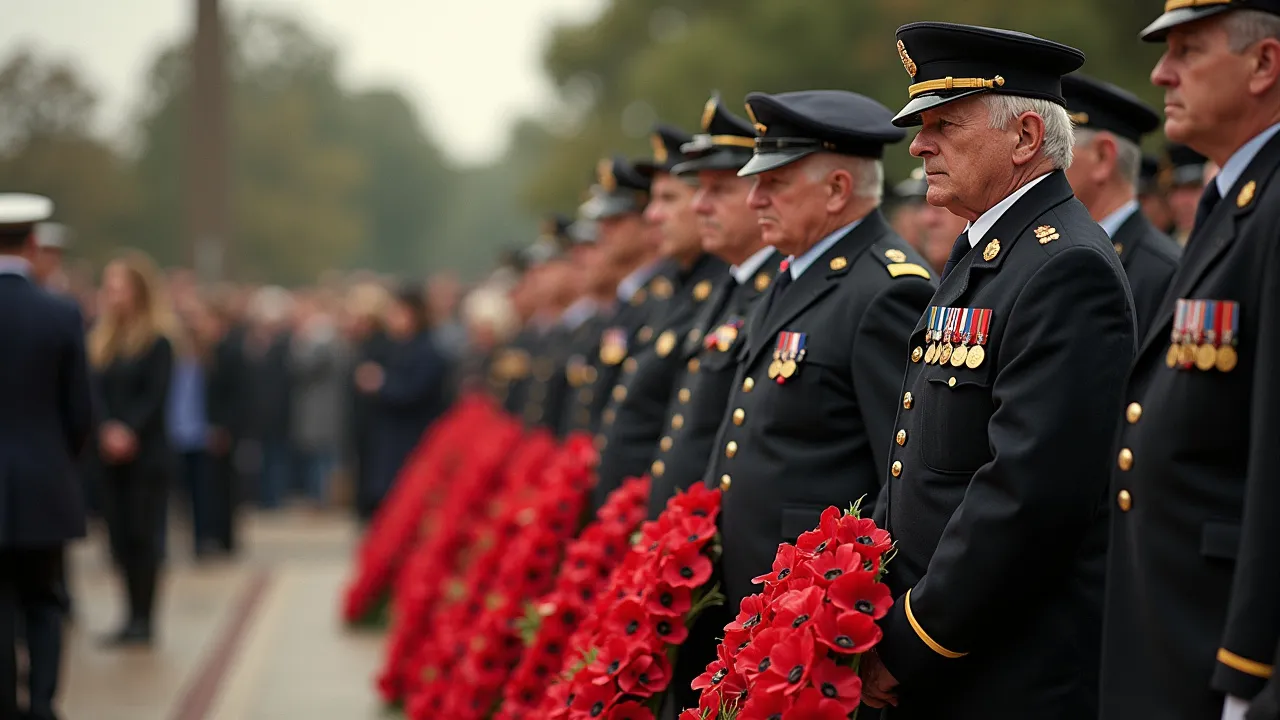
ANZAC Day, observed on April 25th, honors Australian and New Zealand soldiers who served and died in wars, conflicts, and peacekeeping missions. It marks the anniversary of the Gallipoli landing in 1915 and is a day of national remembrance and reflection.
The Historical Origins & Evolutionary Journey
ANZAC Day, observed on April 25th, commemorates the landing of the Australian and New Zealand Army Corps (ANZAC) at Gallipoli, Ottoman Empire (now Turkey), during World War I in 1915. The day has evolved from a solemn remembrance of a military defeat into a sacred national day of reflection, honoring all Australians and New Zealanders who served and died in all military operations.
The Foundational Catalyst
The Gallipoli campaign, launched on April 25, 1915, was intended to knock the Ottoman Empire out of the war and open a sea route to Russia. However, the operation turned into a stalemate lasting eight months, resulting in heavy casualties—over 8,700 Australian and 2,700 New Zealand soldiers died. Despite the military failure, the courage and mateship displayed by the ANZAC troops became a defining moment in the national identities of both countries.
The Legislative/Official Adoption
The first anniversary of the landing was observed in 1916 with services and marches in Australia and New Zealand. In the 1920s, ANZAC Day was declared a national day of commemoration, and by the 1930s, it had become a public holiday. The day is governed by legislation such as the Anzac Day Act 1920 in New Zealand and similar laws in Australian states, which protect the day's solemnity and restrict commercial activities.
Modern Global Legacy
Today, ANZAC Day has transcended its original scope. Since the Vietnam War, the day has been used to honor veterans of all conflicts, including peacekeeping missions. In recent decades, there has been a resurgence of interest among younger generations, with large crowds attending dawn services and marches. The day is also observed in other countries, including Turkey (at Gallipoli), the United Kingdom, and the United States, through ceremonies organized by expatriate communities.
Symbolism and Traditions
ANZAC Day is rich with symbols and traditions that reinforce its solemn and reflective nature. Key elements include:
- The Dawn Service: The most iconic tradition, held at dawn—the time of the original Gallipoli landing. It typically includes a reading of the poem For the Fallen, the Last Post bugle call, a minute of silence, and the laying of wreaths.
- The Red Poppy: Inspired by the poem In Flanders Fields, poppies are worn as a symbol of remembrance and sacrifice.
- ANZAC Biscuits: Originally made by women to send to soldiers, these hard, long-lasting biscuits are now a traditional treat associated with the day.
- Two-Up: A gambling game traditionally played by soldiers, it is legal only on ANZAC Day in some Australian states, as a way to honor the past.
These traditions help maintain a connection to the past while allowing new generations to participate in meaningful remembrance.
How to Celebrate ANZAC Day
ANZAC Day is observed with solemnity and respect. Here is a guide to meaningful participation:
- Attend a Dawn Service: Most towns and cities hold a dawn service at a war memorial. Arrive early, stand quietly, and follow the service order.
- Wear a Red Poppy: Purchase a poppy from a veterans' organization and pin it on your left lapel (over your heart) as a sign of remembrance.
- Participate in the March: Veterans, current service members, and their families often march in parades later in the morning. Support them by lining the streets.
- Host or Attend a Gunfire Breakfast: After the dawn service, many communities gather for a simple breakfast, traditionally coffee and rum or tea, reflecting the soldiers' pre-battle meal.
- Educate Yourself and Others: Read about the history of ANZACs, visit war museums, or watch documentaries to understand the sacrifices made.
- Observe a Minute of Silence: At 11 a.m. (or during the dawn service), pause for one minute of silent reflection to honor the fallen.
For schools and organizations, activities can include essay contests, wreath-laying ceremonies, and inviting veterans to speak.
Global Impact and International Observances
While ANZAC Day is primarily Australian and New Zealand, its significance has spread globally. Key international observances include:
- Turkey: At the Gallipoli Peninsula, a joint dawn service is held annually, with representatives from Australia, New Zealand, Turkey, and other nations, promoting peace and reconciliation.
- United Kingdom: Services are held at the Australian War Memorial in London and at the New Zealand War Memorial, with attendance from royal family members.
- United States: Major cities like Los Angeles and Washington, D.C., host ceremonies at local war memorials, often organized by ANZAC expatriates.
- Other Locations: Services occur at various war cemeteries and memorials worldwide, including France, Belgium, and Thailand, where ANZAC forces fought.
The day has also influenced other countries' remembrance traditions, fostering a global culture of honoring military service.
Controversies and Evolving Perspectives
ANZAC Day has not been without controversy. In the 1960s and 1970s, anti-war movements criticized the day as glorifying militarism. More recently, debates have arisen over the commercialization of the day, the inclusion of peacekeepers, and the recognition of Indigenous service members. Some argue that the day should focus on the horrors of war rather than romanticized heroism. Despite these debates, the core purpose—remembrance and gratitude—remains broadly supported. Efforts to acknowledge the contributions of Aboriginal and Maori soldiers have grown, reflecting a more inclusive historical narrative.
ANZAC Day in Popular Culture and Education
ANZAC Day is deeply embedded in the cultural fabric of Australia and New Zealand. It is taught in schools as a key part of national history, with curriculum units on Gallipoli and the ANZAC spirit. Films, books, and documentaries—such as Gallipoli (1981) and The Water Diviner (2014)—have brought the story to wider audiences. The phrase 'ANZAC spirit' is used to describe qualities of courage, endurance, and mateship, and is often invoked in sports, business, and community contexts. Social media campaigns like #ANZACDay help younger generations engage with the day's meaning.
Historical Timeline
On April 25, Australian and New Zealand troops land at Gallipoli, beginning a campaign that lasts eight months and results in heavy casualties.
The first anniversary of the Gallipoli landing is observed with commemorative services and marches in Australia and New Zealand.
ANZAC Day is declared a national day of commemoration in Australia and New Zealand, with the first official dawn service.
The Australian government passes legislation making ANZAC Day a public holiday in all states and territories.
During World War II, ANZAC Day services continue, taking on added significance as new generations serve overseas.
Anti-war protests question the militaristic aspects of ANZAC Day, leading to a broader discussion about the day's meaning.
The Gallipoli Dawn Service becomes an annual international event, drawing large crowds from Turkey, Australia, and New Zealand.
The focus of ANZAC Day expands to include all conflicts and peacekeeping missions, with special recognition for veterans of Vietnam and Korea.
ANZAC Day sees a resurgence in popularity, with record attendance at dawn services and marches, driven by younger generations.
The centenary of the Gallipoli landing is commemorated with massive services in Turkey, Australia, and New Zealand, including a special service at Gallipoli with world leaders.