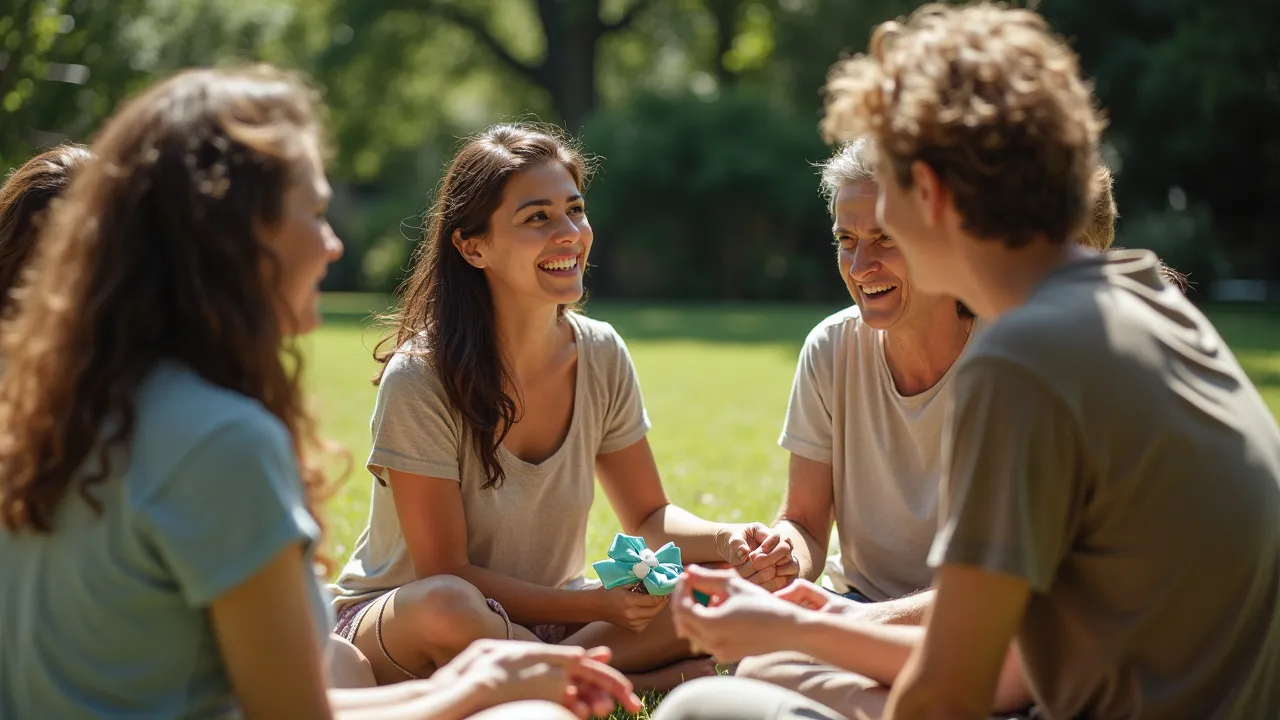
National Teal Talk Day, observed on September 23rd, is a grassroots movement to normalize conversations about mental health, especially anxiety and PTSD. It encourages open dialogue, community support, and teal-themed awareness events worldwide.
The Historical Origins & Evolutionary Journey
National Teal Talk Day began as a small community effort in 2015, born from a growing recognition of the silent epidemic of anxiety disorders and PTSD. The teal color was chosen as a symbol of calm, communication, and healing. The day was first celebrated by a handful of support groups in the United States, who organized public talks and social media campaigns to reduce stigma.
The Foundational Catalyst
The early 2010s saw a surge in mental health advocacy, yet anxiety and trauma-related conditions remained underdiscussed. In 2014, a coalition of therapists, survivors, and community leaders—the Global Teal Initiative—proposed a dedicated day for open conversation. Their goal was to create a safe space for sharing experiences without judgment. The first event on September 23, 2015, drew over 500 participants in five cities.
The Legislative/Official Adoption
While never federally recognized, National Teal Talk Day gained organic traction through grassroots campaigns. By 2018, several state governors issued proclamations supporting the day. In 2020, during the COVID-19 pandemic, the observance saw exponential growth as mental health became a global priority. Schools, workplaces, and online communities adopted teal-themed activities.
Modern Global Legacy
Today, National Teal Talk Day is observed in over 30 countries. It has evolved to include corporate wellness programs, university mental health fairs, and virtual support groups. The day remains decentralized, empowering local organizers to adapt traditions. Key milestones include the creation of the "Teal Pledge" – a commitment to listen without judgment – and partnerships with major mental health organizations.
How to Celebrate National Teal Talk Day
Celebrating National Teal Talk Day involves creating intentional spaces for conversation and support. Below are actionable strategies for individuals, schools, and organizations worldwide.
For Individuals
- Wear Teal: Don teal clothing or accessories to spark conversations about mental health.
- Start a Conversation: Call or text a friend, family member, or colleague to ask how they're really doing. Use open-ended questions.
- Share Your Story: Post on social media using #TealTalkDay. Describe your journey with anxiety or PTSD to inspire others.
- Practice Active Listening: Dedicate time to listen without interrupting or offering unsolicited advice.
For Schools
- Host a Teal Assembly: Organize a school-wide event featuring speakers, skits, or student panels about mental health.
- Create a Teal Wall: Set up a bulletin board where students can post anonymous notes of encouragement.
- Implement Teal Check-Ins: Teachers can start class with a brief mindfulness exercise or a mood check using colors.
For Organizations
- Teal Hour: Encourage employees to take a paid hour to connect with a colleague over coffee or a walk.
- Workshops: Bring in mental health professionals to lead stress management or resilience training.
- Teal Fundraiser: Donate proceeds to mental health charities or launch a matching gift program.
Regional Variations
In the UK, some communities observe it as part of Mental Health Awareness Week. In Japan, teal-themed origami events are popular. Australia emphasizes outdoor group talks. Regardless of location, the core remains #StartTheConversation.
Global Impact & Societal Themes
National Teal Talk Day has played a significant role in shifting public discourse around anxiety and trauma. Its impact extends to policy, education, and media representation.
Reducing Stigma
Since its inception, teal-colored awareness campaigns have appeared on major networks and social media. Studies show that open conversation days like this can improve public attitudes by up to 20%. The phrase "Teal Talk" entered common lexicon, symbolizing safe disclosure.
Corporate & Healthcare Integration
Many companies now integrate Teal Talk Day into their Employee Assistance Programs. Health systems use the day to promote screening tools and telehealth resources. In 2022, the day was endorsed by the World Health Organization as a model for community-based mental health promotion.
Digital Communities
Virtual Teal Talk events have connected people across time zones, creating 24-hour conversation streams. Online resources, from guided meditations to peer support forums, see significant traffic on September 23rd. The hashtag #TealTalkDay trends annually on Twitter.
The Psychology of Teal: Why This Color Matters
Teal, a blue-green hue, was chosen for its calming and balancing properties. Color psychology associates blue with trust and communication, and green with growth and healing. Together, they represent the core of the observance: trustful dialogue leading to personal growth.
Symbolism in Different Cultures
- Western: Teal often symbolizes open communication and emotional balance.
- Eastern: In some traditions, blue-green represents water and tranquility, essential for mental clarity.
- Global: Many cultures use teal in awareness ribbons for PTSD and anxiety disorders.
The deliberate use of teal helps create a visual anchor for the movement, making it instantly recognizable and fostering a sense of belonging among participants.
Key Statistics & Research Supporting the Day
Data underscores the need for dedicated conversation days. According to the World Health Organization, anxiety disorders affect over 300 million people worldwide. PTSD affects about 3.6% of the global population. Yet stigma prevents many from seeking help.
Impact of Open Conversation
- Research shows that talking about mental health reduces isolation and improves coping strategies.
- Workplace programs that encourage dialogue can decrease absenteeism by 25%.
- Social media campaigns increase awareness and willingness to seek help among young adults.
National Teal Talk Day leverages these findings by creating structured opportunities for dialogue, complementing ongoing efforts in mental health advocacy.
Future Directions & Evolving Traditions
The observance continues to evolve. Organizers are exploring partnerships with streaming platforms for live mental health Q&A sessions. There is also a push for school curriculum integration, teaching students how to have supportive conversations.
Sustainability & Inclusivity
Future celebrations aim to include more languages and cultural contexts. The Global Teal Initiative is developing free toolkits for low-resource communities. Virtual reality experiences are being piloted to simulate safe conversation spaces.
As the day grows, maintaining its grassroots authenticity remains a priority. The focus stays on the simple act of talking – because every conversation can be a lifeline.
Historical Timeline
The Global Teal Initiative is formed by mental health advocates, therapists, and survivors to propose a day for open dialogue about anxiety and PTSD.
The first National Teal Talk Day is observed on September 23rd in five U.S. cities, with over 500 participants.
Social media campaign #TealTalkDay trends locally; several state governors issue proclamations recognizing the day.
During the COVID-19 pandemic, observance expands internationally as virtual events connect participants in 15 countries.
The Teal Pledge initiative launches, encouraging individuals and organizations to commit to non-judgmental listening.
World Health Organization endorses National Teal Talk Day as a model for community-based mental health promotion.
Observed in over 30 countries; corporate partnerships with major mental health apps provide free resources on September 23rd.