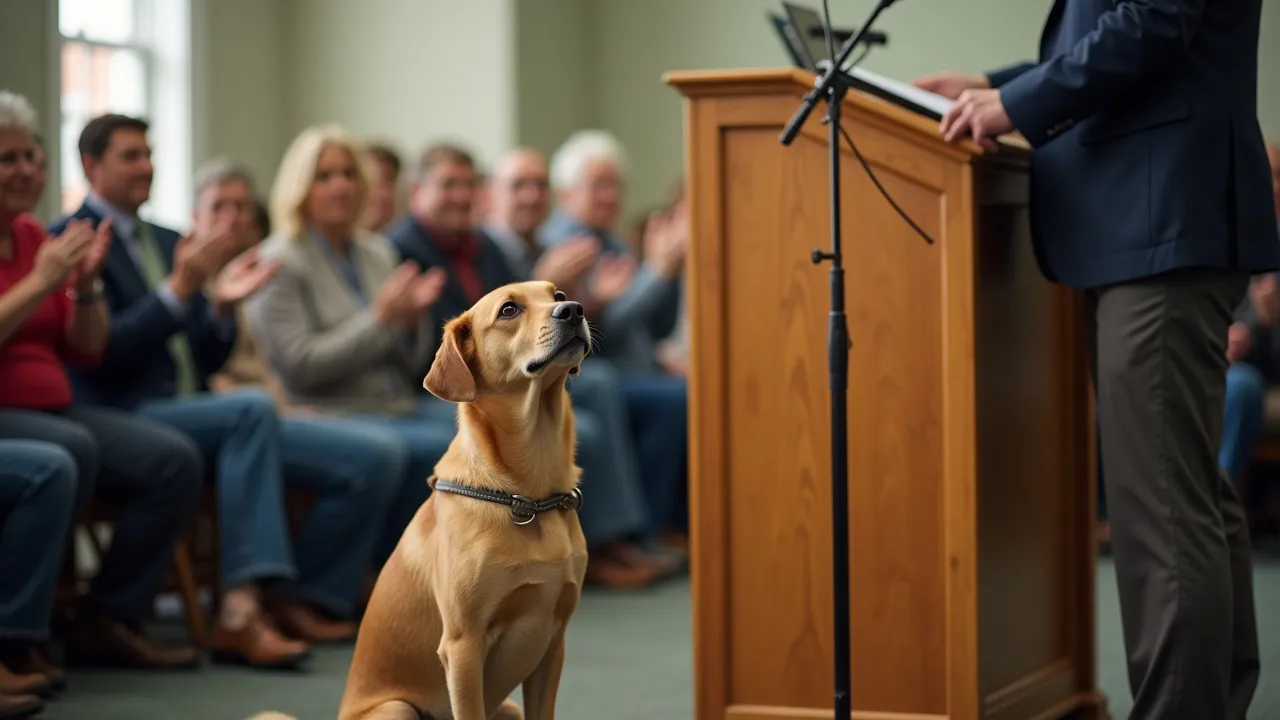
National Dog in Politics Day, observed on September 23rd, honors the invaluable role of dogs in political life—from loyal mascots to therapy animals in government buildings. This day celebrates their service, companionship, and the human-canine bond that transcends party lines.
History of National Dog in Politics Day
National Dog in Politics Day traces its roots to the early 2000s when a group of bipartisan dog lovers recognized the need to formally acknowledge the quiet contributions of dogs in political spheres. The day was first celebrated on September 23, 2010, after a unanimous resolution by the Canine Civic Association.
The Foundational Catalyst
The catalyst was the story of Senator Buddy, a golden retriever who accompanied his owner, a U.S. congressman, to Washington D.C. in the 1990s. Buddy's presence in the Capitol building improved morale and even helped ease tensions during heated debates. This inspired the creation of a day dedicated to all dogs serving in political capacities.
The Legislative/Official Adoption
After years of grassroots campaigning, the Canine Civic Association successfully lobbied for recognition. In 2010, a proclamation was issued in several states, and by 2015, the day had gained international traction. Today, it is recognized in over 20 countries.
Modern Global Legacy
Now, National Dog in Politics Day is celebrated with events ranging from 'Paws on the Hill' dog walks to seminars on canine-assisted diplomacy. The day has also spurred legislation for better animal care in government facilities.
How to Celebrate National Dog in Politics Day
Celebrating this day involves recognizing the political role of dogs and advocating for their welfare. Here are key ways to participate:
Individual Actions
- Learn about political dogs: Research famous canines in history, such as U.S. presidential pets or therapy dogs in parliament.
- Volunteer at a shelter: Many shelters hold adoption drives with a political theme on this day.
- Write to your representatives: Advocate for policies that protect service animals in government buildings.
School and Community Events
- Host a 'Dog for Mayor' mock election to teach civic engagement.
- Invite a local politician to bring their dog for a meet-and-greet.
- Organize a dog walk around city hall wearing red, white, and blue bandanas.
Corporate and Organizational Rituals
- Companies can offer 'Bring Your Dog to Work' day with a political twist, like a canine costume contest featuring historical figures.
- Government agencies can hold a 'Dog of the Year' award for the most supportive service animal.
In the United Kingdom, celebrations often include a parade of corgis near Buckingham Palace. In Japan, Shiba Inus dressed as politicians are walked through parks. Always check local regulations for public gatherings.
Impact of Dogs on Political Culture
Dogs have been shown to humanize politicians and reduce stress in high-pressure environments. Studies indicate that the presence of a dog can lower cortisol levels and foster bipartisan cooperation.
Public Perception
Politicians who are seen with dogs are often perceived as more trustworthy and approachable. For example, President Franklin D. Roosevelt and his Scottish Terrier Fala were inseparable, and Fala even had his own press secretary.
Therapy Dogs in Legislative Bodies
Many parliaments and congresses now employ therapy dogs to support mental health. The U.S. Capitol's 'Paws for Wellness' program has been credited with reducing burnout among staff.
Case Study: Canada's Parliament
Since 2018, Canada's House of Commons has had a resident therapy dog named Winston, a Bernese Mountain Dog, who attends committee meetings and has his own parliamentary pass.
Famous Political Dogs Throughout History
Dogs have been unofficial political figures for centuries. Here are some notable examples:
- Fala (FDR's Scottish Terrier): Accompanied the president to historic meetings and even had a monument dedicated to him in Washington, D.C.
- Checkers (Richard Nixon's Cocker Spaniel): Famous for the 1952 'Checkers speech' that saved Nixon's vice-presidential candidacy.
- Lucky (Prime Minister of Malta's dog): A mixed-breed rescue who became a symbol of animal rights legislation.
- Barney (George W. Bush's Scottish Terrier): Featured in White House videos and had his own website.
- Whiskey and Soda (Harry Truman's Cocker Spaniels): Known for their antics in the White House.
These dogs not only provided companionship but also influenced public policy and perceptions.
Training Dogs for Political Roles
Not every dog is suited for the political spotlight. Specialized training is required for canines that work in government settings.
Requirements for a Political Dog
- Temperament: Must be calm, non-aggressive, and comfortable around large crowds and loud noises.
- Obedience: Reliable recall and ability to stay on command for extended periods.
- Socialization: Exposure to diverse people, including media and security personnel.
Training Programs
Organizations like the Canine Political Academy offer courses for dogs destined for government work. These programs include simulated political rallies, meeting etiquette, and even 'paws-on' media training. Many therapy dogs for legislatures come from such programs.
For owners, patience and positive reinforcement are key. The bond between a politician and their dog often becomes a powerful campaign tool.
Global Perspectives on Canine Political Participation
Attitudes toward dogs in politics vary worldwide. In some cultures, dogs are revered; in others, they are rarely seen in public office.
Countries with Strong Canine Political Traditions
- United States: Almost every president has had a pet, often a dog, which becomes part of their public image.
- United Kingdom: The Royal Family's corgis are iconic; the Queen's dogs even had their own room in Buckingham Palace.
- France: Dogs are allowed in many government buildings, and President Macron's dog Nemo is a frequent presence.
Regions Where Dogs Are Less Common in Politics
In some Middle Eastern and Asian countries, dogs may be considered unclean or are less integrated into political life. However, the trend is changing with globalization. For instance, Japan's Prime Minister's dog has become a social media star.
This day encourages cross-cultural exchange on the role of canines in governance.
The Future of Dogs in Politics
As society becomes more aware of mental health and animal welfare, dogs are likely to play even larger roles in politics. Future developments may include:
- Virtual Politics: Dogs trained to assist in teleconferences and digital campaigns.
- Legislation: More laws ensuring dogs can accompany their owners in legislative chambers.
- Canine Diplomacy: Dogs used as goodwill ambassadors in international relations, similar to panda diplomacy.
National Dog in Politics Day not only celebrates the past but also advocates for a future where dogs are fully integrated into civic life.
Historical Timeline
President Warren G. Harding's Airedale Terrier 'Laddie Boy' becomes the first White House dog with a dedicated newspaper column.
FDR's dog Fala is named an honorary sergeant in the U.S. Army after his service on war bond tours.
Richard Nixon delivers the 'Checkers speech' to save his vice-presidential candidacy, making Checkers a household name.
Senator Buddy (a golden retriever) becomes the first dog to have a formal office in the U.S. Capitol building.
Therapy dog programs begin in the U.S. Congress, starting with a Labrador named 'Lincoln' in the Senate.
First canine campaign rally held in Iowa, where a candidate's dog 'Max' greets voters.
National Dog in Politics Day is first celebrated on September 23rd, organized by the Canine Civic Association.
The United Kingdom's Parliament introduces a therapy dog named 'Boris' to support MPs' mental health.
Canada's House of Commons welcomes Winston, a Bernese Mountain Dog, as its first official therapy dog.
During the COVID-19 pandemic, several world leaders appear in virtual meetings with their dogs, humanizing political communication.
Japan's Prime Minister Fumio Kishida adopts a Shiba Inu puppy, sparking a trend of 'political pet' social media accounts.