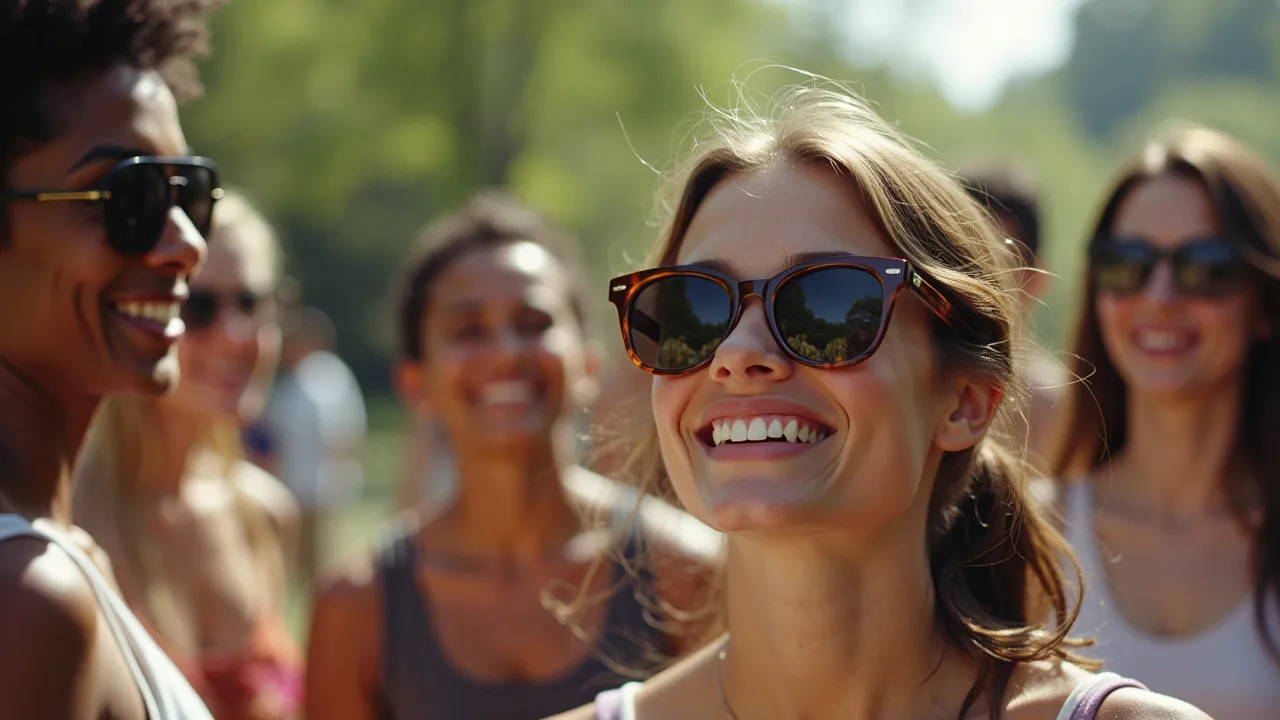
National Sunglasses Day is observed annually on June 27th, promoting the importance of UV eye protection and stylish eyewear. Founded by The Vision Council in 2009, it encourages everyone to wear sunglasses for eye health.
The Historical Origins & Evolutionary Journey
The Foundational Catalyst
The genesis of National Sunglasses Day lies in growing public awareness of ultraviolet (UV) radiation's harmful effects on eyes. By the early 2000s, studies linked prolonged UV exposure to cataracts, macular degeneration, and photokeratitis. The Vision Council, a leading trade association for the optical industry, recognized the need for a dedicated day to educate the public and promote preventive eye care.
The Vision Council's Initiative
In 2009, The Vision Council officially launched National Sunglasses Day on June 27th, strategically placed at the start of summer when UV intensity peaks. The campaign aimed to normalize sunglass wearing as a health habit, not just a fashion accessory. Initial efforts included press releases, social media campaigns, and partnerships with eye care professionals.
The Legislative/Official Adoption
While not a federally recognized holiday, National Sunglasses Day gained widespread adoption through grassroots support and media attention. By 2012, major eyewear brands like Ray-Ban, Oakley, and Maui Jim joined the initiative, offering promotions and educational content. The day became a staple in optometry offices, with many offering free UV protection screenings.
Modern Global Legacy
Today, National Sunglasses Day is celebrated across the United States and internationally through social media hashtags like #NationalSunglassesDay and #SunglassesSelfie. The Vision Council continues to release annual reports on UV exposure risks and sunglass trends. In 2023, the campaign reached over 500 million impressions globally, solidifying its role as a key health observance.
How to Celebrate National Sunglasses Day
For Individuals
- Wear sunglasses every time you go outdoors, even on cloudy days, to block UVA and UVB rays.
- Take a "Sunglasses Selfie" and share on social media with #NationalSunglassesDay to spread awareness.
- Check your sunglasses' UV protection label – ensure they block 99-100% of UV radiation.
- Donate old sunglasses to charities like Lions Club International for distribution in developing countries.
For Schools and Organizations
- Host an eye health workshop with an optometrist to discuss UV risks and proper sunglass selection.
- Organize a sunglass drive to collect funds or new eyewear for underprivileged communities.
- Create educational displays in hallways or lobbies with facts about UV damage and sunglass technology.
Global Traditions
In Australia, where UV levels are extreme, National Sunglasses Day aligns with their summer solstice promotions. In Europe, optical retailers offer discounts on polarized lenses. In Japan, the day is often celebrated with fashion shows featuring high-end designer sunglasses.
The Importance of UV Protection for Eye Health
Ultraviolet (UV) radiation from the sun can cause both short-term and long-term eye damage. Short-term exposure can lead to photokeratitis, a painful sunburn of the cornea. Long-term risks include cataracts, macular degeneration, and pterygium. According to the World Health Organization, up to 20% of cataract cases are attributed to UV exposure.
Types of UV Rays
- UVA rays penetrate deep into the eye and are linked to macular degeneration.
- UVB rays are absorbed by the cornea and lens, causing cataracts and photokeratitis.
- UVC rays are mostly filtered by the ozone layer, but some still reach the surface.
How Sunglasses Protect
Quality sunglasses block 99-100% of UVA and UVB rays. Look for labels that say "UV 400" or "100% UV protection." Polarized lenses reduce glare but do not automatically block more UV; ensure the UV coating is present. Wrap-around styles offer additional coverage from peripheral light.
Sunglasses as Fashion and Function
Sunglasses have evolved from purely functional tools to iconic fashion accessories. The evolution began with early 20th-century movie stars donning shades to hide their eyes from fans. Today, brands like Gucci, Prada, and Warby Parker blend style with advanced lens technology.
Iconic Styles
- Aviators – originally designed for pilots in 1936, now a timeless classic.
- Wayfarers – popularized in the 1950s and 1960s, worn by celebrities from James Dean to Bob Dylan.
- Cat-eye – synonymous with 1950s glamour, still a favorite for women.
- Oversized and shield – trendy in the 1970s and revived by modern influencers.
Technological Advances
Modern sunglass lenses can be photochromic (transition), polarized, mirror-coated, or even equipped with blue light filtering for digital screen use. Prescription sunglasses are also widely available, ensuring those with vision correction can protect their eyes.
Economic Impact of the Sunglass Industry
The global sunglass market was valued at approximately $18 billion in 2023 and is projected to grow at a CAGR of 7.5% through 2030. Key drivers include rising UV awareness, fashion trends, and increasing disposable incomes in emerging economies.
Major Players
- EssilorLuxottica – the world's largest eyewear company, owning brands like Ray-Ban, Oakley, and Sunglass Hut.
- Safilo – Italian manufacturer producing for designers like Dior and Fendi.
- Warby Parker – disruptor with direct-to-consumer model and affordable prescription sunglasses.
Employment and Manufacturing
The industry supports over 150,000 jobs globally, from lens grinding to retail. Italy, China, and Japan are leading manufacturers. National Sunglasses Day boosts sales by an estimated 15-20% in the week surrounding June 27th.
Future of Eyewear Technology
As technology advances, sunglasses are becoming smarter and more functional. Emerging trends include:
- Smart sunglasses with built-in audio, augmented reality (AR) displays, and voice assistants – e.g., Amazon Echo Frames and Bose Frames.
- Blue light filtering lenses that reduce digital eye strain, now common in both sunglasses and indoor glasses.
- Biometric sensors embedded in frames to monitor health data like UV exposure, heart rate, and skin temperature.
- Self-tinting lenses that respond faster to light changes, using new organic photochromic materials.
National Sunglasses Day will likely evolve to highlight these innovations, merging eye health with wearable tech.
Historical Timeline
The Vision Council launches the first National Sunglasses Day on June 27th to promote UV eye protection.
National Sunglasses Day gains social media traction with #NationalSunglassesDay hashtag, reaching over 1 million impressions.
Major eyewear retailers begin offering discounts and free eye exams on June 27th, boosting participation.
The Vision Council releases its first annual survey on public attitudes toward sunglass use and UV awareness.
National Sunglasses Day is recognized by the American Academy of Ophthalmology as a key opportunity for eye health education.
Despite the pandemic, digital campaigns see record engagement, with virtual sunglass try-on apps gaining popularity.
Global impressions exceed 500 million; the day is observed in over 50 countries, including Australia, UK, and Japan.