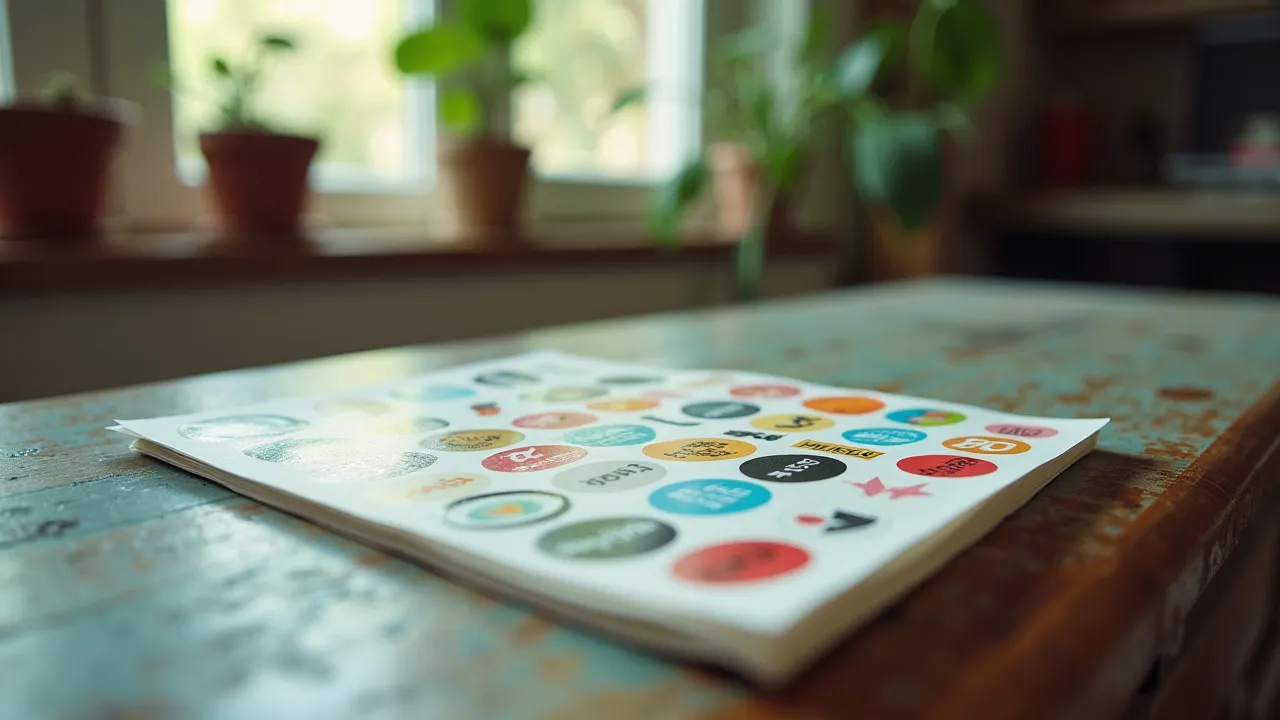
National Sticker Day, observed on January 13th, celebrates the art and utility of stickers. From childhood collections to marketing tools, stickers have a rich history and global appeal.
The Historical Origins & Evolutionary Journey
National Sticker Day, observed on January 13th, honors the humble sticker—a simple adhesive label that has evolved into a cultural icon. The day was established in 2017 by Susan Russ, a passionate sticker collector and founder of National Sticker Day, to celebrate the joy and history of stickers. Russ chose January 13th to coincide with the anniversary of the first commercially successful sticker patent.
The Foundational Catalyst
Stickers trace their roots to ancient times when Egyptians used papyrus labels for goods. However, the modern sticker was born in 1935 when R. Stanton Avery invented the first self-adhesive label. His invention revolutionized packaging and branding. The first peel-off sticker, known as the "Avery Sticker," paved the way for mass adoption.
The Legislative/Official Adoption
National Sticker Day was officially proclaimed by the National Sticker Day Foundation in 2017. Susan Russ rallied collectors, artists, and manufacturers to establish a day of appreciation. The date was chosen to mark the anniversary of the Avery patent (January 13, 1935). Since then, it has been recognized annually.
Modern Global Legacy
Today, stickers are ubiquitous—from bumper stickers to emojis. They serve as art, marketing tools, and personal expression. National Sticker Day has grown into a global celebration with events, sticker swaps, and online campaigns. The day highlights the creativity and community behind stickers.
How to Celebrate National Sticker Day
National Sticker Day offers endless ways to join the fun. Whether you're a collector, artist, or business, here are activities for everyone.
For Individuals
- Start a collection: Hunt for unique stickers from stores, events, or online.
- Decorate your belongings: Personalize laptops, water bottles, or notebooks.
- Create custom stickers: Design your own using printable sheets or online services.
- Share stickers: Exchange with friends or mail them to pen pals.
For Schools and Educators
- Host a sticker design contest.
- Teach the history of adhesive technology.
- Use stickers as rewards for students.
For Organizations and Brands
- Limited-edition releases: Launch special stickers for customers.
- Social media campaigns: Encourage fans to share sticker art with a hashtag.
- Community events: Organize sticker fairs or swaps.
Global Traditions
In the US, sticker collectives host meetups. In Japan, sticker culture is huge with "sticka" art. In Europe, street artists use stickers as graffiti. National Sticker Day unites enthusiasts worldwide.
The Psychology of Stickers: Why We Love Them
Stickers tap into deep psychological needs: self-expression, nostalgia, and belonging. Self-expression: Stickers allow people to display interests without words. Nostalgia: Many associate stickers with childhood rewards and scrapbooks. Belonging: Sticker swapping creates community. Studies show that collecting gives dopamine boosts. Stickers also trigger the "IKEA effect"—we value items we customize. Personalizing a laptop with stickers makes it feel uniquely ours.
Stickers in Marketing and Branding
Stickers are cheap, effective marketing tools. Branding: Companies distribute stickers as mini billboards. Guerrilla marketing: Stickers can appear anywhere, creating buzz. Customer loyalty: Free stickers encourage repeat purchases. For example, Red Bull uses stickers to promote extreme sports. Startups often include stickers in packaging for social media shares. The global sticker market is valued at over $4 billion and growing. National Sticker Day is a prime opportunity for brands to engage audiences.
The Art of Sticker Collecting
Sticker collecting is a hobby with a passionate community. Collectors seek rare, vintage, or artistic stickers. Types: Panini stickers (sports), holographic, die-cut, and lenticular. Rarity: Limited edition stickers from events or brands are prized. Communities: Online forums like Reddit’s r/stickers and Facebook groups facilitate trades. Conventions like StickerCon exist. National Sticker Day encourages collectors to showcase their albums and trade digital stickers too.
Environmental Impact and Sustainable Stickers
Stickers pose environmental challenges: most are non-biodegradable vinyl. Issues: Adhesives and plastics contribute to waste. Solutions: Eco-friendly stickers made from recycled paper or compostable materials are rising. Some brands use removable adhesives that don’t leave residue. National Sticker Day promotes sustainable practices: choose paper stickers, reuse backing sheets, and recycle properly. The future is biodegradable stickers with plant-based inks.
Digital Stickers: Emojis and Beyond
In the digital age, stickers have evolved into emojis, GIFs, and AR filters. Emojis: Originating in Japan, emojis are digital stickers used in messaging. AR stickers: Apps like Snapchat and Instagram use facial recognition to attach stickers to photos. Social media: Platforms have sticker collections for stories. Digital stickers are a billion-dollar industry. National Sticker Day now celebrates both physical and virtual stickers, bridging the analog and digital worlds.
Historical Timeline
R. Stanton Avery invents the first self-adhesive label, the precursor to modern stickers. His company, Avery Dennison, becomes a global leader.
Bumper stickers gain popularity in the United States, used for political campaigns and tourism.
Sticker collecting surges with the rise of Panini football (soccer) sticker albums in Europe.
Smiley face stickers become a global phenomenon, symbolizing the counterculture movement.
Digital stickers emerge with the introduction of emoticons and early online stickers in messaging platforms.
Susan Russ establishes National Sticker Day on January 13th to honor the anniversary of Avery's patent.
Sticker culture thrives with augmented reality stickers and eco-friendly materials gaining traction.