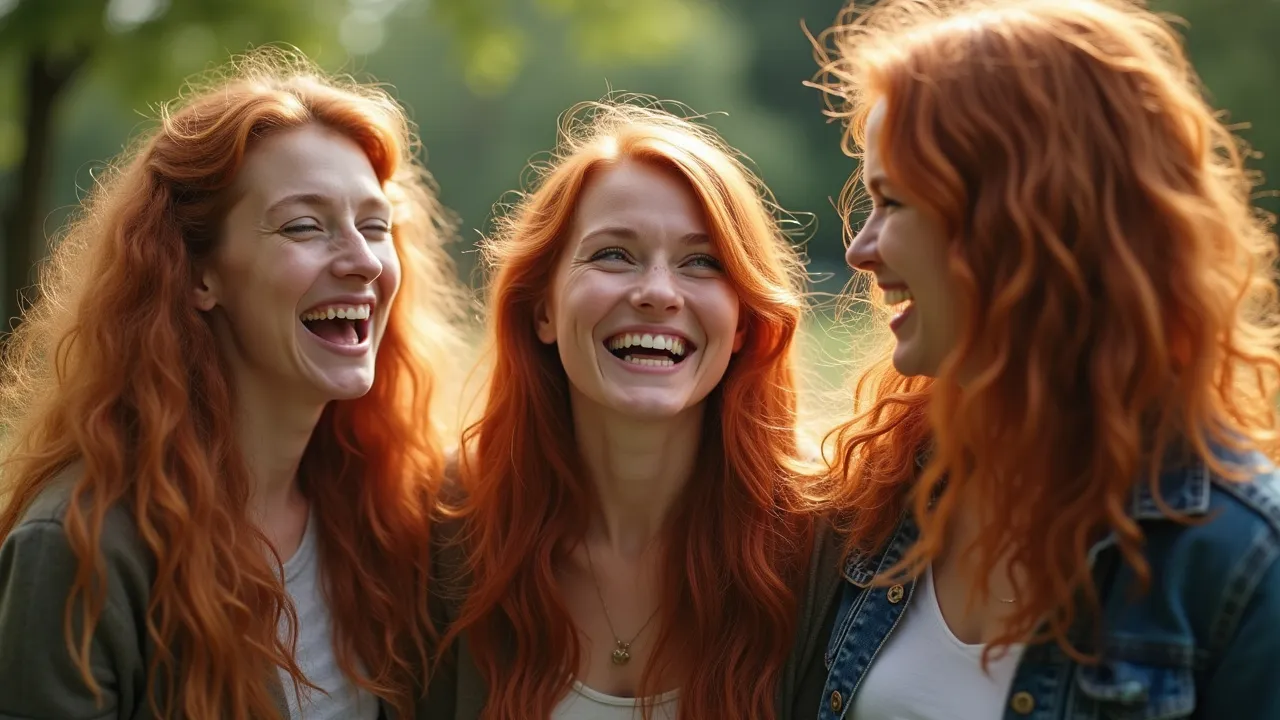
National Redhead Day on November 5th celebrates the unique genetic trait of red hair. Learn about its history, cultural significance, global traditions, and how to honor redheads worldwide.
The Historical Origins & Evolutionary Journey
National Redhead Day, observed annually on November 5th, was founded by Jace Shoemaker-Galloway in 2007 as a day to celebrate and appreciate red-haired individuals. The catalyst was a desire to combat stereotypes and promote pride in a genetic trait that occurs naturally in only about 1–2% of the global population. However, the earliest organized celebration of redheads dates back to 2005 in the Netherlands, where the first Roodharigendag (Redhead Day) was held in the city of Breda. This festival has since grown into a massive annual gathering attracting thousands of redheads from over 80 countries.
The Foundational Catalyst
Red hair, caused by a variant of the MC1R gene, has historically been both revered and stigmatized. In ancient Rome, redheads were prized. In medieval Europe, they were often associated with witchcraft or heresy. The modern movement to celebrate red hair began as a grassroots effort to reclaim identity. Jace Shoemaker-Galloway, a freelance writer and redhead herself, created National Redhead Day in the US to encourage positive awareness. The date November 5th was chosen arbitrarily but has since become fixed in the calendar, often coinciding with other cultural events like Guy Fawkes Night in the UK, adding extra layers of symbolism.
The Legislative / Official Adoption
Unlike many observances, National Redhead Day has not received official federal recognition in the US. However, it has been widely adopted through social media, community groups, and corporate promotions. In the Netherlands, Roodharigendag has official support from the city of Breda and attracts international media coverage. As of 2024, several US states have issued proclamations for Redhead Appreciation Day on November 5th, including Ohio, Michigan, and New York.
Modern Global Legacy
Today, National Redhead Day is celebrated across the globe from the US to Europe, Australia, and beyond. It serves as a platform for genetic research, anti-bullying campaigns, and cultural festivities. The day has spawned related events such as redhead photography projects, DNA testing drives, and charity walks for skin cancer awareness (redheads are more prone to sun damage). The legacy is one of turning a physical difference into a unifying source of pride.
How to Celebrate National Redhead Day
Celebrating National Redhead Day is about embracing and honoring the ginger community. Below are actionable strategies for individuals, schools, workplaces, and organizations worldwide.
Individual Celebrations
- Wear red or orange clothing as a show of solidarity, even if you are not a redhead.
- Share a selfie or photo with the hashtag #NationalRedheadDay on social media to spread awareness.
- Learn about redhead genetics by reading articles or watching documentaries such as The Science of Red Hair.
- Attend a local redhead meetup or organize one in your city using platforms like Meetup.com.
School & Workplace Activities
- Red Hair Day Contest: Encourage students or colleagues to wear red wigs, hair accessories, or temporary dye. Offer prizes for the most creative.
- Educational session: Host a lecture on the biology of red hair, including the MC1R gene and its associated traits (e.g., pain tolerance, vitamin D synthesis).
- Fundraiser for skin cancer research: Since redheads are at higher risk, partner with a dermatology charity to raise funds.
Global Traditions
- Netherlands – Roodharigendag: Thousands gather in Breda for a weekend of parades, photo shoots, and ginger-themed markets. Typically held in early September, but many mark November 5th as a secondary celebration.
- United Kingdom: Organized through Facebook events; pubs sometimes offer discounts for redheads. In 2023, a pub in London hosted a "Ginger Beer" tasting in honor of the day.
- Australia: Beach parties with sunscreen campaigns, highlighting the need for skin protection among fair-skinned individuals.
Corporate & Brand Involvement
Many brands use National Redhead Day for marketing. For example, beauty companies launch red hair dye promotions, and food chains introduce limited-edition "ginger" treats (e.g., gingerbread cookies, carrot cake). Use the day to support local businesses that offer services to redheads, such as freckle-friendly makeup lines.
Global Variations & Regional Dates
While the primary date for National Redhead Day in the United States and many countries is November 5th, important regional variations exist, particularly in Europe.
Netherlands – Roodharigendag
Though Roodharigendag originated in 2005 and is typically held in early September, many Dutch redheads also recognize November 5th as an international day of celebration. The September event is a massive festival with its own traditions, including a collective photo of redheads forming a human flag, freckle competitions, and scientific lectures on red hair genetics.
United Kingdom & Ireland
In the UK and Ireland, November 5th coincides with Guy Fawkes Night (Bonfire Night), a historical commemoration that often involves bonfires and fireworks. Some redheads cheekily adopt the theme of "fire" to merge celebrations, such as hosting "Redhead Bonfire Picnics." There is also a Redhead Day UK event held in London in October, but November 5th remains the unofficial national date.
Other Regions
In Canada, National Redhead Day is widely observed on November 5th, with major events in Toronto and Vancouver. In Australia and New Zealand, where summer begins, outdoor barbecues and beach days are common, emphasizing sun safety. Countries with smaller redhead populations, such as Japan and Brazil, celebrate through online communities and local meetups.
It is important to respect these regional differences and recognize that the day's spirit is inclusive regardless of the exact date.
Health & Genetics: The Science Behind Red Hair
Red hair is caused by a recessive variant of the MC1R gene on chromosome 16. This gene produces a receptor that controls pigment production. In redheads, the receptor is less active, leading to a predominance of pheomelanin (yellow-red) over eumelan (brown-black). This results in pale skin, freckles, and red hair.
Unique Health Considerations
- Sun sensitivity: Redheads have a higher risk of sunburn and skin cancer due to low melanin. Daily sunscreen use is critical.
- Pain tolerance: Studies show redheads may have altered pain perception, requiring more anesthesia during surgery.
- Vitamin D synthesis: Because their skin produces vitamin D more efficiently in low-light conditions, redheads evolved in cloudy climates like Northern Europe.
Genetic Research
Ongoing research explores the link between MC1R and other traits. For instance, redheads are slightly more likely to be left-handed, and some studies suggest a higher risk of Parkinson's disease but a lower risk of prostate cancer. National Redhead Day often partners with research institutions to promote participation in genetic studies.
Cultural Representation & Stereotypes
Redheads have been depicted in art, literature, and media for centuries. From the fiery hair of Queen Elizabeth I to the cartoon character Gingerbread Man, red hair carries powerful symbolism.
Historical Stereotypes
- Fiery temper: Ancient Greeks and Romans associated red hair with a volatile personality, a stereotype that persists today.
- Witchcraft: During the witch hunts, redheads were often targeted as witches or vampires.
- Comic relief: In modern media, red-haired characters are often portrayed as nerdy, awkward, or eccentric (e.g., Ron Weasley, Archie Andrews).
Positive Shifts
National Redhead Day helps counteract negative stereotypes by showcasing redheads as diverse, talented individuals. Social media campaigns like #RedheadPride celebrate red hair as beautiful and unique. In 2023, a viral TikTok campaign highlighted red-haired models and actors, challenging industry biases. The day also encourages discussion about bullying and discrimination faced by redheads, particularly in schools.
Economic & Commercial Impact
National Redhead Day has a measurable economic impact, especially in the beauty and fashion industries.
Product Sales
- Hair dye: Sales of red hair dye (both temporary and permanent) spike by 30% in the week leading up to November 5th.
- Sunscreen: Brands launch special offers on high-SPF products targeting redheads.
- Ginger-themed foods: Limited edition gingerbread, ginger ale, and carrot-based snacks appear in stores.
Tourism
The Roodharigendag festival in Breda generates over €2 million in local tourism revenue each year. Smaller events in the US contribute to local economies through venue hires, catering, and merchandise sales. National Redhead Day has also spurred the creation of niche businesses, such as freckle-enhancing makeup lines and redhead-specific clothing brands.
Charity Partnerships
Many celebrations include fundraisers for skin cancer research or anti-bullying organizations. In 2024, the American Redhead Association aims to raise $1 million for melanoma research in conjunction with National Redhead Day.
Historical Timeline
First Roodharigendag (Redhead Day) held in Breda, Netherlands, with 150 participants.
Roodharigenday expands to 500 participants; media coverage grows globally.
Jace Shoemaker-Galloway creates National Redhead Day in the US, observed on November 5th.
First official National Redhead Day celebration in the US, primarily online via blogs and social networks.
Roodharigenday draws over 5,000 redheads from 60 countries; becomes the world's largest redhead gathering.
National Redhead Day gains traction on Twitter and Facebook; hashtag #NationalRedheadDay trends in the US.
Several US cities issue proclamations recognizing November 5th as Redhead Appreciation Day.
A genetic study on red hair is published in Nature Genetics, partly funded by National Redhead Day donations.
Virtual celebrations due to COVID-19; online redhead meetups attract record participation.
National Redhead Day partnerships with sunscreen brands; over $500,000 raised for skin cancer awareness.