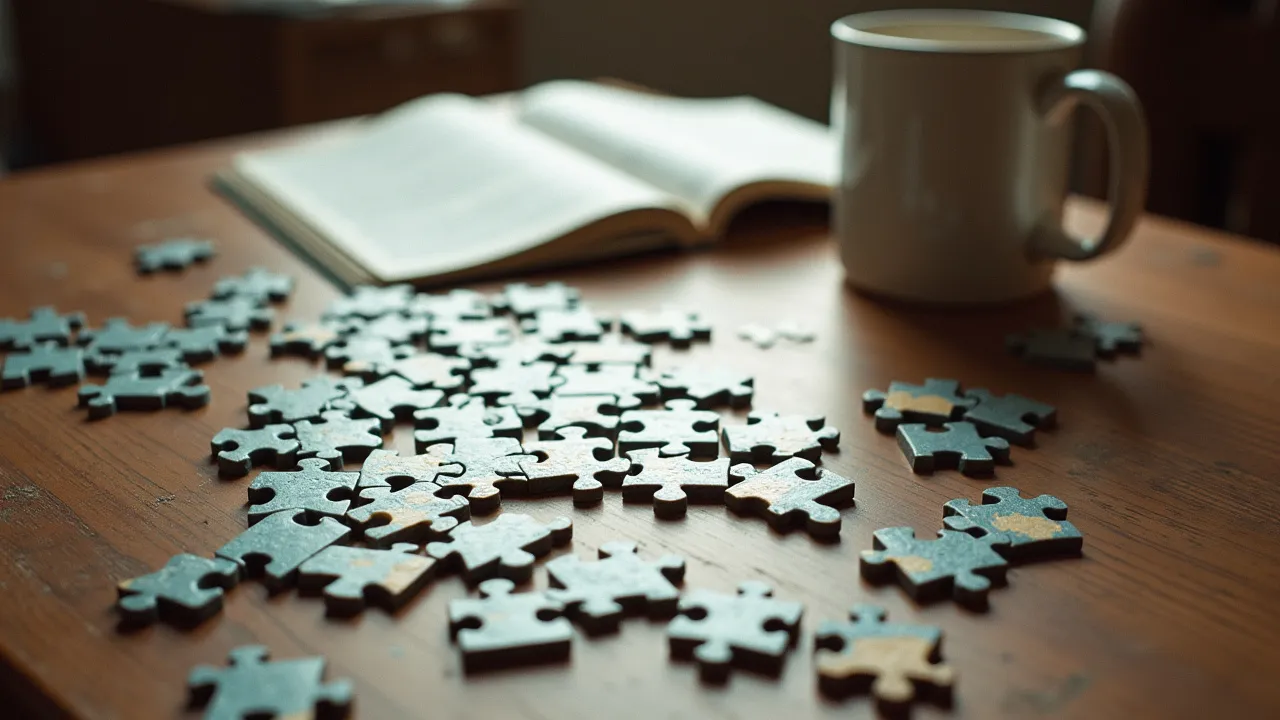
National Puzzle Day, observed annually on January 29th, celebrates the joy and mental challenge of puzzles of all kinds. Founded in 2002 by puzzle enthusiast Jodi Jill, it encourages people to engage in crosswords, jigsaws, Sudoku, and more.
The Historical Origins & Evolutionary Journey
The Foundational Catalyst
National Puzzle Day was established in 2002 by Jodi Jill, a professional puzzle maker and syndicated newspaper puzzle creator. Jill, known for her daily puzzles in various publications, wanted to create a day that recognized the universal appeal and cognitive benefits of puzzles. She chose January 29th to fall after the holiday season, providing a fun, low-pressure activity for people to enjoy during the winter months.
The Legislative/Official Adoption
Unlike some national observances, National Puzzle Day did not require congressional approval. It was launched as a grassroots celebration through Jill's newspaper columns and puzzle syndication. Over time, it gained recognition from puzzle enthusiasts, libraries, schools, and puzzle manufacturers. By the 2010s, many educational institutions and puzzle clubs began officially marking the day with events and competitions.
Modern Global Legacy
Today, National Puzzle Day is celebrated across the United States and increasingly worldwide, thanks to the internet and mobile puzzle apps. It has grown from a niche observance into a mainstream event that highlights the importance of mental exercise. The day is often promoted by puzzle publishers, toy companies, and educational organizations, with many offering free puzzles and discounts to encourage participation.
How to Celebrate National Puzzle Day
National Puzzle Day offers endless opportunities for individuals, families, schools, and organizations to engage with puzzles. Below are actionable strategies:
For Individuals
- Try a new puzzle type: Explore a genre you've never attempted, such as a cryptic crossword, a 3D jigsaw, or a logic grid puzzle.
- Set a daily puzzle challenge: Spend 15–30 minutes on a puzzle to sharpen your mind.
- Join online puzzle communities: Participate in forums, multiplayer puzzle games, or virtual escape rooms.
For Schools and Teachers
- Organize a puzzle competition: Host a school-wide crossword or jigsaw challenge with prizes.
- Incorporate puzzles into lessons: Use math puzzles, word games, or logic problems to teach critical thinking.
- Create a puzzle station: Set up a corner of the classroom with various puzzle books and games for students to explore.
For Organizations and Companies
- Host a team puzzle-building event: Provide large jigsaw puzzles for employees to work on together as a teambuilding exercise.
- Offer puzzle-themed giveaways: Distribute puzzle books, Sudoku pads, or puzzle apps as gifts.
- Promote mental health: Encourage breaks for puzzle-solving to reduce stress and improve focus.
In different countries, traditions vary. For example, in Japan, Sudoku and nonograms are especially popular, while in the UK, cryptic crosswords are a staple. Many countries also host their own national puzzle championships that align with or near January 29th.
The Cognitive Benefits of Puzzles
Brain Health and Neuroplasticity
Research shows that regularly solving puzzles can improve memory, problem-solving skills, and attention to detail. Puzzles stimulate the brain's neuroplasticity, helping to form new neural connections. Studies indicate that older adults who engage in puzzles may delay cognitive decline and reduce the risk of dementia.
Stress Reduction and Mindfulness
Working on a puzzle can be meditative. The focused concentration required to solve a puzzle lowers cortisol levels and promotes a state of flow. Many people use puzzles as a way to unwind after a stressful day.
Educational Benefits
Puzzles enhance learning in children by teaching pattern recognition, spatial reasoning, and vocabulary. Educational institutions often use puzzles to reinforce subjects like math, science, and language arts.
Types of Puzzles and Their Popularity
Jigsaw Puzzles
Jigsaw puzzles involve assembling interlocking pieces to form a picture. They range from simple 50-piece sets to complex 40,000-piece challenges. Their popularity surged during the COVID-19 pandemic, with sales increasing over 400% in some months.
Crossword Puzzles
Crosswords are word puzzles that test vocabulary and general knowledge. The New York Times crossword is one of the most iconic, with millions of solvers daily. National Puzzle Day sees many newspapers publishing special themed crosswords.
Sudoku
Sudoku is a number placement puzzle that originated in Japan. It requires logical reasoning and has become a global phenomenon, with tournaments held worldwide.
Logic Puzzles
Logic puzzles, including grid puzzles like Einstein's Riddle, challenge deductive reasoning. They are popular among puzzle enthusiasts who enjoy non-verbal challenges.
Word Searches and Cryptograms
Word searches are simple puzzles that help with pattern recognition, while cryptograms (decoding ciphertext) appeal to those interested in codes and cryptography.
Other notable types include nonograms (picross), mazes, and mechanical puzzles (like Rubik's Cube).
Puzzles in Education and Therapy
Classroom Integration
Teachers use puzzles to make learning interactive. For instance, math puzzles teach algebra concepts, while crossword puzzles reinforce spelling and vocabulary. Research has shown that puzzle-based learning improves retention and student engagement.
Therapeutic Applications
Occupational therapists often employ puzzles to develop fine motor skills, hand-eye coordination, and cognitive function in patients recovering from strokes or brain injuries. Puzzles are also used in dementia care to stimulate memory and provide a sense of accomplishment.
Special Needs and Inclusive Puzzles
Large-piece jigsaw puzzles and tactile puzzles are designed for individuals with visual impairments or limited dexterity. Many puzzle companies now create inclusive products to ensure everyone can participate.
The Puzzle Industry and Community
Economic Impact
The global puzzle market is estimated to be worth over $10 billion annually, with jigsaw puzzles being the largest segment. Digital puzzle apps also generate significant revenue through subscriptions and advertising. Major puzzle brands like Ravensburger, Buffalo Games, and Hasbro dominate the physical puzzle market.
Competitive Puzzling
World-class puzzle competitions, such as the World Puzzle Championship and the US Puzzle Championship, attract top solvers from around the globe. These events test speed and accuracy in a variety of puzzle types. National Puzzle Day often sees local puzzle events leading up to these championships.
Online Communities
Platforms like Reddit's r/puzzles and Puzzle Prime host thousands of puzzle enthusiasts who share creations, solutions, and tips. Social media trends like #NationalPuzzleDay encourage users to post their puzzle progress and connect with fellow solvers.
Historical Timeline
Jodi Jill establishes National Puzzle Day on January 29th, promoting it through her syndicated newspaper puzzle columns.
The observance gains traction as libraries and schools begin hosting puzzle events on January 29th.
Digital puzzles and mobile apps (e.g., Sudoku and crossword apps) see a surge in popularity, expanding National Puzzle Day's reach.
The National Puzzle Day website (nationalpuzzleday.com) launches, offering resources and free puzzles for participants.
During the COVID-19 pandemic, puzzle sales skyrocket; National Puzzle Day is widely promoted on social media with hashtags like #PuzzleDayAtHome.
Major puzzle companies like Ravensburger and Buffalo Games run special promotions for National Puzzle Day, including limited-edition puzzles.