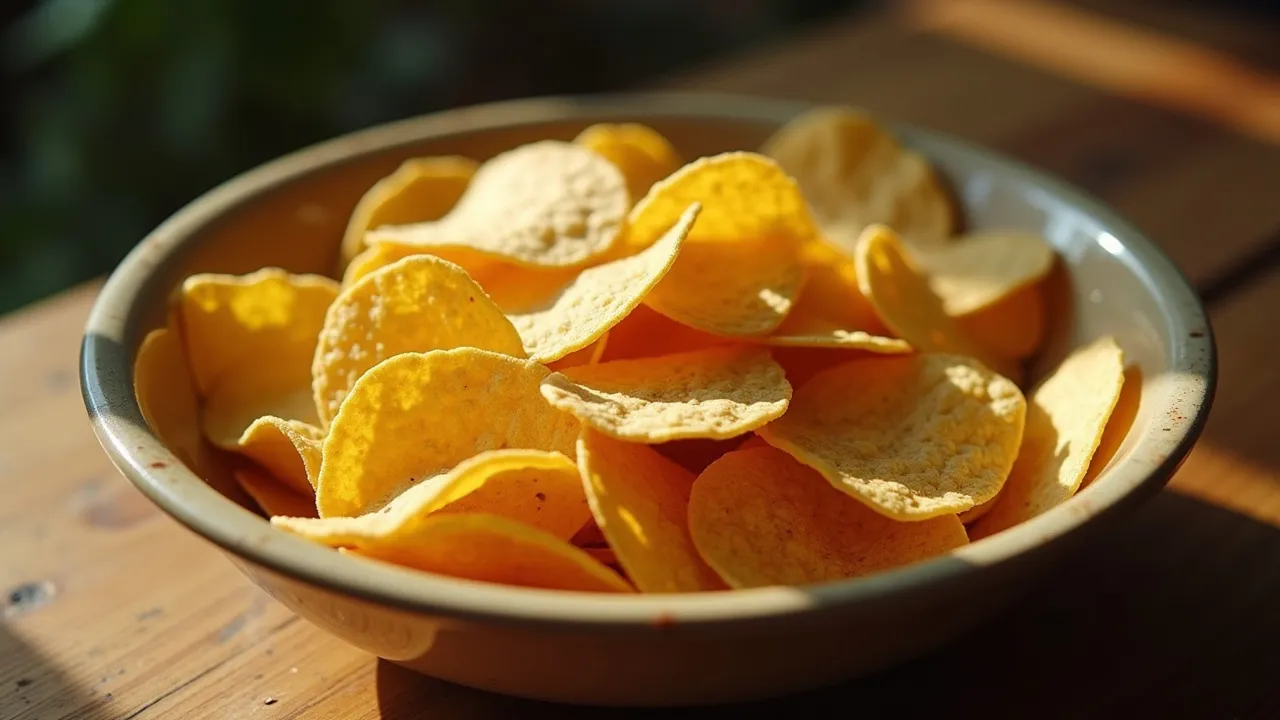
National Corn Chip Day is celebrated on January 29th, honoring the crunchy, golden snack made from fried or baked corn masa. Learn about its history, how to celebrate, and the best dips to enjoy.
The Historical Origins & Evolutionary Journey
Corn chips are a beloved snack food with roots deep in Mexican cuisine, but their modern form is a distinctly American innovation. The journey from simple masa to the crispy bag of chips we know today is a story of ingenuity, industrialization, and marketing.
The Foundational Catalyst: From Tortillas to Chips
The earliest ancestors of corn chips were totopos, stale tortillas cut into triangles and fried, common in Mexican households. This concept was commercialized in the early 20th century. In 1932, Charles Elmer Doolin, a San Antonio candy maker, purchased a recipe for fried corn chips from a local Mexican food vendor and began selling them under the name Fritos. Doolin's innovation was not just the chip itself but the mass production process. He developed a machine that could press corn masa into thin strips and fry them continuously, enabling large-scale manufacturing.
The Rise of a Snack Empire
Fritos became a national sensation by the 1940s, especially after Doolin partnered with potato chip giant Herman Lay in 1945 to form the Frito-Lay company. The brand's success inspired countless competitors, each offering variations in shape, thickness, and flavor. By the 1960s, corn chips were a staple of American snacking, often paired with the newly invented chili con queso and salsa. The 1960s and 1970s saw the introduction of restaurant-style chips and the birth of the modern tortilla chip, which is a close cousin.
National Corn Chip Day Emerges
The exact origin of National Corn Chip Day is murky, typical of many food holidays. It likely emerged in the early 2000s as a social media-driven celebration, possibly promoted by snack companies or food bloggers. No official proclamation exists, but January 29th became the de facto date through online calendars and media mentions. The day now serves as a marketing opportunity for brands and a fun excuse for chip enthusiasts to indulge.
Modern Global Legacy
Today, corn chips are a multibillion-dollar industry with global reach. In the United States, Fritos remain iconic, but brands like Bugles and Corn Nuts have carved niches. Internationally, corn chips are adapted to local tastes: in India, spiced masala versions; in the UK, they are often called "corn snacks" and are less greasy. The day encourages both homemade and store-bought appreciation.
How to Celebrate National Corn Chip Day
There are countless ways to honor the humble corn chip. Whether you prefer them straight from the bag or as part of a elaborate snack board, this day is about savoring the crunch. Below are ideas for individuals, groups, and organizations.
For Individuals and Families
- Host a Corn Chip Tasting Party: Buy several brands and varieties (plain, BBQ, chili-lime, etc.) and rate them blind. Provide scorecards.
- DIY Dips: Whip up homemade salsa, guacamole, queso, and bean dip. Experiment with spicy, sweet, or savory options.
- Movie Night Snack Board: Create a platter with corn chips, tortilla chips, pretzels, and an array of dips.
- Baking Challenge: Make your own corn chips from masa harina. Try different shapes and seasonings.
For Schools and Workplaces
- Potluck Snack Contest: Employees or students bring their best corn chip-based dish, like nachos or walking tacos.
- Educational Session: Teach the history and production of corn chips, including the role of nixtamalization.
- Fundraiser: Sell bags of corn chips with custom labels to raise money for a cause.
For Restaurants and Bars
- Offer a special menu featuring corn chips: loaded nachos, chilaquiles, or corn chip-crusted chicken.
- Host a "chip challenge" where patrons attempt to eat the most spicy chips.
Global Celebrations
In Mexico, January 29th aligns with totopos appreciation. Street vendors often offer discounts. In the United States, Frito-Lay frequently runs social media promotions. In the United Kingdom, pubs may feature corn-chip snacks alongside beer. The day is also popular in Australia, where corn chips accompany barbecues.
Nutritional Profile and Health Considerations
Corn chips are primarily made from ground corn (masa), oil, and salt. The nutritional value varies widely by brand and preparation method.
Key Nutrients
- Carbohydrates: Mainly from corn, providing quick energy.
- Fat: Usually from frying oils; baked versions have less fat.
- Fiber: Whole-grain corn chips offer some fiber.
- Sodium: Often high; low-sodium options exist.
Healthier Choices
Baked corn chips cut fat by about 50%. Look for brands with "non-GMO" or "organic" labels. Pairing with nutrient-dense dips like bean dip or guacamole improves the overall meal. Moderation is key due to calorie density.
Global Variations and Cultural Adaptations
While corn chips are a global snack, each region adds its own twist.
United States
Fritos remain the archetype. Regional flavors like Chili Cheese and Honey BBQ are popular. The "walking taco" (a bag of chips topped with taco fillings) is a Midwest staple.
Mexico
Traditional totopos are thicker and often sold fresh. They are typically fried in lard for authentic flavor. Street vendors serve them with lime, chili powder, and salsa.
India
Local brands like Kurkure and Pringles offer masala-flavored corn snacks. They are often eaten with tea or as a side with lunch.
Europe
In the UK, "corn chips" are often lighter and less oily. In Germany, paprika-flavored versions are common.
The Manufacturing Process: From Corn to Chip
Understanding how corn chips are made adds appreciation for the product.
Step 1: Nixtamalization
Dried field corn is soaked in an alkaline solution (limewater) to remove the hull and improve nutritional availability. This process is ancient and originates from Mesoamerica.
Step 2: Grinding into Masa
The treated corn is ground into a dough called masa. The texture must be smooth but not sticky.
Step 3: Sheeting and Cutting
The masa is pressed into thin sheets and cut into shapes—stripes, rounds, or triangles. For Fritos, the masa is extruded as a ribbon.
Step 4: Frying or Baking
Most commercial chips are fried in vegetable oil at high heat for seconds. Baked chips are cooked in an oven. This step sets the texture.
Step 5: Seasoning and Packaging
The hot chips are tumbled with seasonings (salt, chili, cheese powder) then cooled and sealed in bags flushed with nitrogen for freshness.
Perfect Pairings: Dips and Accompaniments
The corn chip is a delivery system for dips. The ideal dip complements the chip's corn flavor and adds moisture and contrast.
Classic Dips
- Salsa: Fresh tomato-based, mild to fiery.
- Guacamole: Creamy avocado with lime and cilantro.
- Queso: Melted cheese, often with jalapeños.
- Bean Dip: Refried beans seasoned with cumin.
International Inspirations
- Hummus: Chickpea puree with tahini.
- Baba Ganoush: Smoky eggplant dip.
- Tzatziki: Yogurt, cucumber, and dill.
Layered Nachos
Corn chips are the base for nachos: topped with cheese, meat, beans, and veggies, then baked or broiled.
Cultural Impact and Fun Facts
Corn chips have left an indelible mark on pop culture.
Fritos were the first snack food in space, taken on Apollo 7 in 1968.
The Fritos Corn Chip is the only snack with its own official mascot, the "Frito Kid".
In 2023, the U.S. corn chip market was valued at over $4 billion.
The largest bag of corn chips ever made weighed over 1,000 pounds.
National Corn Chip Day is sometimes celebrated alongside National Tortilla Chip Day (February 24th).
Historical Timeline
Charles Elmer Doolin buys a recipe for fried corn chips from a Mexican vendor and begins producing Fritos in San Antonio, Texas.
The Frito Company merges with H.W. Lay & Company to form Frito-Lay, creating a national distribution network.
Corn chips become a mainstream snack nationwide; new flavors and shapes emerge, including restaurant-style tortilla chips.
Fritos are included on the Apollo 7 mission, becoming the first snack food in space.
Baked corn chips and low-fat versions are introduced to meet health-conscious demand.
National Corn Chip Day gains traction on social media and food blogs, with January 29th becoming the accepted date.
Artisanal corn chip brands focusing on non-GMO, organic, and heritage corn varieties enter the market.