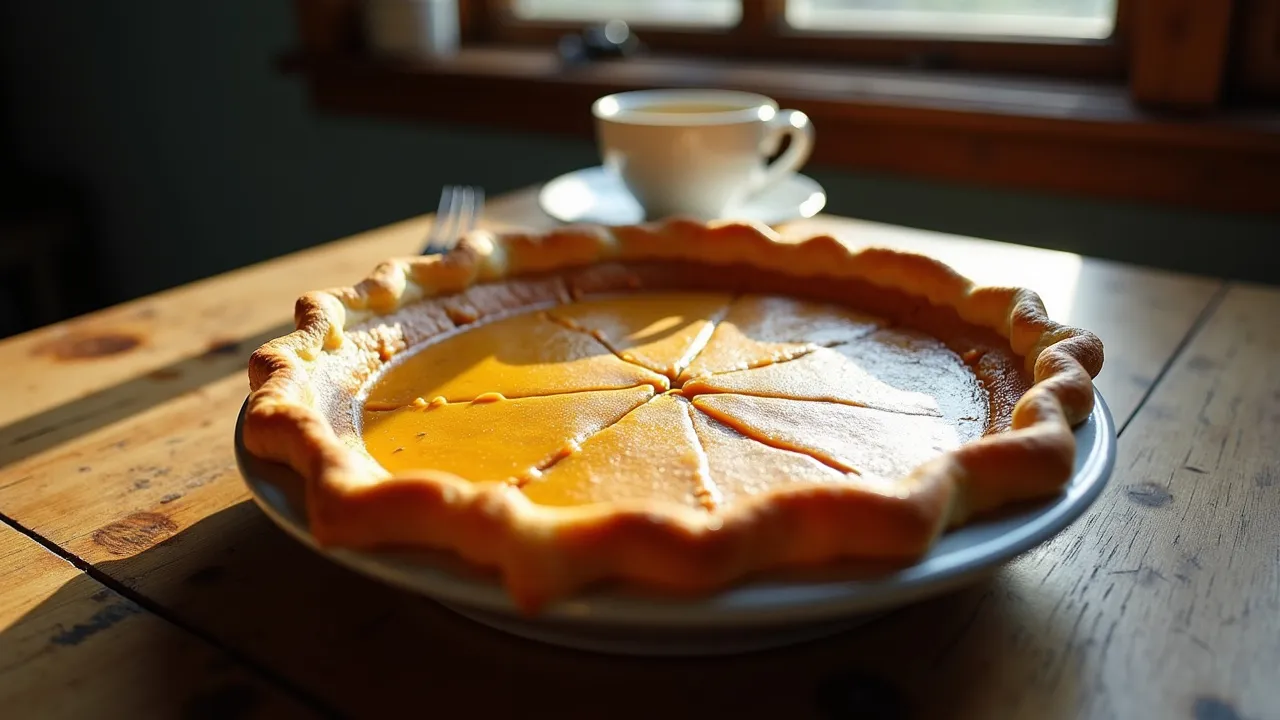
National Pumpkin Pie Day on December 25th celebrates the iconic dessert that graces holiday tables. Learn about its rich history, global variations, and how to enjoy this spiced pie tradition.
Historical Origins & Evolutionary Journey
Pumpkin pie is a dessert that traces its roots to early American colonial times, when European settlers adopted the Native American practice of cooking pumpkins. The modern pumpkin pie as we know it evolved over centuries, becoming a staple of Thanksgiving and Christmas tables.
The Foundational Catalyst
The earliest known recipe resembling pumpkin pie appears in the 17th century. English settlers hollowed out pumpkins, filled them with milk, honey, and spices, then roasted them in hot ashes. By the 18th century, cookbooks like American Cookery (1796) by Amelia Simmons included a recipe for "pumpkin puding" baked in a crust, which is the direct predecessor of today's pie.
The Legislative/Official Adoption
While not an official government holiday, National Pumpkin Pie Day was established by the American Pie Council in 1987 to recognize the cultural significance of pie-making. The date December 25th was chosen to coincide with Christmas, when many families already serve pumpkin pie. This unofficial observance gained popularity through media coverage and food industry promotions.
Modern Global Legacy
Today, pumpkin pie is enjoyed worldwide, with regional twists such as adding maple syrup in Canada, using sweet potato in the Southern United States, or incorporating pumpkin pie spice blends in other countries. The observance has expanded beyond America, with bakeries and restaurants offering special pumpkin pie menus on December 25th.
How to Celebrate National Pumpkin Pie Day (Alternative 1)
This day is perfect for indulging in pumpkin pie in creative ways. Whether you are a home baker, a food enthusiast, or a business owner, here are comprehensive strategies to celebrate.
Individual Celebrations
- Bake a traditional pumpkin pie from scratch using fresh pumpkin purée and warm spices like cinnamon, nutmeg, and ginger.
- Host a pie-tasting party with friends, featuring different crust styles (butter, graham cracker, or gluten-free) and toppings (whipped cream, ice cream, or caramel drizzle).
- Visit a local bakery and purchase a handcrafted pumpkin pie to support small businesses.
- Share your creation on social media with hashtags like #NationalPumpkinPieDay.
School and Community Activities
- Organize a pie bake-off competition in your neighborhood or school. Categories: classic, vegan, and no-bake.
- Hold a history lesson about the origins of pumpkin pie, linking colonial agriculture to modern cuisine.
- Coordinate a pie donation drive for local shelters, providing holiday cheer through homemade or store-bought pies.
Corporate and Social Rituals
Companies can host a virtual pie-making workshop for employees, send gift boxes of mini pumpkin pies to clients, or feature pumpkin-flavored items in their cafeterias. Restaurants can run a special on pumpkin pie slices and offer a limited-time pumpkin latte.
Global Celebrations
In Canada, pumpkin pie is often served with maple pecan topping. In the United Kingdom, some pubs offer pumpkin pie with custard. In Japan, pumpkin pie flavored with white miso is a fusion twist. Wherever you are, the key is to enjoy the warm, spiced flavors that symbolize comfort and gratitude.
Global Variations of Pumpkin Pie
While the classic American pumpkin pie is beloved worldwide, many cultures have adapted it to local tastes. Here are notable variations.
North America
- United States: The quintessential pumpkin pie features a single-crust pastry shell filled with a custard of pumpkin, evaporated milk, eggs, and spices, baked until set.
- Canada: Often uses maple syrup as a sweetener, giving a distinct earthy sweetness. Some versions add a crumbly pecan streusel topping.
Europe
- United Kingdom: Pumpkin pie is sometimes made with a shortcrust pastry and spiced with allspice and cloves. It may be served with clotted cream.
- France: Known as tarte au potiron, it often includes a pâte brisée crust and a filling of pumpkin purée with vanilla and orange zest.
Asia and Oceania
- Japan: Kabocha pumpkin (Japanese squash) is used for a denser, sweeter filling. Often incorporated into cheesecakes or tarts.
- Australia: Pumpkin pie is less common but appears in fusion form, sometimes with macadamia nut crust or served with a dollop of passionfruit cream.
These global adaptations show the versatility of pumpkin pie and how it can reflect local ingredients and culinary traditions.
Nutritional Profile and Culinary Significance
Pumpkin pie is not just delicious; it also offers nutritional benefits when made with wholesome ingredients. The pumpkin itself is rich in vitamin A (beta-carotene), fiber, and antioxidants. However, traditional recipes can be high in sugar and saturated fat from butter and condensed milk.
Healthier Modifications
- Swap evaporated milk for coconut milk or almond milk for a dairy-free version.
- Reduce sugar by using natural sweeteners like honey, maple syrup, or monk fruit.
- Use a whole-wheat or almond flour crust for added fiber and healthy fats.
Culinary Role
Pumpkin pie is often the centerpiece of holiday meals, providing a sweet counterpart to savory dishes. Its blend of warming spices—cinnamon, nutmeg, ginger, cloves—evokes the comfort of autumn and winter. The pie also holds symbolic meaning, representing the harvest and the bounty of the season.
The Economic Impact of Pumpkin Pie Production
The pumpkin pie industry is a multi-billion dollar sector, driven by holiday demand. In the United States alone, over 50 million pumpkin pies are consumed during Thanksgiving and Christmas. This demand supports farmers, food processors, and retailers.
Key Economic Factors
- Pumpkin Farming: Illinois is the largest producer of pumpkins in the US, harvesting about 700 million pounds annually. A significant portion is processed into canned pumpkin purée.
- Manufacturing: Companies like Libby's (owned by Nestlé) dominate the canned pumpkin market, providing the key ingredient for many pies.
- Retail: Grocery stores and bakeries see a spike in sales of pie crusts, spices, and ready-made pies. In 2022, pumpkin pie sales exceeded $300 million in the US.
The popularity of National Pumpkin Pie Day further boosts sales, as promotions and special offers encourage consumers to buy or bake pies on December 25th.
Pumpkin Pie in Popular Culture and Media
Pumpkin pie has made many appearances in films, television, and literature, often as a symbol of tradition, comfort, and Americana. It is frequently featured in Thanksgiving-themed episodes of shows like Friends, The Office, and Modern Family.
Iconic References
- In the movie When Harry Met Sally, the scene where Sally orders pumpkin pie at Katz's Deli has become a cultural touchstone.
- The children's book Pumpkin Pie by Susan B. Anderson tells the story of making pie from scratch, introducing kids to cooking.
- Music: Songs like "Pumpkin Pie" by Frank Zappa and "Pumpkin Pie" by Raffi celebrate the dessert in quirky ways.
Social media platforms like Instagram and Pinterest see a surge in pumpkin pie photos on December 25th, with users sharing their homemade creations and decorating ideas. This digital celebration reinforces the dessert's status as a holiday icon.
Historical Timeline
Early European settlers in America hollow out pumpkins, fill them with milk and spices, and roast them, creating the first pumpkin puddings.
Amelia Simmons publishes 'American Cookery', the first cookbook with a recipe for 'pumpkin puding' baked in a crust, similar to modern pumpkin pie.
Libby's introduces canned pumpkin purée, making pie preparation easier and more consistent.
The American Pie Council establishes National Pumpkin Pie Day on December 25th to honor the dessert's cultural role.
Pumpkin pie spice becomes a popular commercial blend, leading to the creation of pumpkin spice lattes and other flavored products.
During the pandemic, home baking soars, with pumpkin pie making a prominent comeback as a comfort food for holiday gatherings.