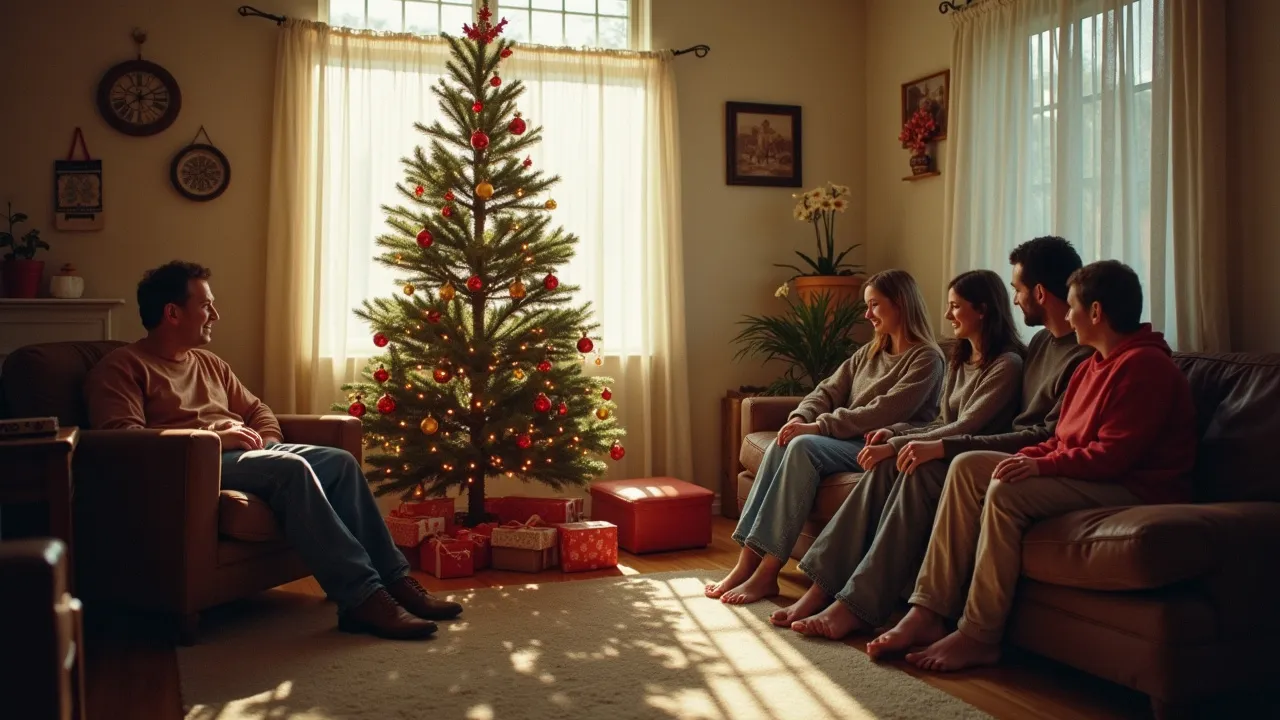
Christmas Day, observed on December 25th, is a global holiday commemorating the birth of Jesus Christ. It is celebrated with religious services, gift-giving, festive decorations, and family gatherings.
Historical Origins & Evolutionary Journey
Christmas Day, observed on December 25th, has a rich history spanning over two millennia. Its origins lie in both Christian and pagan traditions.
The Foundational Catalyst
The earliest known celebration of Christmas on December 25th occurred in 336 AD during the reign of Roman Emperor Constantine. The date was chosen to coincide with the winter solstice festivals like Saturnalia and Sol Invictus, allowing the Church to integrate existing pagan customs. The Bible does not specify Jesus's birth date, but Christian theologians like Hippolytus of Rome (c. 204 AD) suggested December 25th.
The Legislative/Official Adoption
By the early Middle Ages, Christmas had become a major Christian festival, but its observance varied. In 1647, the Puritan-led English Parliament banned Christmas celebrations, viewing them as unscriptural. The ban lasted until the Restoration in 1660. In the United States, Christmas was not a federal holiday until 1870, when President Ulysses S. Grant signed it into law. The holiday's modern form emerged in the 19th century, influenced by works like Charles Dickens's A Christmas Carol (1843) and the introduction of the Christmas tree by Prince Albert to the British court.
Modern Global Legacy
Today, Christmas is celebrated by billions worldwide, both religiously and secularly. Key traditions include:
- Religious Services: Midnight Mass, Nativity plays, and Advent calendars.
- Gift-Giving: Inspired by the Magi's gifts and Santa Claus.
- Decorations: Christmas trees, lights, wreaths, and nativity scenes.
- Food: Regional specialties like roast turkey, ham, and mince pies.
The commercial aspect grew in the 20th century, with mass marketing of gifts and decorations. Despite its Christian roots, Christmas has become a global cultural phenomenon, celebrated even in non-Christian countries with local adaptations.
How to Celebrate Christmas Day
Christmas Day offers endless ways to celebrate, from traditional religious observances to modern secular festivities. Below is a guide to making the most of December 25th.
Individual & Family Celebrations
- Attend a Religious Service: Many churches hold Christmas morning services or Midnight Mass on Christmas Eve.
- Exchange Gifts: Open presents after breakfast or during a designated time.
- Prepare a Festive Meal: Classic dishes include roast turkey, glazed ham, mashed potatoes, and pumpkin pie.
- Decorate the Home: Set up a Christmas tree, hang stockings, and place a nativity scene.
- Watch Holiday Movies: Classics like It's a Wonderful Life or Home Alone are popular.
Community & Corporate Rituals
- Volunteer: Serve meals at shelters or donate toys to charity.
- Office Parties: Many workplaces host holiday gatherings with games, food, and secret Santa exchanges.
- Neighborhood Events: Caroling, light displays, and community dinners.
International Traditions
Different cultures add unique flavors:
- Iceland: 13 Yule Lads leave gifts in shoes placed by windows.
- Japan: KFC fried chicken is a popular Christmas meal.
- Mexico: Las Posadas reenacts Mary and Joseph's journey.
- Sweden: A giant straw goat called Gävle is erected (and often burned).
Global Impact of Christmas
Christmas Day transcends religious boundaries and has become a global cultural force. Its economic, social, and environmental impacts are vast.
Economic Significance
Christmas is the peak shopping season in many countries, driving retail sales that often account for 20% of annual revenue. In the US, holiday retail sales exceed $1 trillion. The demand for gifts, decorations, and food boosts manufacturing, logistics, and employment. However, it also leads to increased consumer debt and waste.
Social Cohesion
Christmas fosters family reunions, charitable giving, and community spirit. It is a time when people set aside differences and focus on goodwill. In multicultural societies, public celebrations often include secular themes like Santa Claus and snowmen, making the holiday inclusive.
Environmental Footprint
The holiday generates significant waste: gift wrap, disposable decorations, and food leftovers. The carbon footprint from travel and lighting displays is considerable. Many now adopt eco-friendly practices like reusable wrapping, LED lights, and giving experiences instead of physical items.
Cultural Symbols & Their Meanings
Christmas is rich in symbols, each with a story.
The Christmas Tree
Originating in 16th-century Germany, the evergreen tree symbolizes eternal life. It was popularized in Britain by Prince Albert and later in America. Decorations like tinsel and ornaments represent the stars and gifts.
Santa Claus
Derived from Saint Nicholas, a 4th-century bishop known for gift-giving, Santa evolved through Dutch folklore (Sinterklaas) and 19th-century literature. His red suit was cemented by Coca-Cola ads in the 1930s.
Nativity Scene
St. Francis of Assisi created the first live nativity in 1223. The scene includes Mary, Joseph, baby Jesus, shepherds, and the Magi, reminding Christians of the birth's humble setting.
Gifts & Stockings
Gift-giving echoes the Magi's offerings and Saint Nicholas's acts. Hanging stockings dates to a legend where Nicholas threw gold coins down a chimney, landing in stockings drying by the fire.
- Wreaths: Circular shape symbolizes eternity; made of evergreen for resilience.
- Candy Cane: Shape of a shepherd's crook, representing Jesus as the Good Shepherd.
- Poinsettia: Plant from Mexico associated with Christmas due to its red color and legend.
Modern Traditions & Changes
In the 21st century, Christmas continues to evolve with technology and cultural shifts.
Digital Celebrations
People send e-cards, create virtual gift registries, and watch live-streamed church services. Social media is filled with holiday photos and greetings. Online shopping dominates, with Cyber Monday extending the shopping season.
Secular vs. Religious Observance
Increasingly, Christmas is celebrated as a cultural holiday by non-Christians. In countries like China and Japan, Christmas is a romantic or commercial event, often without religious significance. This has sparked debates about keeping Christ in Christmas.
Inclusivity & Diversity
Many now use phrases like "Happy Holidays" to respect diverse traditions. Schools and workplaces often celebrate winter festivals broadly. Interfaith families blend customs, such as Christmas and Hanukkah (Chrismukkah).
Health & Safety Concerns
During the COVID-19 pandemic, many adapted with virtual gatherings and outdoor celebrations. Post-pandemic, hybrid traditions continue: smaller family events and increased awareness of health risks.
Christmas in Literature & Media
Christmas has inspired countless works of art, literature, and music.
Classic Literature
Charles Dickens's A Christmas Carol (1843) transformed the holiday into a celebration of generosity and family. Clement Clarke Moore's A Visit from St. Nicholas (1823) defined Santa's look and reindeer. Other classics include The Gift of the Magi by O. Henry and The Night Before Christmas.
Music
Christmas carols date to the Middle Ages, with favorites like "Silent Night" (1818) and "Hark! The Herald Angels Sing" (1739). Modern pop songs include "White Christmas" (Bing Crosby) and "All I Want for Christmas Is You" (Mariah Carey).
Film & Television
Notable films: It's a Wonderful Life (1946), A Christmas Story (1983), Elf (2003), and Home Alone (1990). TV specials like Rudolph the Red-Nosed Reindeer (1964) and How the Grinch Stole Christmas! (1966) are annual traditions.
Historical Timeline
First recorded celebration of Christmas on December 25th in Rome, under Emperor Constantine.
St. Francis of Assisi creates the first live nativity scene in Greccio, Italy.
After the Reformation, some Protestant groups ban Christmas. The ban in England lasts until 1660.
Franz Xaver Gruber composes 'Silent Night' in Oberndorf, Austria, premiering on Christmas Eve.
Clement Clarke Moore's poem 'A Visit from St. Nicholas' introduces the modern Santa Claus.
Charles Dickens publishes 'A Christmas Carol,' popularizing the spirit of Christmas charity.
The first Christmas card is commercially produced in England by Henry Cole.
Christmas is declared a federal holiday in the United States.
Thomas Edison's associate Edward Johnson creates the first string of electric Christmas lights.
Coca-Cola's ad campaign by Haddon Sundblom popularizes Santa's red suit and jolly image.
The Rockefeller Center Christmas tree lighting becomes an annual tradition in New York City.
COVID-19 pandemic forces many to celebrate virtually, with drive-through light displays and online services.