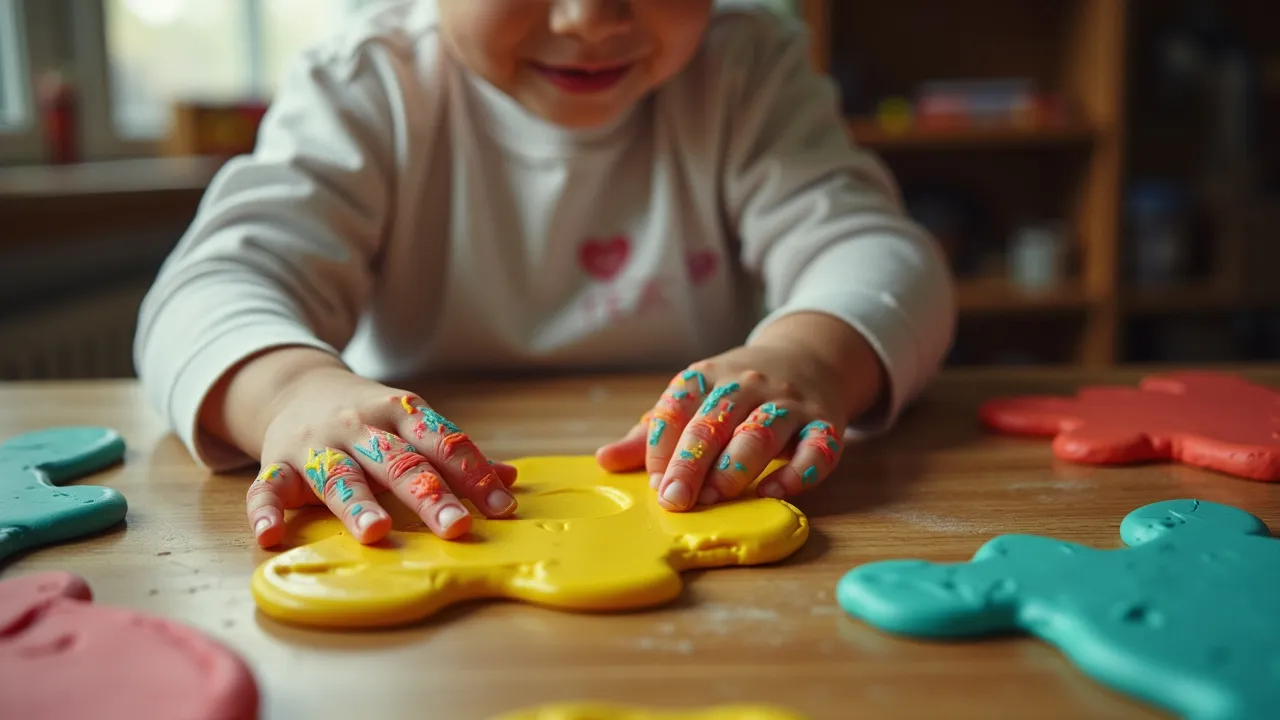
National Play-Doh Day on September 16th celebrates the iconic modeling compound that has inspired creativity for over 60 years. Discover the history and join the fun.
The Historical Origins & Evolutionary Journey
National Play-Doh Day, observed annually on September 16th, celebrates the beloved modeling compound that has sparked imagination in children and adults for generations. This day was established by Hasbro to honor the invention and enduring legacy of Play-Doh. The story begins in the 1930s when Noah McVicker and later his brother Joseph McVicker created a non-toxic, pliable substance originally intended as a wallpaper cleaner. It was not until 1956 that the product was rebranded as a children's toy, after a teacher suggested its educational potential.
The Foundational Catalyst
The accidental discovery that a wallpaper cleaner could be a creative tool for kids led to the launch of Play-Doh in 1956 at a Cincinnati school supply convention. The original compound was off-white and came in a single color. The product quickly gained popularity through school demonstrations and early television advertising, including the iconic Captain Kangaroo show. By the 1960s, Play-Doh expanded to include primary colors and was sold in the iconic yellow cans.
The Official Adoption of National Play-Doh Day
While Play-Doh had been a staple for decades, Hasbro officially designated September 16th as National Play-Doh Day in 2009, tying it to the anniversary of the compound's first appearance on the market. The day is now recognized globally, with celebrations in schools, museums, and homes. Hasbro often releases limited-edition colors and kits to mark the occasion.
Modern Global Legacy
Today, Play-Doh is sold in over 75 countries and has inspired countless creative activities. The compound has evolved to include glitter, scents, and even digital apps. National Play-Doh Day serves as a reminder of the importance of tactile play in child development, encouraging fine motor skills, creativity, and problem-solving. The day also highlights the compound's role in art therapy and STEM education, where it is used to model concepts in geometry and engineering.
How to Celebrate National Play-Doh Day
Whether you're a child, a parent, an educator, or just young at heart, National Play-Doh Day offers countless opportunities to get creative. Here is a comprehensive guide to celebrating the day, with activities tailored for different settings and cultures around the world.
For Individuals and Families
- Create a Play-Doh Masterpiece: Set aside time to sculpt something unique—a favorite animal, a fantasy creature, or a replica of a famous landmark.
- Host a Play-Doh Party: Invite friends over for a modeling session. Provide a variety of colors and tools like rolling pins and cookie cutters.
- Try DIY Play-Doh: Make your own batch using flour, salt, cream of tartar, and food coloring. Experiment with scents like cinnamon or lavender.
For Schools and Educators
- Incorporate into Lessons: Use Play-Doh to teach shapes, letters, and numbers in preschool. For older students, model cell structures or topographic maps.
- Organize a Sculpture Contest: Challenge students to create a scene from a book or historical event. Display the works in a gallery walk.
- Collaborative Mural: Have each student contribute a tile made from Play-Doh, then assemble them into a large mosaic.
For Organizations and Communities
Many museums and libraries host Play-Doh-themed events on September 16th. Check your local community calendar for hands-on workshops. Companies can encourage employees to take a creative break and share photos of their creations on internal social channels.
Global Traditions
In the United States and Canada, the day is marked by Hasbro's official promotions and social media campaigns. In Japan, Play-Doh is used in kindergarten art classes, and some stores hold special demonstrations. In the United Kingdom, schools often incorporate Play-Doh into sensory play for children with special needs.
Educational Benefits of Play-Doh
Play-Doh is more than just a toy; it is a powerful educational tool. Research has shown that modeling compounds enhance learning across multiple domains.
Fine Motor Skills
Squeezing, rolling, and pinching Play-Doh strengthens the small muscles in hands and fingers, which is crucial for writing and other tasks. Occupational therapists often use Play-Doh in therapy sessions.
Creativity and Imagination
Open-ended play allows children to invent new worlds and characters. This unstructured activity fosters divergent thinking and problem-solving skills.
STEM Learning
Play-Doh can be used to teach basic physics (force, pressure), geometry (shapes, symmetry), and even simple engineering (building bridges or towers). Teachers can create models of molecules or landforms.
Social and Emotional Development
Collaborative sculpting promotes teamwork and communication. Children learn to share tools and negotiate ideas, building social skills and emotional regulation.
Cultural Impact and Artistic Significance
Play-Doh has transcended its status as a children's toy to become a medium for art and popular culture.
Play-Doh in Art
Artists like Richard Shaw have used Play-Doh in fine art sculptures, while stop-motion animators have employed it for short films. The compound's malleability allows for detailed works that can be baked to harden.
Pop Culture References
Play-Doh appears in films like Toy Story and The Simpsons, and has inspired video games like De Blob. The iconic yellow can is recognized worldwide.
Social Media Phenomena
On National Play-Doh Day, social media platforms flood with hashtags like #PlayDohDay and #SquishyFun. YouTube channels dedicated to Play-Doh tutorials have millions of subscribers.
The Science Behind Play-Doh
The unique properties of Play-Doh come from its chemistry. Understanding the science adds an extra layer of appreciation.
Ingredients and Chemistry
Play-Doh primarily consists of water, flour, salt, and a binders like wheat gluten. The compound is a viscoelastic material that behaves like a solid under quick deformation (bouncing) and like a liquid under sustained pressure (flattening).
Non-Newtonian Fluid Behavior
Play-Doh is a classic example of a non-Newtonian fluid. When stressed quickly, it thickens and can break; when stressed slowly, it flows. This property makes it both fun and educational.
Conservation and Storage
If left exposed, Play-Doh dries out. The salt in the compound helps retain moisture and acts as a preservative. To keep it fresh, store in an airtight container.
Future of Play-Doh and National Play-Doh Day
As technology advances, Play-Doh continues to evolve. Hasbro has introduced digital Play-Doh experiences, including augmented reality apps that bring physical creations to life. Sustainability is also a focus, with eco-friendly packaging and non-toxic, biodegradable formulas being developed.
National Play-Doh Day is expected to grow, with more schools and community organizations adopting it as an annual creative break. The day's message of hands-on creativity is timeless, ensuring its relevance for generations to come.
Historical Timeline
Noah McVicker invents a non-toxic wallpaper cleaner that will later become Play-Doh.
The McVicker brothers rebrand the wallpaper cleaner as a toy called 'Play-Doh' and debut it at a school supply convention.
Play-Doh is introduced in primary colors (red, blue, yellow) and starts being sold in the iconic yellow cans.
Play-Doh is featured on 'Captain Kangaroo,' boosting its popularity among children.
Hasbro acquires the Play-Doh brand and expands its product line with new colors and accessories.
The Play-Doh brand is inducted into the National Toy Hall of Fame in Rochester, New York.
Hasbro officially establishes September 16th as National Play-Doh Day, celebrating the toy's enduring legacy.
Play-Doh introduces a 'Scented' line, adding fragrances like bubble gum and pizza to the compound.
Hasbro launches the 'Play-Doh Kitchen Creations' line, allowing kids to make pretend food with realistic molds.