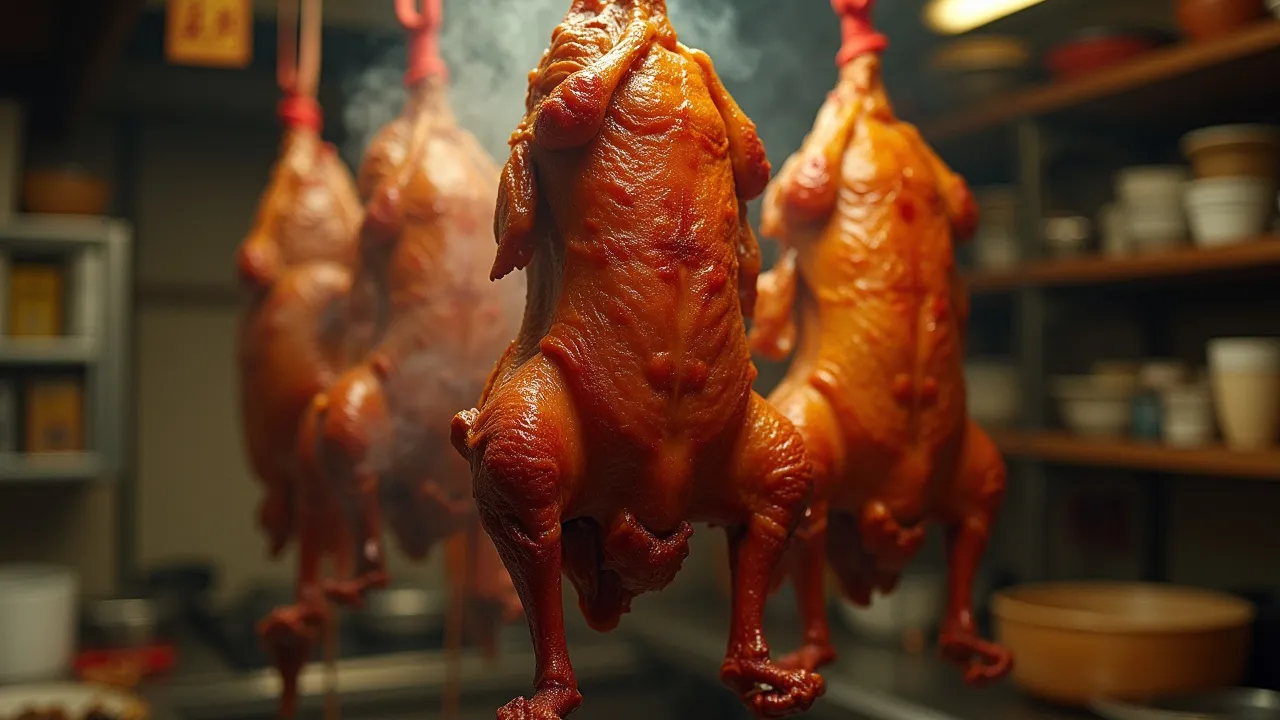
National Peking Duck Day on January 18th celebrates the iconic Chinese dish with its crispy skin and tender meat. Learn about its rich history, global influence, and how to enjoy this culinary masterpiece.
The Historical Origins & Evolutionary Journey
National Peking Duck Day, observed annually on January 18th, pays homage to one of China’s most celebrated culinary treasures: Peking duck. This dish, with its crispy lacquered skin and succulent meat wrapped in thin pancakes with hoisin sauce and scallions, has a history as rich as its flavor. The origins of Peking duck can be traced back over 600 years to the Yuan Dynasty (1271–1368), where it was first mentioned in the Yinshan Zhengyao (Proper and Essential Things for the Emperor’s Food), a dietary manual by the court dietitian Hu Sihui. However, the dish we know today evolved during the Ming Dynasty (1368–1644) when imperial chefs perfected the technique of roasting ducks over an open fire using fruitwood, yielding the signature crispy skin.
The Foundational Catalyst
The specific catalyst for National Peking Duck Day as a modern observance is less documented, but it is widely recognized as part of the American food calendar movement. The National Day Calendar, which catalogs unofficial holidays, likely designated January 18th to honor the dish’s enduring popularity in the United States, especially after Peking duck became a symbol of Chinese cuisine worldwide. The date may also coincide with the timing of Chinese New Year celebrations, though it is a fixed date.
The Legislative/Official Adoption
Unlike federal holidays, National Peking Duck Day is not officially legislated by any government body. Instead, it gained traction through social media, restaurant promotions, and food enthusiasts. The rise of food holidays in the 2010s, driven by PR campaigns and cultural appreciation, cemented its place on calendars. Major Chinese restaurant chains and food bloggers now actively promote the day, encouraging diners to order Peking duck or try making it at home.
Modern Global Legacy
Today, Peking duck is a global phenomenon, from Beijing’s Da Dong restaurant to New York’s Peking Duck House. The observance encourages cross-cultural appreciation and supports the preservation of traditional cooking methods. Many chefs use the day to educate customers about the dish’s heritage, while food historians highlight its evolution from imperial kitchens to street food stalls. National Peking Duck Day also fuels tourism to Beijing, where visitors still flock to quanjude, the oldest Peking duck restaurant est. 1864.
How to Celebrate National Peking Duck Day
Celebrating National Peking Duck Day on January 18th can be as simple or elaborate as you wish. Here is the ultimate guide to honoring this iconic dish, whether you are at home, in a restaurant, or hosting a gathering.
For Individuals and Families
- Dine at a Local Chinese Restaurant: Order a whole Peking duck, typically served in three courses: crispy skin with pancakes, stir-fried duck meat, and a duck bone soup. Many restaurants offer special deals on this day.
- Cook at Home (Advanced): Purchase a fresh duck, air-dry it overnight, coat with maltose, and roast slowly in a hot oven. Serve with homemade pancakes, cucumber, scallions, and hoisin sauce. Use a recipe from a reputable source like Fuchsia Dunlop’s Land of Plenty.
- Host a Peking Duck Party: Invite friends over for a DIY wrapping session. Provide multiple ducks, condiments, and sides like spring rolls and dumplings.
- Learn the History: Watch documentaries such as The Search for General Tso or read articles about Peking duck’s imperial origins.
For Schools and Organizations
- Educational Events: Host a cooking demonstration by a local chef who specializes in Chinese cuisine. Discuss the cultural significance and the art of carving.
- Cultural Exchange Lunches: Serve Peking duck to students and staff, pairing it with calligraphy or language lessons about Beijing.
- Fundraisers: Partner with Chinese restaurants to donate a portion of the day’s sales to cultural preservation funds.
Global Variations
While the core dish remains the same, different regions have adapted the celebration. In the United States, chain restaurants like P.F. Chang’s offer limited-time Peking duck tacos. In Australia, food festivals often feature whole-roasted ducks as a centerpiece. In China itself, the day is less commercial but locals still enjoy the dish at family gatherings. Wherever you are, the key is to appreciate the dish’s crispy skin and rich history.
The Art of Preparing Authentic Peking Duck
Authentic Peking duck is a labor of love, requiring precise steps to achieve the coveted lacquered skin and tender meat. This section delves into the traditional methods and modern shortcuts.
Traditional Preparation
Step 1: Selection and Cleaning – Choose a White Pekin duck (or Aylesbury duck), about 5-6 pounds. Clean thoroughly, remove innards, and rinse.
Step 2: Air Pumping and Blanching – Inject air between the skin and meat to separate them, then blanch the duck in boiling water to tighten the skin. This step is crucial for crispiness.
Step 3: Marinating and Drying – Rub the duck with a mixture of maltose (or honey), soy sauce, and five-spice powder. Hang the duck in a cool, ventilated area for 12–24 hours to dry the skin. Some recipes use a fan or refrigerator.
Step 4: Roasting – Roast the duck hanging in a special oven at 400°F or using rotisserie. Baste with a sugar glaze every 15 minutes. The skin should become deep mahogany and shatteringly crisp.
Step 5: Carving and Serving – Carve tableside into thin slices with skin attached. Serve with thin flour pancakes (bing), julienned cucumber and scallions, and sweet bean sauce (hoisin).
Modern Adaptations
Home cooks often simplify: use a rack in the oven, skip the air pump, or use a Peking duck kit from Asian grocers. Some chefs fry or lightly smoke the duck first. Despite variations, the essence remains.
Global Impact and Cultural Significance
Peking duck is more than a dish; it is a cultural ambassador that has influenced global cuisine and dining etiquette. Its spread from imperial China to Michelin-starred restaurants worldwide demonstrates its universal appeal.
China’s Culinary Diplomacy
During the 1970s, Peking duck became a tool of culinary diplomacy when the US and China reopened relations. President Nixon famously enjoyed Peking duck during his 1972 visit, and the dish was featured in subsequent state banquets. Today, it remains a symbol of Chinese luxury and hospitality.
Influence on Global Cuisine
Peking duck has inspired fusion dishes: Peking duck pizza in Korea, Peking duck burger in the US, and Peking duck tacos in Mexico. In fine dining, chefs like David Chang have deconstructed it into duck skin chips and fois gras. The cooking technique has also influenced Western roast duck recipes.
Cultural Representations
In film and literature, Peking duck appears in works like The Wedding Banquet and Eat Drink Man Woman. It symbolizes family reunions, prosperity, and the complexity of Chinese culture. National Peking Duck Day helps preserve these cultural narratives for future generations.
Nutritional Profile and Modern Adaptations
While delicious, Peking duck is not typically considered health food due to high fat and sodium content. However, chefs have created lighter versions and plant-based alternatives.
Traditional Nutritional Breakdown
A serving of Peking duck (skin and meat, plus two pancakes) contains approximately 400-500 calories, 25g fat, and 800mg sodium. The skin is rich in collagen and gelatin. The duck meat provides protein, iron, and B vitamins.
Healthier Variations
- Peking Duck Salad – Replace pancakes with lettuce wraps, reduce hoisin sauce, and add more vegetables.
- Air-Fried Duck – Use an air fryer to achieve crispiness with less oil.
- Plant-Based Peking Duck – Seitan or mushroom-based versions mimic the texture, often served at vegan Chinese restaurants like Bodhi in New York.
These adaptations allow more people to enjoy the experience without sacrificing health goals or ethical concerns.
Where to Find the Best Peking Duck
Whether you are in Beijing or Boston, finding authentic Peking duck is a quest. Here are top recommendations for National Peking Duck Day.
Beijing, China
- Quanjude (est. 1864) – The most famous, with multiple branches. Known for traditional oven-roasted ducks with a signature sweet sauce.
- Da Dong – Modern interpretation with less fat and crispier skin. Their "Super Lean Peking Duck" is a hit among health-conscious diners.
- Bianyifang – Another century-old restaurant, specializing in closed-oven roasting.
United States
New York: Peking Duck House (Chinatown) and Hakkasan (Michelin-starred). San Francisco: Z & Y Restaurant. Los Angeles: Newport Tan Cang. Many Chinese chains also offer Peking duck as a special.
Tips for Ordering
Call ahead to reserve a duck, as preparation takes 45 minutes. Look for restaurants that carve tableside. Ask if they serve the entire duck (skin, meat, soup). The price ranges from $30 to $80 depending on location. On National Peking Duck Day, some restaurants offer discounts or free pancakes.
Historical Timeline
Peking duck is first mentioned in the dietary manual 'Yinshan Zhengyao' by Hu Sihui during the Yuan Dynasty.
Quanjude restaurant opens in Beijing, specializing in Peking duck. It becomes the most iconic establishment for the dish.
President Richard Nixon enjoys Peking duck during his historic visit to China, introducing the dish to American high society.
National Peking Duck Day is unofficially established by the National Day Calendar, celebrated on January 18th in the United States.
Peking duck gets a cultural spotlight during the World Peking Duck Competition held in Beijing, drawing international chefs.
Plant-based Peking duck gains traction as vegan options appear in major cities, expanding the dish’s appeal.