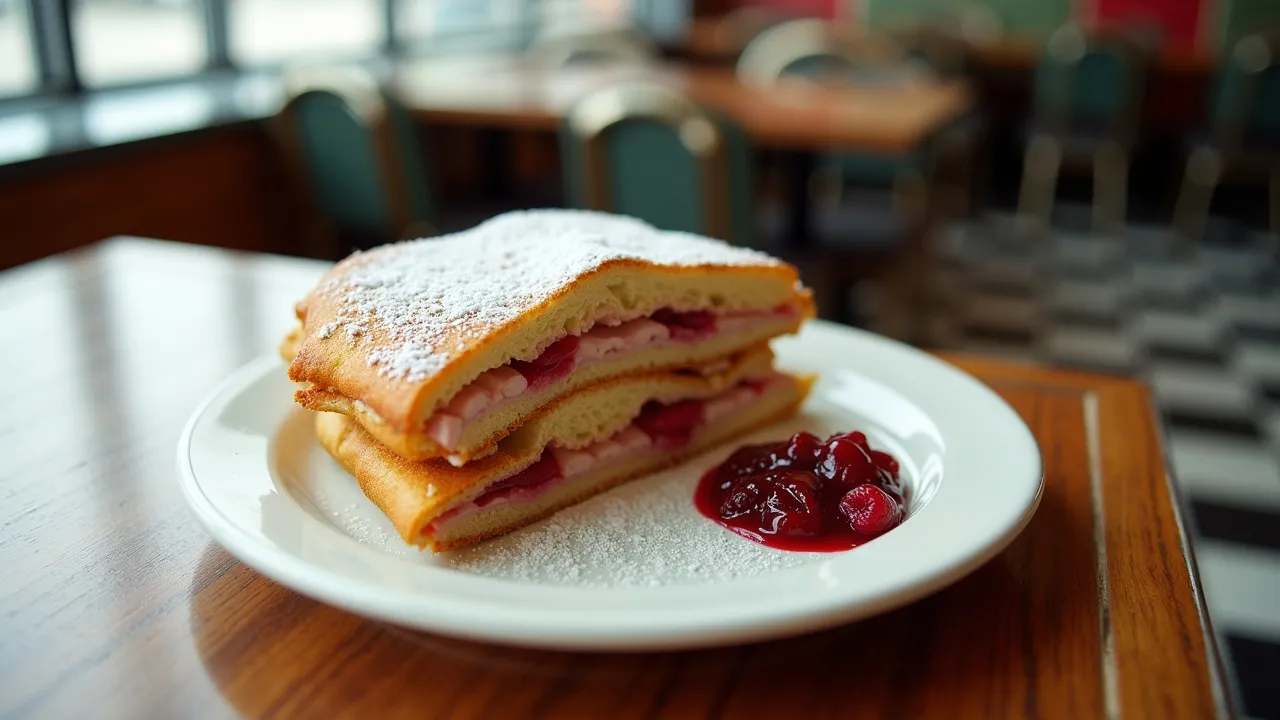
National Monte Cristo Day, observed on September 17th, celebrates the iconic Monte Cristo sandwich—a decadent fried ham, turkey, and Swiss cheese creation dusted with powdered sugar. This day honors the sandwich's rich history and its beloved status in American diner culture.
The Historical Origins & Evolutionary Journey
The Monte Cristo sandwich, a beloved American diner classic, has a history as rich and layered as its ingredients. While the exact origins are debated, the sandwich is widely believed to be a variation of the French croque-monsieur, a grilled ham and cheese sandwich. The Monte Cristo elevates this by adding turkey, dipping the assembled sandwich in egg batter, and frying it until golden brown, then dusting it with powdered sugar and serving it with fruit preserves.
The Foundational Catalyst
The first known recipe resembling the Monte Cristo appeared in the 1930s, but it wasn't until the 1950s and 1960s that the sandwich gained widespread popularity in American diners and coffee shops. The name 'Monte Cristo' likely derives from the novel The Count of Monte Cristo by Alexandre Dumas, evoking a sense of adventure and indulgence. Some speculate that the sandwich was created by chefs looking to add a sweet-savory twist to the traditional croque-monsieur, using powdered sugar and jam to create a unique flavor profile.
The Legislative/Official Adoption
National Monte Cristo Day was established in 1998 by a coalition of food enthusiasts and diner owners seeking to honor this iconic sandwich. Unlike federal holidays, food holidays like this one are not officially recognized by the U.S. government but are celebrated informally through social media, restaurant promotions, and home cooking. The date September 17th was chosen to coincide with the end of summer and the beginning of comfort food season, making it an ideal time to enjoy this warm, hearty sandwich.
Modern Global Legacy
Today, the Monte Cristo has evolved beyond its diner roots. Chefs worldwide have created gourmet variations using artisanal breads, exotic cheeses, and house-made preserves. The sandwich has also become a symbol of American indulgence in popular culture, appearing in movies, TV shows, and food blogs. National Monte Cristo Day serves as a reminder of the creativity and fusion that define American cuisine, encouraging people to experiment with flavors and share their own versions.
How to Celebrate National Monte Cristo Day
National Monte Cristo Day offers a perfect excuse to indulge in this delectable sandwich. Whether you're a seasoned home cook or a diner enthusiast, there are myriad ways to celebrate. Below are actionable strategies for individuals, schools, and organizations.
For Individuals and Families
- Make a Classic Monte Cristo at Home: Use thick slices of bread, ham, turkey, and Swiss cheese. Dip the sandwich in beaten egg and milk, then fry in butter until golden. Dust with powdered sugar and serve with raspberry or strawberry jam.
- Host a Monte Cristo Tasting Party: Invite friends to bring their own variations, such as using brioche, adding bacon, or swapping Swiss for Gruyère. Vote on the best version.
- Visit a Local Diner: Many diners offer specials on this day. Support local businesses by ordering their Monte Cristo and sharing your experience on social media with #NationalMonteCristoDay.
For Schools and Educational Institutions
- Cooking Class Activity: Teach students about the history of the sandwich while preparing a simple, safe version (e.g., using an electric griddle). Discuss the cultural fusion of French and American cuisines.
- Cultural Lesson: Incorporate the holiday into a lesson on food traditions, exploring how holidays like this reflect American culinary creativity.
For Organizations and Businesses
- Restaurant Promotions: Offer a discounted Monte Cristo combo meal, or create a limited-time gourmet version with unique ingredients like prosciutto or fig jam.
- Office Potluck: Encourage employees to bring in Monte Cristo sandwiches or related dishes. Hold a friendly competition for the best presentation.
No matter how you celebrate, the key is to enjoy the process and share the joy of this unique sandwich with others.
The Monte Cristo Sandwich: A Culinary Profile
The Monte Cristo sandwich is a masterclass in contrasting textures and flavors. At its core, it is a fried sandwich that combines savory, salty meats and cheese with a sweet, crispy exterior and a dusting of powdered sugar. The typical ingredients include ham, turkey, and Swiss cheese sandwiched between slices of bread—often white or challah—then dipped in an egg batter and pan-fried until the bread is golden and the cheese melts. The final touch: a generous dusting of powdered sugar and a side of fruit preserves, usually raspberry or strawberry, for dipping.
Key Characteristics
- Sweet-Savory Balance: The combination of salty meats and sweet powdered sugar creates a unique umami experience that has captivated diners for decades.
- Texture: The exterior is crisp and slightly caramelized from the egg batter and sugar, while the interior remains soft and gooey with melted cheese.
- Versatility: Chefs often experiment with different breads (brioche, sourdough), meats (roast beef, chicken), cheeses (cheddar, provolone), and jams (apricot, blackberry).
Nutritionally, the Monte Cristo is an indulgence, typically containing around 600-800 calories per sandwich, with high fat and carbohydrate content. However, its popularity endures as a comfort food that evokes nostalgia for classic American diners.
Variations Around the World
While the Monte Cristo is quintessentially American, similar dishes exist across the globe, each reflecting local tastes and ingredients.
France: The Croque-Monsieur and Croque-Madame
The Monte Cristo's direct ancestor, the croque-monsieur, is a baked or fried ham and cheese sandwich, often topped with béchamel sauce. The croque-madame adds a fried egg on top. Unlike the Monte Cristo, these are not battered or dusted with powdered sugar, maintaining a purely savory profile.
United States: Regional Twists
- Hawaiian Monte Cristo: Adds grilled pineapple and ham, using sweet Hawaiian bread for a tropical twist.
- New Orleans Monte Cristo: Often incorporates Creole mustard or a spicy remoulade, reflecting local Cajun flavors.
- California Monte Cristo: Uses avocado and turkey bacon, appealing to health-conscious diners.
Other Countries
- Australia: Known as a 'toasted ham and cheese' but sometimes served with a fried egg and beetroot.
- Japan: Gourmet versions use shokupan (milk bread) and may include teriyaki-inspired ingredients.
These variations demonstrate the sandwich's adaptability and enduring global appeal.
The Rise of Food Holidays in Modern Culture
National Monte Cristo Day is part of a broader phenomenon: the proliferation of food-related holidays in the United States and beyond. From National Pizza Day to National Donut Day, these celebrations have become a staple of social media culture, providing content for influencers, marketing opportunities for brands, and fun ways for people to engage with food.
Why Food Holidays Matter
Food holidays serve several purposes:
- Cultural Preservation: They keep traditional dishes and culinary practices alive, encouraging people to cook and share recipes.
- Community Building: Sharing food online fosters a sense of belonging and collective enjoyment.
- Economic Boost: Restaurants and food brands see increased sales and engagement on their social media channels during these events.
The rise of food holidays can be traced to the early 2000s, when websites and calendars began compiling lists of unofficial days. Social media platforms like Instagram and TikTok amplified their reach, turning them into viral moments.
Industry and Economic Impact
While National Monte Cristo Day may not have the economic weight of major holidays, it still influences the food industry in measurable ways. Restaurants, particularly diners and casual dining chains, often run special promotions, leading to increased foot traffic and sales. Food bloggers and influencers create recipes and videos, driving online traffic and ad revenue. Additionally, the holiday supports small businesses, such as local bakeries that supply bread and preserves.
Promotional Strategies
Common marketing tactics include:
- Limited-Time Offers: Restaurants feature a Monte Cristo sandwich as a special, sometimes with a unique twist.
- Social Media Campaigns: Using hashtags like #NationalMonteCristoDay, businesses encourage customers to share photos.
- Collaborations: Food brands partner with influencers to create sponsored content highlighting the sandwich.
The cumulative effect of multiple food holidays throughout the year contributes to a vibrant, ever-evolving food culture that benefits producers, retailers, and consumers alike.
Historical Timeline
First known recipes resembling the Monte Cristo appear in American cookbooks, though it is still considered a variation of the croque-monsieur.
The Monte Cristo gains popularity in diners and coffee shops across the United States, especially in the Northeast and Midwest.
Chain restaurants like Bennigan's and TGI Fridays add Monte Cristo sandwiches to their menus, popularizing it nationwide.
National Monte Cristo Day is established by food holiday enthusiasts, with September 17th selected to mark the transition to comfort food season.
The rise of food blogging and social media leads to a resurgence of interest in the Monte Cristo, with users sharing recipes and photos online.
Gourmet variations appear in high-end restaurants, using artisanal ingredients like brioche and fig jam.
National Monte Cristo Day is featured in several national food calendars, gaining official recognition from food media outlets.
During the COVID-19 pandemic, home cooking surges, and the Monte Cristo becomes a popular comfort food for families in lockdown.