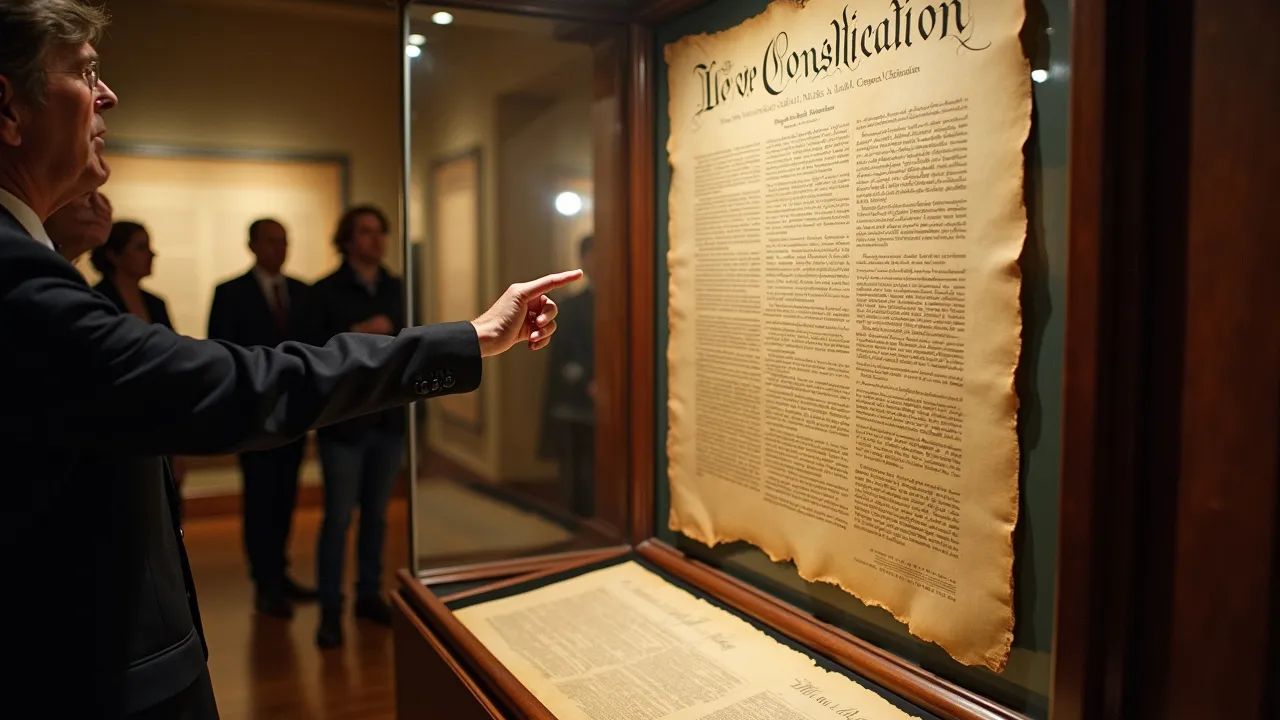
Constitution Day, observed on September 17th, commemorates the signing of the U.S. Constitution in 1787. It honors the foundational document of American democracy and promotes civic education.
The Historical Origins & Evolutionary Journey
Constitution Day traces its roots to the signing of the United States Constitution on September 17, 1787, at Independence Hall in Philadelphia. This seminal event established the framework for the U.S. federal government and remains a cornerstone of American democracy.
The Foundational Catalyst
The Constitutional Convention convened from May to September 1787, with delegates from twelve states (Rhode Island absent) debating the structure of the new government. Key figures such as James Madison, Alexander Hamilton, and George Washington played pivotal roles. The convention aimed to replace the weak Articles of Confederation with a stronger central authority. After months of compromise, the final document was signed by 39 of the 55 delegates.
The Legislative/Official Adoption
Although the Constitution was signed in 1787, it took until 1788 for the required nine states to ratify it. The day itself was not officially recognized until much later. In 1952, Congress established "Citizenship Day" on September 17th to honor new citizens. Decades later, Senator Robert Byrd inserted a provision into a 2004 spending bill that renamed the day "Constitution Day" and mandated that all educational institutions receiving federal funds teach about the Constitution on that date.
Modern Global Legacy
Beyond the United States, many countries celebrate their own constitution days, such as India (January 26) and Norway (May 17). However, the U.S. Constitution's influence as the world's oldest written national constitution has inspired numerous democracies. Today, Constitution Day serves as a reminder of the rule of law and the enduring principles of liberty, justice, and separation of powers.
How to Celebrate Constitution Day
Constitution Day is both a civic holiday and an educational opportunity. Observances range from formal ceremonies to classroom activities. Below are actionable ways to celebrate.
- Read the Constitution: Dedicate time to read the original document and its amendments. The National Archives offers digital access.
- Attend a Naturalization Ceremony: Many courthouses hold citizenship oath ceremonies on September 17th.
- Participate in Civic Discussions: Organize or join a debate on constitutional issues like free speech or federal power.
- Visit Historic Sites: Tour Independence Hall or the National Constitution Center in Philadelphia.
- School Programs: Teachers can use free lesson plans from the Bill of Rights Institute iCivics.
Corporate and Social Rituals
- Workplace celebrations: Hold a trivia contest or distribute pocket constitutions.
- Social media campaigns: Share quotes from the preamble or amendments using #ConstitutionDay.
- Community events: Libraries often host lectures or film screenings on constitutional history.
Internationally, countries with written constitutions may hold flag hoisting ceremonies or special court sessions. For example, India's Constitution Day on January 26 features a grand parade in New Delhi.
Civic Education and the Constitution
Constitution Day emphasizes the importance of civic literacy. Surveys show that only about one-third of Americans can name all three branches of government. The day aims to bridge that gap through educational outreach.
School Requirements
Federal law mandates that any school receiving federal funds must provide educational programming on the Constitution every September 17th. This includes public schools, colleges, and even military academies. Many institutions distribute copies of the Constitution or host guest speakers.
Digital Resources
Organizations like the National Archives offer interactive online exhibits. The Constitution Center's "Interactive Constitution" allows users to explore scholarly interpretations of each clause. These tools make the document accessible to all ages.
Citizenship education also focuses on the Bill of Rights, which protects freedoms of speech, religion, and press. Understanding these rights enables individuals to engage more effectively in democratic processes.
Global Impact of Constitutional Governance
The U.S. Constitution has served as a model for many nations, particularly in the post-colonial era. Its principles of checks and balances, federalism, and judicial review have been adapted worldwide.
Influence on Other Constitutions
Countries such as India, Germany, and South Africa incorporated elements from the U.S. Constitution when drafting their own. For instance, the German Basic Law (1949) includes a strong federal structure and an independent judiciary. The Indian Constitution (1950) adopted a bill of rights and a supreme court with judicial review.
Challenges and Adaptations
Not all countries fully replicate the U.S. model. Some parliamentary systems concentrate power differently. Nonetheless, the concept of a written constitution as the supreme law of the land has become a global standard. Over 150 nations have written constitutions today.
Constitution Day, therefore, is not just an American holiday but a celebration of constitutionalism itself. It underscores the value of rule of law in protecting human rights and preventing tyranny.
Key Supreme Court Cases Shaping Constitutional Interpretation
The Constitution is a living document, interpreted by the Supreme Court. Landmark rulings have defined the scope of federal power and individual liberties.
- Marbury v. Madison (1803): Established judicial review, giving courts the power to strike down unconstitutional laws.
- Brown v. Board of Education (1954): Declared racial segregation in public schools unconstitutional under the 14th Amendment.
- Roe v. Wade (1973): Recognized a constitutional right to privacy, including abortion access (later overturned in 2022).
- Citizens United v. FEC (2010): Protected corporate political spending as free speech under the First Amendment.
These cases demonstrate how constitutional interpretation evolves with societal changes. On Constitution Day, discussions often center on contemporary issues like voting rights, gun control, and executive power. Understanding the Court's role helps citizens appreciate the balance of powers.
Constitutional Amendments: The Living Document
The Framers included Article V, allowing amendments to adapt to future needs. Since ratification, 27 amendments have been added.
The Bill of Rights
First ten amendments, ratified in 1791, guarantee fundamental freedoms. These include the First Amendment's protections for speech, religion, press, assembly, and petition.
Major Later Amendments
- 13th Amendment (1865): Abolished slavery.
- 19th Amendment (1920): Granted women the right to vote.
- 26th Amendment (1971): Lowered voting age to 18.
Constitution Day often highlights proposed amendments, such as the Equal Rights Amendment (ERA). The amendment process reflects the people's ability to perfect their government over time.
Historical Timeline
The U.S. Constitution is signed by 39 delegates at the Constitutional Convention in Philadelphia on September 17.
The Constitution is ratified by the required nine states and goes into effect.
The Bill of Rights (first ten amendments) is ratified.
Congress establishes September 17 as 'Citizenship Day' to honor new U.S. citizens.
Senator Robert Byrd's amendment renames 'Citizenship Day' as 'Constitution Day' and mandates educational programming in federally funded schools.
Constitution Day is widely observed with educational events, naturalization ceremonies, and online resources promoting civic knowledge.