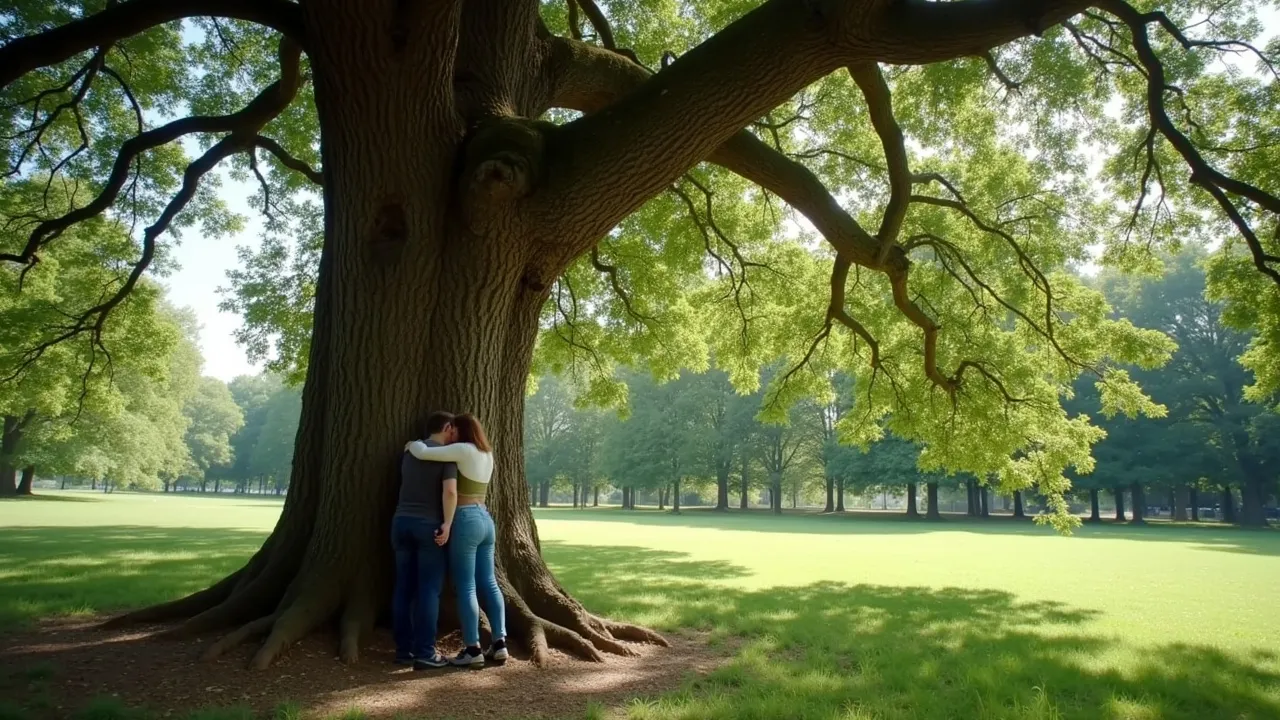
National Love a Tree Day on May 16 celebrates the beauty and importance of trees. Discover its history, ways to participate, and how you can help protect our leafy neighbors for future generations.
The Historical Origins & Evolutionary Journey
National Love a Tree Day began as a grassroots effort to complement the more formal Arbor Day, which focuses on planting trees. While Arbor Day (the last Friday in April) has been a national observance since 1872, many felt that a separate day dedicated purely to appreciating and enjoying existing trees was needed.
The Foundational Catalyst
The early 21st century saw a surge in environmental awareness. In 2009, a coalition of urban foresters and educators proposed a day to simply 'love trees'—to encourage people to spend time with trees, learn about them, and advocate for their protection. The Arbor Day Foundation, recognizing the gap, officially adopted the idea in 2011.
The Legislative/Official Adoption
Unlike Arbor Day, which was proclaimed by President Richard Nixon in 1970, National Love a Tree Day has no federal proclamation. Instead, it gained traction through social media and nonprofit campaigns. The Arbor Day Foundation designated May 16 as the date, strategically placed after the peak of spring planting and before summer heat, making it ideal for tree-focused activities.
Modern Global Legacy
Today, the day is celebrated in schools, parks, and nature centers across the United States. While not a public holiday, it has inspired similar observances in Canada and the UK. The focus has expanded to include tree hugging, canopy walks, and digital campaigns like #LoveATree. The day serves as a reminder that trees are vital for mental health, biodiversity, and climate resilience.
How to Celebrate National Love a Tree Day
Whether you have a backyard full of oaks or a single street tree, National Love a Tree Day offers countless ways to show appreciation. Below are actionable ideas for individuals, families, schools, and organizations.
Individual and Family Activities
- Tree Hugging: Spend at least 5 minutes embracing a tree. Research shows it reduces cortisol levels.
- Tree Bathing: Practice Shinrin-yoku (forest bathing) by walking slowly among trees, using all your senses.
- Leaf Rubbing Art: Place paper over a leaf and rub with a crayon to create nature-inspired art.
- Adopt a Tree: Choose a tree in your neighborhood and commit to watering and caring for it throughout the year.
School and Educational Programs
- Tree Identification Walks: Teach students to identify local species using bark, leaves, and seeds.
- Plant a Tree: Organize a tree-planting ceremony on school grounds, involving students in digging and mulching.
- Art Contests: Host a drawing or poetry competition themed around trees.
- Read-Aloud Sessions: Use books like The Giving Tree to spark discussions about generosity and nature.
Corporate and Community Engagement
- Volunteer Tree Care: Coordinate a park cleanup day, removing invasive vines and mulching around tree bases.
- Sponsor a Grove: Companies can fund the planting of a memorial grove or adopt a city block for tree maintenance.
- Social Media Campaign: Encourage employees to post photos with their favorite tree using a branded hashtag.
Global Traditions
In Japan, people traditionally celebrate Midori no Hi (Greenery Day) around this time, focusing on nature appreciation. In the UK, the Tree Council promotes National Tree Week in autumn, but many groups now use May 16 as a secondary focus day. Australia celebrates National Tree Day in July, but arboreal enthusiasts often observe May 16 informally.
The Environmental Impact of Trees
Trees are the planet's lungs, but their benefits go far beyond oxygen production. National Love a Tree Day is an opportunity to highlight these critical ecosystem services.
Carbon Sequestration
A mature tree can absorb up to 48 pounds of CO2 per year. Urban forests in the US alone remove 17.4 million tons of carbon annually, saving billions in health costs.
Air Quality Improvement
Trees trap particulate matter (PM2.5, PM10) and absorb pollutants like sulfur dioxide and nitrogen oxides. A single tree can reduce airborne particulates by up to 60% within its canopy.
Water Management
Trees intercept rainfall, reducing stormwater runoff. A study in Portland, Oregon found that street trees reduce runoff by 18% during heavy rains, lowering flood risk.
Biodiversity Hotspots
Old-growth trees provide habitat for birds, insects, fungi, and mammals. A single oak can support over 500 species of insects alone. Celebrating trees means protecting these micro-ecosystems.
Urban Heat Island Mitigation
Well-placed trees can lower city temperatures by 2-8°C, reducing energy use for air conditioning. This is especially vital in low-income neighborhoods lacking green spaces.
Tree Species to Celebrate on May 16
Not all trees are alike. National Love a Tree Day is a perfect time to learn about iconic and unique species that deserve special attention.
- Giant Sequoia (Sequoiadendron giganteum): The largest tree by volume, found in California's Sierra Nevada. Some specimens exceed 3,000 years old.
- Banyan Tree (Ficus benghalensis): India's national tree, known for its aerial roots that form new trunks. The Great Banyan in Kolkata spans 4.4 acres.
- Baobab (Adansonia): African 'tree of life,' storing up to 32,000 gallons of water in its trunk. Some are over 2,000 years old.
- Maple (Acer): Famous for autumn color and maple syrup. Canada's emblematic tree, but also important in Northeast US.
- Olive Tree (Olea europaea): Symbol of peace, some trees in the Mediterranean are over 2,000 years old and still producing fruit.
- Cherry Blossom (Prunus serrulata): Celebrated in Japan for its fleeting beauty. The National Cherry Blossom Festival in Washington, D.C., draws millions.
Understanding these species fosters a deeper appreciation for global arboreal diversity.
Global Tree Planting Movements
National Love a Tree Day aligns with several international reforestation campaigns. Here are some of the most impactful initiatives.
The Trillion Tree Campaign
Launched by the World Economic Forum in 2020, this ambitious goal aims to plant one trillion trees worldwide. Countries like Ethiopia have broken world records by planting 350 million trees in a single day.
Bonn Challenge
Initiated in 2011, this global effort seeks to restore 350 million hectares of deforested and degraded land by 2030. Over 60 countries have committed, including India and Brazil.
Urban Forest Initiatives
Cities like Melbourne, Paris, and Los Angeles have set canopy coverage targets. For example, Melbourne aims to increase its tree canopy from 22% to 40% by 2040, using citizen science to monitor progress.
Grassroots Movements
Local groups often use May 16 to launch tree adoption programs. For instance, TreePeople in Los Angeles has planted over 3 million trees since 1973 and uses May 16 as a recruitment day for volunteers.
Educational Programs and School Involvement
Schools are key amplifiers of the love for trees. National Love a Tree Day provides a curriculum hook for interdisciplinary learning.
Science Lessons
- Photosynthesis Experiments: Measure oxygen production using aquatic plants like Elodea.
- Tree Ring Analysis: Examine cross-sections to understand climate history and tree age.
- Soil Sampling: Compare soil health under trees vs. open areas.
Art and Language Arts
- Nature Journaling: Write descriptive essays about a chosen tree throughout the year.
- Tree Poetry Slam: Compose haikus or free verse inspired by tree metaphors.
Community Projects
Students can inventory trees on campus using apps like iNaturalist, create identification guides, and present findings to local city councils to advocate for more green spaces.
Case Study: Green Schoolyards America
This nonprofit transforms asphalt schoolyards into green oases with trees, gardens, and rain gardens. Their work shows that access to trees improves student attention and reduces stress.
Corporate and Community Engagement
Businesses and local governments can leverage National Love a Tree Day to boost sustainability goals and employee morale.
Green Team Initiatives
Companies can form a Green Team that organizes tree planting events, carbon offset programs, and educational workshops. For example, Patagonia's '1% for the Planet' donates profits to reforestation.
Employee Volunteering
Paid time off for tree-related volunteering is a growing trend. Salesforce offers 7 days of paid volunteer time per year, often used for tree planting with Arbor Day Foundation.
City-Wide Canopy Challenges
Municipalities can launch competitions between neighborhoods to increase tree counts. For instance, the 'Million Tree Initiative' in New York City surpassed its goal by 2015, planting over 1 million trees.
Financial Incentives
Some cities offer rebates for planting trees on private property. In Sacramento, residents receive up to $75 per tree planted, reducing stormwater fees.
By participating, organizations demonstrate corporate social responsibility and build stronger ties with the community.
Historical Timeline
Environmental educators propose a separate day to appreciate existing trees, complementing Arbor Day's planting focus.
The Arbor Day Foundation officially adopts National Love a Tree Day, setting the date as May 16.
First widespread social media campaign using #LoveATree reaches over 100,000 posts.
The initiative partners with the National Park Service, hosting events at 50 parks across the US.
Over 1 million trees are reported planted or cared for in celebration of National Love a Tree Day.
Due to the pandemic, virtual tree tours and online education programs replace in-person gatherings.
More than 5,000 schools now include National Love a Tree Day in their annual environmental curriculum.
Global expansion: Observances recorded in Canada, UK, Australia, and Japan, with localized activities.