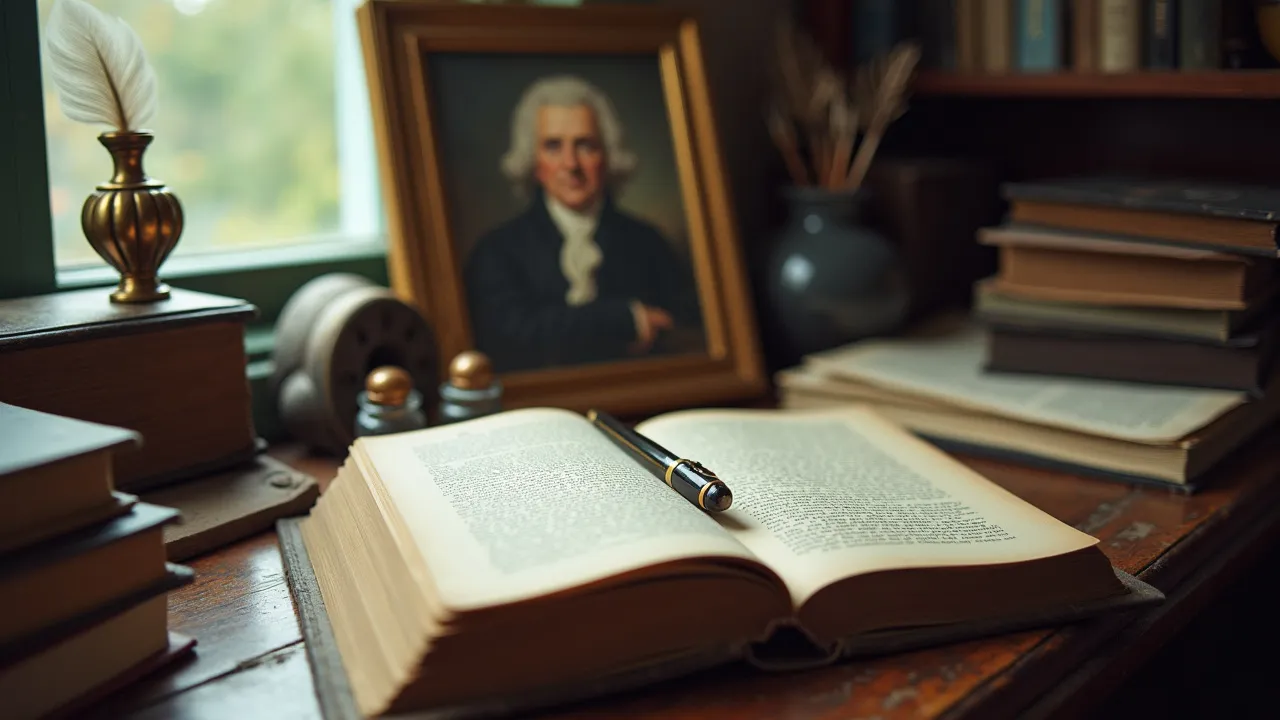
Celebrated on May 16, Biographers Day honors the art of biography writing, commemorating the historic meeting of Samuel Johnson and James Boswell in 1763. It's a day to read, write, and appreciate life stories.
The Historical Origins & Evolutionary Journey
The Foundational Catalyst
The roots of Biographers Day trace back to a single, transformative meeting in London on May 16, 1763. On that day, Samuel Johnson, the preeminent English lexicographer and literary critic, met James Boswell, a young Scottish lawyer with a passion for literature. This encounter sparked a unique friendship and intellectual partnership that would culminate in Boswell's masterpiece, The Life of Samuel Johnson (1791), widely regarded as the greatest biography ever written in the English language. The meeting is considered the catalyst for modern biography, establishing a template for intimate, detailed, and psychologically nuanced life writing.
The Legislative/Official Adoption
Despite its literary significance, Biographers Day remained an informal observance for centuries. It was only in 2005 that the National Association of Independent Writers and Editors (NAIWE) formally established May 16 as Biographers Day. NAIWE aimed to create a dedicated day to honor biographers, promote the craft of biography, and encourage the reading and writing of life stories. The date was chosen specifically to commemorate the Johnson-Boswell meeting, anchoring the day in a concrete historical event. Since then, the day has gained recognition among literary circles, libraries, and educational institutions, though it remains an unofficial holiday.
Modern Global Legacy
Today, Biographers Day has evolved beyond its Anglo-American origins. Literary organizations around the world, including the Biographers International Organization (BIO) and various national biography associations, use the day to host events, panel discussions, and workshops. The day also serves as a platform to discuss ethical issues in biography, such as privacy, accuracy, and the biographer's relationship with their subject. In the digital age, the accessibility of biographical information has expanded the audience for life writing, making Biographers Day more relevant than ever. Social media campaigns with hashtags like #BiographersDay encourage sharing of favorite biographies and writing tips.
How to Celebrate Biographers Day
For Individuals
- Read a biography: Choose a classic like Boswell's Life of Johnson or a modern work like Walter Isaacson's Steve Jobs.
- Write a short biography: Profile a family member, friend, or historical figure you admire. Share it on social media with #BiographersDay.
- Visit a library or archive: Explore primary sources—letters, diaries, photographs—that illuminate a life story.
For Schools and Educators
- Biography writing workshop: Have students research and write a one-page biography of a notable figure.
- Guest speaker: Invite a local author or historian to talk about the process of writing biography.
- Classroom debate: Discuss ethical dilemmas in biography, such as whether to reveal private details.
For Organizations and Publishers
- Host a panel: Bring together biographers to discuss their craft and recent works.
- Discount on biographies: Offer promotions on biography books in bookstores or online.
- Social media takeover: Feature biographers answering questions about their work.
Regional Variations
While May 16 is the global anchor, some regions celebrate biography more broadly. In the United Kingdom, the day often coincides with events at Dr. Johnson's House in London. In the United States, the Biographers International Organization holds an annual conference around this date. In India, literary festivals sometimes schedule biography-themed sessions. Universal to all celebrations is the appreciation for the meticulous craft of capturing a human life in words.
The Art and Craft of Biography Writing
Research as Foundation
Biography begins with exhaustive research. Biographers must comb through archives, conduct interviews, and verify facts. Primary sources—letters, diaries, official documents—form the backbone. Secondary sources provide context. The best biographers also immerse themselves in the subject's world, visiting places they lived and worked.
Narrative and Structure
A compelling biography is more than a chronology; it is a story with themes, conflicts, and character development. Biographers must decide on a narrative arc: linear, thematic, or framed by a pivotal event. They must balance objective facts with interpretive storytelling, avoiding hero worship or vilification. The goal is to present a truthful, multidimensional portrait.
Ethical Considerations
Biographers face dilemmas: how much private information to reveal, how to handle controversial episodes, and how to respect living subjects or their descendants. The Biographers International Organization has published guidelines emphasizing accuracy, fairness, and transparency. Biographers should disclose their sources and acknowledge any biases.
Famous Biographers and Their Impact
Pioneers of the Genre
- James Boswell (1740–1795): His Life of Johnson set the standard for intimate biography.
- Plutarch (c. 46–120 AD): His Parallel Lives influenced biographers for centuries.
- Marcel Schwob (1867–1905): Pioneered the fictionalized biography.
Modern Masters
- Robert Caro: Known for his multivolume biography of Lyndon B. Johnson, exemplifying deep research and narrative power.
- Antonia Fraser: Wrote acclaimed biographies of Mary Queen of Scots and Cromwell.
- Walter Isaacson: Brought accessible biography to a broad audience with works on Steve Jobs, Einstein, and Leonardo da Vinci.
Impact on Culture
Biographies shape our understanding of historical figures and events. They can rehabilitate reputations, inspire new generations, and even influence policy. For instance, Caro's work on Lyndon Johnson has affected how historians view the Great Society. The genre also fuels film and television adaptations, making biography a cornerstone of public history.
Biographers Day Around the World
United States
The Biographers International Organization (BIO) hosts a conference in early May, often featuring keynote speeches and breakout sessions on research methods and publishing. Many public libraries create biography displays and reading lists.
United Kingdom
Dr. Johnson's House in London holds special tours and talks on May 16, focusing on Johnson's life and the craft of biography. The BBC occasionally runs biographical programming.
India
Literary festivals, such as the Jaipur Literature Festival, sometimes schedule biography panels around May. Indian biographers like Ramachandra Guha have contributed significantly to the genre.
Australia
The National Biography Award announces its winner near this date, celebrating the best Australian life writing.
Canada
University literature departments hold symposiums on biographical theory and practice.
Challenges and Ethics in Modern Biography
The Privacy Paradox
Biographers must navigate privacy laws, especially when writing about recently deceased or living people. In some jurisdictions, estates can sue for defamation or invasion of privacy. The biographer must weigh the public's right to know against the subject's dignity.
Bias and Objectivity
No biography is completely objective. Biographers have relationships with their subjects—admiration, hostility, or indifference. The ethical biographer acknowledges these biases and strives for balance, presenting evidence that may contradict their own interpretation.
Digital Age Challenges
The internet offers vast troves of data—emails, social media posts—that can enrich biographies but also raise concerns about authenticity and consent. Biographers must verify online sources carefully and respect copyright. Additionally, the speed of digital publishing pressures authors to produce faster, potentially sacrificing accuracy.
The Future of Biography in the Digital Age
Enhanced Research Capabilities
Online archives, digitized newspapers, and databases like Ancestry.com make research faster and more thorough. AI tools can help analyze large volumes of text, but the interpretive work remains human.
Multimedia and Transmedia Biography
Biographies are no longer just books. Podcasts, documentary series, and interactive websites offer new ways to tell life stories. For example, the podcast Life Stories brings biography to audio audiences. Future biographers may use virtual reality to immerse readers in a subject's environment.
Democratization of Biography
Social media allows anyone to write and share biographical content—from Wikipedia entries to personal blogs. This democratization means more voices, but also a need for critical media literacy. Biographers Day may increasingly celebrate not just professional authors but anyone who contributes to preserving life stories.
Historical Timeline
Samuel Johnson meets James Boswell in London on May 16, initiating a friendship that leads to Boswell's legendary biography.
Boswell publishes 'The Life of Samuel Johnson', setting the standard for modern biography.
The genre expands with Lytton Strachey's 'Eminent Victorians', introducing a critical, psychologically aware approach.
Robert Caro begins research for 'The Power Broker', exemplifying deep investigative biography.
The National Association of Independent Writers and Editors establishes Biographers Day on May 16.
The Biographers International Organization holds its first annual conference, strengthening the global community.
Biographers Day gains traction on social media, with thousands sharing favorite biographies under #BiographersDay.