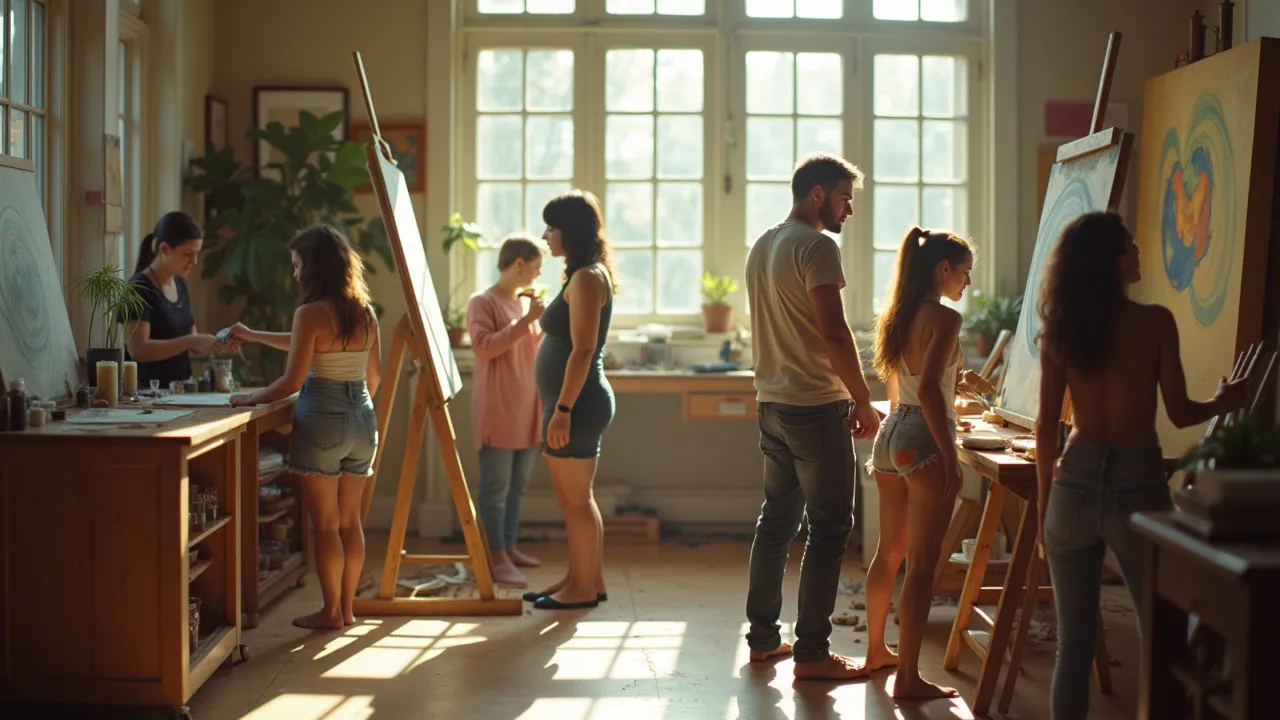
National Live Creative Day, observed on September 14th, encourages everyone to embrace their creative potential. It's a celebration of imagination, innovation, and the transformative power of creative expression in daily life.
The Historical Origins & Evolutionary Journey
National Live Creative Day was established in 2012 by the Live Creative Foundation, a nonprofit organization dedicated to fostering creativity across all sectors of society. The day was born from a growing recognition that creativity is not just an artistic pursuit but a fundamental human capacity essential for problem-solving, innovation, and personal fulfillment.
The Foundational Catalyst
The early 21st century saw a surge in psychological research on creativity, led by figures like Mihaly Csikszentmihalyi and Teresa Amabile. Their work highlighted that creativity thrives under conditions of autonomy, curiosity, and intrinsic motivation. In parallel, educational systems began to emphasize STEM over arts, prompting a counter-movement advocating for the inclusion of creative skills in curricula. The Live Creative Foundation emerged from this movement, aiming to institutionalize a day that would remind individuals and institutions to prioritize creative thinking.
The Official Adoption
In 2012, the foundation petitioned various cultural councils and secured official recognition for September 14th as National Live Creative Day in the United States. The date was chosen to coincide with the back-to-school season, encouraging students and teachers to reintegrate creativity into their routines. Over the years, the day gained momentum through social media campaigns, community art events, and partnerships with major creative brands like Adobe and Crayola.
Modern Global Legacy
Today, National Live Creative Day is celebrated in over 30 countries. It has evolved from a U.S.-centric observance into a global movement, with activities ranging from digital art marathons to corporate innovation workshops. The day now also emphasizes creativity in technology, such as coding and design thinking, reflecting the expanding definition of what it means to be creative in the digital age.
How to Celebrate National Live Creative Day
National Live Creative Day invites everyone to engage in creative activities, both individually and collectively. Below are actionable strategies for individuals, schools, and organizations to mark the day meaningfully.
For Individuals
- Start a creative project: Dedicate the day to starting something new—a painting, a poem, a song, or a DIY craft. The goal is process, not perfection.
- Experiment with a new medium: If you usually write, try photography. If you paint, try digital illustration. Stepping out of your comfort zone sparks fresh neural pathways.
- Join a community event: Many cities host open mic nights, art fairs, or maker spaces. Check local listings or online platforms like Eventbrite.
- Document your creativity: Share your process on social media using the hashtag #LiveCreativeDay to inspire others.
For Schools
- Hold a creativity day: Replace regular classes with workshops on creative writing, arts, coding, or improvisational theater.
- Invite guest artists: Local painters, musicians, or inventors can share their journeys and lead activities.
- Create a collaborative mural: Have students contribute to a large wall painting that reflects the school's creative spirit.
For Organizations and Corporations
- Host an innovation sprint: Encourage employees to work on creative solutions to a company challenge, using design thinking methodologies.
- Organize a talent show: Let colleagues showcase their hidden talents—from singing to coding side projects.
- Redecorate the workspace: Set up a 'creativity corner' with art supplies, Lego bricks, or a whiteboard for brainstorming.
In many countries, the celebration adapts to local customs. For instance, in Japan, offices hold kaizen creativity sessions, while in Brazil, street artists often collaborate on public murals. The key is to make creativity accessible and fun for all ages.
The Societal Impact of Creativity
Creativity is a cornerstone of human progress, influencing everything from science and technology to culture and mental health. On National Live Creative Day, we reflect on how creative thinking shapes our world.
Innovation and Economic Growth
According to a 2020 report by the World Economic Forum, creativity is among the top three skills needed for the future workforce. Countries that invest in creative industries—such as design, media, and arts—see significant economic returns. For example, the U.S. creative economy contributes over $800 billion annually, equivalent to about 4.5% of GDP.
Personal Well-Being
Engaging in creative activities reduces stress, improves cognitive function, and enhances emotional resilience. Studies show that even 45 minutes of creative work a day can lower cortisol levels and increase feelings of happiness. National Live Creative Day serves as a reminder to integrate such practices into our routines.
Social Cohesion
Community art projects, from murals to theatre, foster connections among diverse groups. They provide a platform for marginalized voices and promote empathy. In cities like Medellín, Colombia, creative interventions have helped reduce crime and improve neighborhood unity.
Creative Education and Youth Development
Education systems worldwide are rethinking their approach to creativity. National Live Creative Day highlights the importance of nurturing creative skills from an early age.
Why Creativity Matters in Schools
Research by Sir Ken Robinson famously argued that schools often kill creativity by prioritizing standardized testing. In response, many schools have adopted project-based learning and STEAM (Science, Technology, Engineering, Arts, Mathematics) curricula. For instance, Finland’s education system integrates creative problem-solving across all subjects, resulting in high student engagement and innovation rankings.
Initiatives on National Live Creative Day
On September 14th, schools often host 'creativity hours' where students choose their own activities—from building models to writing stories. Teachers use the day to assess not just knowledge but creative potential. Some districts partner with local museums or tech companies to provide real-world creative challenges. The goal is to show that creativity is not a luxury but a vital skill for the 21st century.
Long-Term Benefits
Students who engage in creative education show higher critical thinking, adaptability, and collaboration skills. These traits are increasingly valued by employers and higher education institutions. National Live Creative Day thus acts as a catalyst for systemic change in how we view learning.
The Business of Creativity: Industries and Innovation
Creativity drives innovation across all sectors, and National Live Creative Day provides an opportunity for businesses to reflect on their creative practices.
Creative Industries: A Global Force
The creative industries—including advertising, architecture, arts, design, fashion, film, music, publishing, and software—are among the fastest-growing sectors globally. According to UNESCO, they account for 3% of global GDP and employ 30 million people. On National Live Creative Day, many companies host hackathons or design jams to foster internal innovation.
Corporate Creativity Programs
Forward-thinking companies like Google, IDEO, and Pixar have institutionalized creativity through policies like '20% time' for personal projects and cross-disciplinary teams. National Live Creative Day encourages smaller businesses to adopt similar practices, such as allowing employees to dedicate a portion of their workday to creative exploration.
Measuring Creative ROI
Return on investment for creative initiatives can be intangible but measurable. Metrics include employee satisfaction, patent filings, and revenue from new products. Companies that prioritize creativity consistently outperform their peers on innovation indices. The day serves as a checkpoint for organizations to evaluate their creative culture.
Global Traditions and Cultural Expressions
National Live Creative Day has been adopted worldwide, each region adding its unique flavor. While the core message remains the same, local customs highlight the diversity of creative expression.
North America
In the United States and Canada, communities organize sidewalk chalk festivals, open mic nights, and creative workshops in public libraries. Social media campaigns feature challenges like '30-minute masterpieces' or 'creative selfies' using art supplies.
Europe
In the United Kingdom, the day is often linked to the 'Great British Creativity Festival', with museums offering free entry and street performers taking over town squares. In Germany, cities like Berlin hold 'Kreativmeile' (creative miles) where artists set up pop-up studios.
Asia
In Japan, National Live Creative Day overlaps with 'Creative Workplace Month', where offices introduce origami breaks and design-thinking sessions. In India, schools organize 'Creative Fests' featuring traditional crafts like rangoli and storytelling.
Latin America
In Brazil, the day coincides with 'Dia do Artista' (Artist's Day) and features massive street art projects and capoeira performances. In Argentina, 'Noche de la Creatividad' (Night of Creativity) sees galleries open late with live painting and music.
These global variations underscore the universal yet personal nature of creativity. National Live Creative Day is a canvas for the world to paint its imagination.
Historical Timeline
J.P. Guilford's APA speech on creativity sparks academic interest, laying the groundwork for future creativity research.
The first Torrance Tests of Creative Thinking are developed, providing a standardized measure for creativity.
Sir Ken Robinson's TED talk 'Do Schools Kill Creativity?' becomes one of the most viewed, igniting global debate.
The Live Creative Foundation establishes National Live Creative Day on September 14th, celebrated initially in the United States.
Adobe launches the 'State of Create' report, revealing that 75% of people feel they are not living up to their creative potential.
National Live Creative Day goes global with events in 15 countries; the hashtag #LiveCreativeDay trends on Twitter.
During the COVID-19 pandemic, celebrations shift to virtual platforms; online art jams and creative webinars see record attendance.
The United Nations recognizes September 14th as World Creativity and Innovation Day in partnership with the Live Creative Foundation.