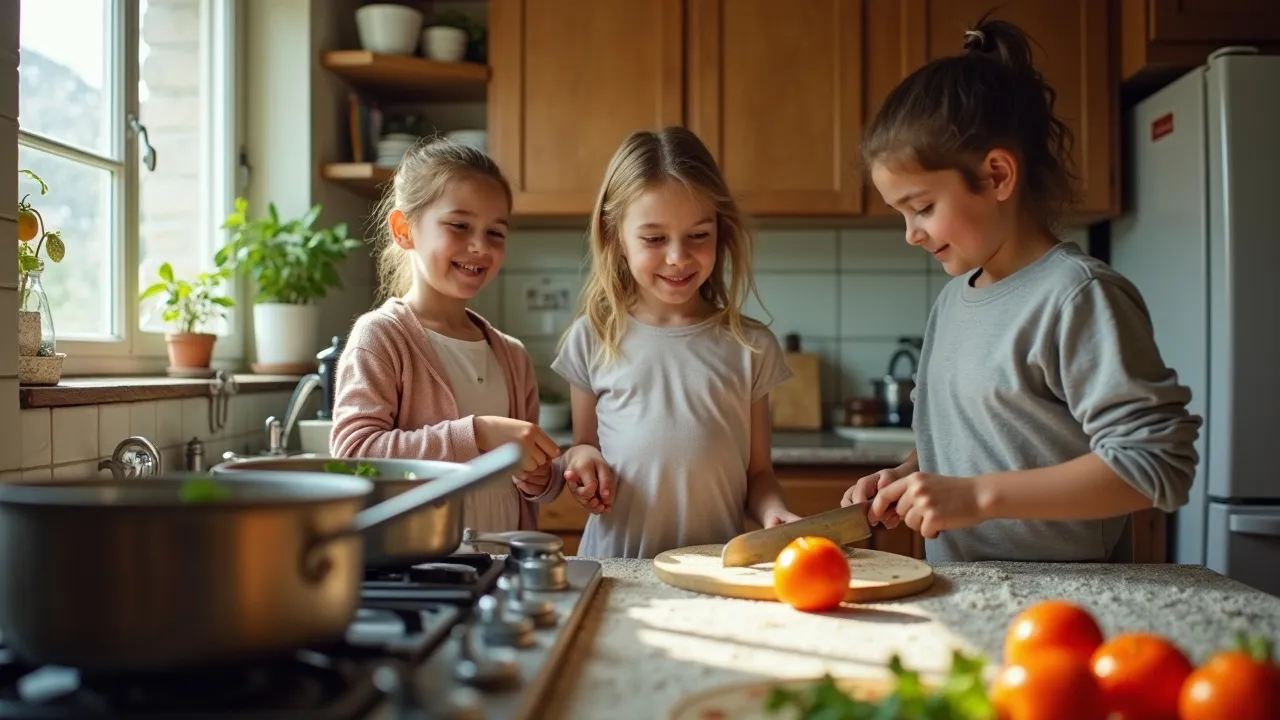
National Kids Take Over The Kitchen Day, observed annually on September 13th, encourages children to cook, bake, and explore culinary creativity with adult supervision. Founded by the nonprofit Kids Cook! in 1998, it promotes kitchen skills, food literacy, and family bonding.
The Historical Origins & Evolutionary Journey
National Kids Take Over The Kitchen Day was first conceived in 1998 by the nonprofit organization Kids Cook!, a group dedicated to empowering children through culinary education. The day was designed to combat the growing disconnect between children and real food, especially amid the rise of processed convenience meals. The founders recognized that hands-on cooking builds confidence, math skills, and healthy eating habits that last a lifetime.
The Foundational Catalyst
The late 1990s marked a turning point in American food culture. Childhood obesity rates were climbing, and the term "food desert" entered public discourse. Studies showed that children who helped prepare meals were more likely to try new foods and develop positive attitudes towards nutrition. Kids Cook! seized this moment, partnering with schools and community centers to host "Kitchen Takeover" events on September 13th, 1998. The first celebrations involved simple recipes like fruit salads, pancakes, and no-bake cookies, with local chefs volunteering to mentor young cooks.
Legislative & Official Adoption
While never formally recognized by Congress, the day gained widespread grassroots support. By the early 2000s, the event had spread to all 50 states and several countries. In 2005, the American Culinary Federation endorsed the day, and the USDA's MyPyramid campaign included kitchen skill-building as part of their educational materials. Schools began integrating "Takeover Day" into their curricula, using it to teach fractions (measuring ingredients) and chemistry (baking reactions).
Modern Global Legacy
Today, the day is celebrated in over 20 countries, including the United Kingdom, Australia, Canada, Japan, and South Africa. The digital age transformed it into a social media phenomenon. Hashtags like #KidsTakeOver and #MiniChef generate millions of impressions every September 13th. Major brands like Kraft Heinz and Betty Crocker release special kid-friendly recipe collections. The nonprofit FamilyCook Productions now spearheads official resources, providing free lesson plans and safety guidelines. The core mission remains unchanged: to turn the kitchen into a classroom of creativity and responsibility.
How to Celebrate National Kids Take Over The Kitchen Day
This day is all about handing the kitchen (with supervision) to children of all ages. Whether you're a parent, teacher, or community organizer, here is the ultimate guide to making the celebration safe, educational, and fun. The key is to let the child lead while ensuring they understand basic safety rules.
For Families at Home
- Plan Ahead: Choose recipes that match your child's age. For ages 3-5: washing veggies, stirring, tearing lettuce. Ages 6-9: measuring, cracking eggs, using a peeler. Ages 10-12: knife skills (child-safe knives), using the stove with supervision.
- Create a Recipe Card: Have your child write or draw the recipe. This reinforces reading and sequencing.
- Set Up Stations: Divide tasks into prep, cooking, and cleaning stations. Let the child be the "head chef" who directs the helpers.
- Safety First: Review how to handle hot surfaces, knives, and cross-contamination. Keep a fire extinguisher nearby and never leave a child unattended with heat.
For Schools & Community Groups
- Host a "Junior Chef" Competition: Teams of 2-4 children create a dish from a mystery basket of ingredients. Judging criteria: taste, presentation, and teamwork.
- Invite Local Chefs: Arrange a virtual or in-person Q&A with a professional chef. Kids can ask about their career path and favorite recipes.
- Incorporate Across Subjects: Math (fractions, doubling recipes), Science (yeast reactions, melting points), Art (food plating), and Social Studies (cultural dishes).
Around the World: Regional Variations
- United Kingdom: Often celebrated as "Kids Takeover" in after-school clubs, focusing on classic British fare like scones and shepherd's pie.
- Australia: Emphasizes outdoor cooking: kids prepare camping meals like damper bread and damper over a campfire.
- Japan: Kids learn to make bento boxes, focusing on presentation and balanced nutrition. Schools host "obento" contests.
- South Africa: Commemorated with community cook-offs using indigenous ingredients like maize and pumpkin.
The Impact on Childhood Development & Food Literacy
Research consistently shows that involving children in meal preparation yields profound developmental benefits. A 2019 study in the Journal of Nutrition Education and Behavior found that children who cooked with their families consumed 76% more vegetables and were 45% more willing to try new foods. Beyond nutrition, cooking builds fine motor skills, enhances mathematical reasoning, and fosters executive functions like planning and task sequencing.
Academic & Cognitive Boosts
Kitchen activities directly support STEM learning. Measuring ingredients introduces fractions and ratios. Following recipes strengthens reading comprehension. Adjusting cooking times teaches estimation and cause-and-effect. Many educators now use cooking as a hands-on teaching tool for subjects like chemistry (emulsification, baking soda reactions) and biology (yeast fermentation).
Emotional & Social Gains
Cooking together strengthens family bonds and creates positive memories. Children who cook report higher self-efficacy and pride in their abilities. The collaborative nature of meal prep teaches teamwork, patience, and the satisfaction of contributing to the household. For shy or anxious children, the kitchen offers a low-pressure environment to practice communication and follow instructions.
Long-Term Health Outcomes
People who learned to cook as children are more likely to maintain a healthy diet as adults. A 2021 survey by the International Food Information Council found that 82% of adults who cook regularly started before age 12. National Kids Take Over The Kitchen Day acts as a gateway to lifelong cooking habits, reducing reliance on ultra-processed foods and lowering obesity risk.
Safety Guidelines & Best Practices for Young Cooks
Safety is paramount when children take over the kitchen. The following guidelines are endorsed by the American Academy of Pediatrics and Kids Cook! to ensure a fun, injury-free experience.
Age-Appropriate Tasks
- Ages 3-5: Wash produce, stir cold ingredients, wipe counters, tear lettuce.
- Ages 6-8: Measure dry and liquid ingredients, crack eggs, use a manual can opener, spread butter or sauce.
- Ages 9-11: Use a knife with a plastic blade or kid-safe knife, peel vegetables, grate cheese (with hand guard), use a microwave.
- Ages 12+: Use a sharp chef's knife with proper grip, operate the stovetop with supervision, use an oven with oven mitts.
Kitchen Safety Rules
- Wash Hands: Scrub with soap for 20 seconds before starting.
- Tie Back Hair: Secure long hair and avoid loose clothing.
- Stay in Designated Area: Only the supervising adult should handle sharp knives or hot pans unless the child is trained.
- Use a Step Stool: For counter access, ensure stability and prevent reaching.
- Know Where the Fire Extinguisher Is: Teach basic fire safety, like not using water on a grease fire.
Allergy & Dietary Considerations
Always review all ingredients for potential allergens, especially nuts, dairy, and gluten. Substitute with safe alternatives when cooking for groups. Encourage the child to taste ingredients raw (when safe) to develop their palate, but caution against raw flour and eggs due to salmonella risk.
Corporate & Community Involvement: How Brands & Organizations Participate
National Kids Take Over The Kitchen Day has become a marketing and CSR (Corporate Social Responsibility) highlight for food-related brands. Major players like General Mills, Pillsbury, and Kraft Heinz launch kid-friendly recipe campaigns and donate to school kitchen programs.
Brand Initiatives
- Betty Crocker: Releases a free "Kids Cookbook" download with easy recipes and safety tips.
- Blue Apron & Home Chef: Offer one-time kid-friendly meal kits with pre-portioned ingredients and simplified instructions.
- KitchenAid: Runs a social media contest where kids submit their original recipes; winners receive a mini stand mixer.
Nonprofit & School Partnerships
Organizations like FoodCorps and Common Threads use the day to launch cooking classes in underserved schools. They provide grants for portable cooking carts, allowing classrooms to become pop-up kitchens. Many libraries host "Cookbook Club" events for kids, where they prepare dishes from books and discuss culinary cultures.
Media & Influencer Engagement
Food bloggers and YouTubers produce special takeover-day content. Popular channels like Binging with Babish (with a kid co-host) and Kids Cooking Channel live-stream on September 13th. Local TV stations often air segments featuring young chefs competing in friendly challenges, reinforcing the day's educational messaging.
The Future of The Observance: Trends & Evolving Traditions
As we move further into the 21st century, National Kids Take Over The Kitchen Day is adapting to new technologies and cultural shifts. The rise of smart kitchen appliances and online recipe platforms are reshaping how children engage with cooking.
Digital Integration
Augmented reality (AR) recipe apps now guide kids through steps with 3D animations. Voice-activated assistants like Amazon Alexa have "kid mode" for reading recipes aloud. Many families are using virtual cooking parties via Zoom, where children cook together from their own homes, sharing results in real-time.
Focus on Sustainability
Modern celebrations increasingly emphasize reducing food waste. Activities include composting vegetable peels, using every part of an ingredient (e.g., carrot tops for pesto), and planning meals to use leftovers. The day is also becoming a platform to teach about plant-based eating, with many recipes being vegan or vegetarian to reduce environmental impact.
Global Expansion
The observance is gaining traction in developing nations where culinary traditions are strong but nutritional education is lacking. In India, for example, local chapters adapt the day to teach children about regional grains and spices. The World Health Organization has recognized the day as a tool for combating malnutrition in all its forms. By 2030, the organizers hope to see formal recognition by UNESCO as a global day of culinary empowerment.
Historical Timeline
Kids Cook! nonprofit founded and inaugurates National Kids Take Over The Kitchen Day on September 13th in the United States with local events.
First school-wide kitchen takeover held in Chicago; lesson plans integrating cooking into math and science curricula emerge.
American Culinary Federation officially endorses the day; USDA includes kitchen skill-building in its MyPyramid campaign.
Celebration expands to Canada and the United Kingdom; first cross-border virtual cooking challenge held.
Social media campaign #KidsTakeOverKitchen trends on Twitter and Instagram; participation reaches 500,000 children.
Major food brands (Betty Crocker, Kraft) launch annual kid-friendly recipe collections and donate cooking kits to underserved schools.
20th anniversary; celebrations in over 15 countries; FamilyCook Productions takes over official coordination.
Pandemic forces virtual celebrations; surge in home cooking leads to record participation; online cooking classes for kids triple.
Over 2 million children globally participate; AR recipe apps introduced; focus on reducing food waste becomes central theme.