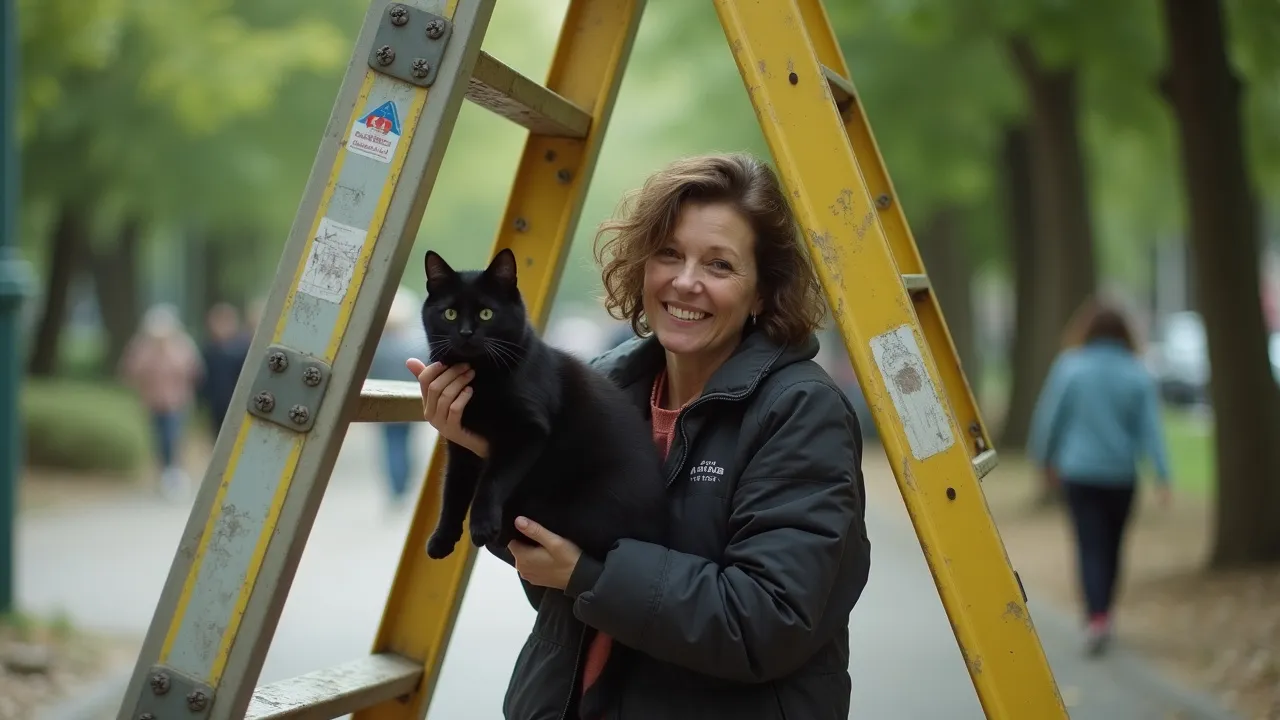
Defy Superstition Day on September 13th encourages people to challenge irrational beliefs and embrace critical thinking. It celebrates science, reason, and skepticism over fear of black cats, broken mirrors, and ladders.
The Historical Origins & Evolutionary Journey of Defy Superstition Day
Defy Superstition Day was founded in 2014 by Linda Foltz, a writer and advocate for rational thinking. The day emerged from a simple but powerful idea: to encourage people to question and actively defy common superstitions that have no basis in fact.
The Foundational Catalyst
Linda Foltz noticed how many people, even in modern times, harbor irrational fears about black cats, broken mirrors, walking under ladders, or the number 13. She wanted to create a lighthearted yet meaningful occasion to confront these fears head-on. The date September 13th was chosen because of its association with the unlucky number 13, making it a perfect day to defy superstition.
Official Adoption & Spread
Originally shared on social media and through word of mouth, Defy Superstition Day quickly gained traction among skeptics, educators, and science communicators. By 2015, it was included in several national day calendars and celebrated in schools and community groups. The day aligns with the broader skepticism movement, which promotes evidence-based thinking.
Modern Global Legacy
Today, Defy Superstition Day is observed worldwide, though primarily in English-speaking countries. It has become a platform for promoting science education, critical thinking, and debunking myths. Events include lectures, workshops, and social media campaigns where people share stories of overcoming superstitious fears.
How to Celebrate Defy Superstition Day
Defy Superstition Day is best celebrated by intentionally performing actions often considered unlucky. Here are specific strategies for individuals, schools, and organizations.
Individual Actions
- Walk under a ladder: Find a ladder and walk under it deliberately, noting that nothing bad happens.
- Break a mirror (safely): Use a wrapped mirror and break it with a hammer (wear safety goggles) to overcome the seven-years-bad-luck myth.
- Let a black cat cross your path: If you see a black cat, calmly continue walking. Adopt or volunteer at a shelter to help black cats, which are often overlooked due to superstition.
- Open an umbrella indoors: Pop open an umbrella inside your home to defy the old wives' tale.
School & Educational Activities
- Debunk myths: Host a 'Myth vs. Science' fair where students research common superstitions and present their scientific explanations.
- Critical thinking exercises: Use puzzles and logic games to teach cognitive biases.
- Guest speakers: Invite a local scientist or skeptic to talk about the importance of evidence.
Organizational & Community Events
- Lucky 13 party: Celebrate the number 13 with decorations, cakes, and games, emphasizing its historical and mathematical significance.
- Social media challenge: Post a video or photo of yourself defying a superstition with the hashtag #DefySuperstitionDay.
- Fundraiser for animal shelters: Raise money for black cat adoption campaigns.
In different cultures, traditions vary. In Japan, people may avoid the number 4 (shi, meaning death) – a defiance could involve writing the number 4 prominently. In Italy, spilling salt is bad luck – a defiance could involve intentionally spilling a small amount and then not throwing it over your shoulder. The key is to adapt the day to local superstitions.
The Science of Superstition: Why We Believe
Superstitions arise from our brain's pattern-recognition abilities, which sometimes create false associations. This cognitive bias, called illusory correlation, leads us to believe that an unrelated action (e.g., knocking on wood) prevents bad luck. Studies show that superstitions can provide a sense of control in uncertain situations, but they also hinder rational decision-making.
Psychological Mechanisms
- Pavlovian conditioning: If a behavior accidentally coincides with a positive outcome, we repeat it.
- Confirmation bias: We remember times when a superstition 'worked' and forget when it didn't.
- Magical thinking: The belief that thoughts or actions can influence unrelated events.
Understanding these mechanisms helps us overcome superstitions through education and exposure.
Global Superstitions and Their Origins
Superstitions vary widely across cultures, yet many share common themes. Exploring them highlights the power of collective belief and the need for critical thinking.
Common Superstitions Around the World
- Black cats (Western): Associated with witches and bad luck, but in some cultures like Japan, black cats are considered lucky.
- Broken mirrors (Global): Thought to break the soul, originating from ancient Roman belief that mirrors reflect the soul.
- Number 13 (Western): Fear of Friday the 13th and the number 13 stems from Norse mythology and Christian tradition (Judas being the 13th apostle).
- Evil eye (Mediterranean & Middle East): The belief that envy can cause harm, countered by talismans like the Nazar.
- Salt over shoulder (Western): Spilling salt is bad luck; throwing it over your left shoulder blinds the devil.
- Whistling indoors (Russia): Whistling indoors is believed to cause financial loss.
Defying these superstitions is a step toward cultural understanding and rational thinking.
The Role of Skepticism in Modern Society
Defy Superstition Day aligns with the skepticism movement, which advocates for evidence-based beliefs. Skepticism is not cynicism; it is the practice of questioning claims and demanding proof.
Benefits of Skeptical Thinking
- Better decision-making: Reduces influence of cognitive biases.
- Scientific literacy: Encourages understanding of the scientific method.
- Resilience against misinformation: Helps identify pseudoscience and scams.
Organizations like the Committee for Skeptical Inquiry and the James Randi Educational Foundation promote critical thinking and have debunked many superstitions.
How Defy Superstition Day Impacts Mental Health
While superstitions can offer comfort, excessive reliance on them can lead to anxiety and compulsive behaviors. Defy Superstition Day encourages people to face irrational fears, which can reduce anxiety over time.
Exposure Therapy Principle
Deliberately confronting superstitions mimics exposure therapy, a proven treatment for phobias. By performing 'unlucky' actions and seeing no negative consequences, individuals can rewire their brain's fear response. This day can be a first step for those struggling with superstitious rituals.
Tips for Mental Health
- Start small: defy one superstition at a time.
- Reflect on outcomes: note that nothing bad happens.
- Seek professional help if superstitions interfere with daily life.
Historical Timeline
The term 'superstition' is formally defined in psychology literature as an irrational belief in supernatural causation.
Psychologist B.F. Skinner publishes a study on superstition in pigeons, demonstrating how random reinforcement creates superstitious behaviors.
The Committee for the Scientific Investigation of Claims of the Paranormal (CSICOP) is founded, later becoming CSI, promoting skepticism.
The James Randi Educational Foundation launches a million-dollar challenge for anyone proving paranormal abilities, highlighting lack of evidence.
The term 'Defy Superstition Day' first appears in online calendar databases, though not yet officially recognized.
Linda Foltz officially establishes Defy Superstition Day on September 13th, gaining media attention.
Defy Superstition Day is featured in major educational resources, including lesson plans for critical thinking.
Social media campaigns for Defy Superstition Day reach millions, with celebrities and scientists participating.