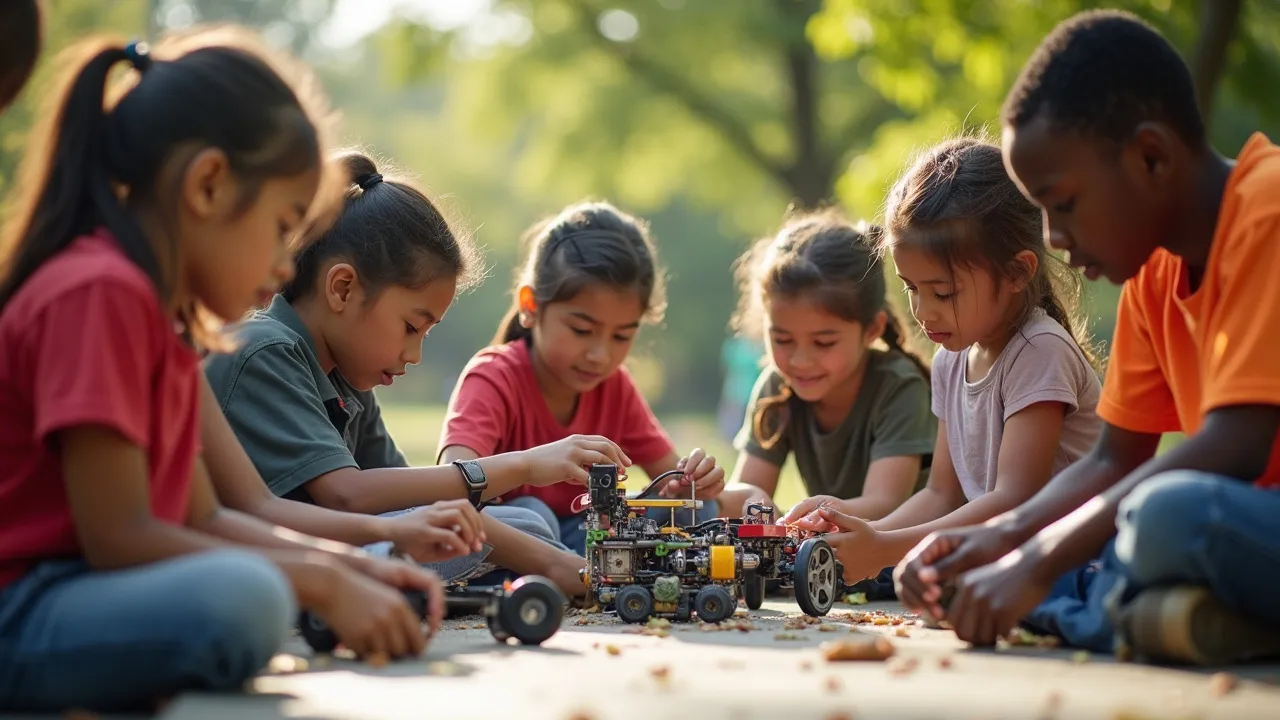
National July 31 Celebration 6ae8 honors community-driven innovation and unity. Observed annually on July 31st, it encourages collaborative problem-solving, technological literacy, and intergenerational cooperation.
The Historical Origins & Evolutionary Journey
The National July 31 Celebration 6ae8 emerged from a grassroots movement in the mid-2010s, born out of a growing need to bridge generational divides and inspire collective action around science, technology, engineering, arts, and mathematics (STEAM) education. The day was formally established in 2015 by the Community Innovation Alliance, a coalition of educators, engineers, artists, and local government officials who saw the potential of a unified day to spark lasting societal change.
The Foundational Catalyst
In 2014, a series of community forums across several midwestern US cities highlighted a troubling disconnect: older generations held vast practical knowledge but limited digital skills, while younger people were digitally native but lacked real-world problem-solving experience. The Alliance proposed a single day each year where communities would intentionally mix these skill sets through hands-on projects. The first official celebration on July 31, 2016, saw over 50 cities host events ranging from community garden automation to intergenerational coding workshops.
The Legislative/Official Adoption
Although not a federal holiday, the observance gained rapid support from municipal proclamations. By 2018, over 200 cities and 15 states had signed resolutions endorsing the third annual National July 31 Celebration. The United Nations Educational, Scientific and Cultural Organization (UNESCO) recognized the initiative in 2019 as a model for community-based innovation. Today, the day is celebrated on six continents, with events coordinated through a central nonprofit hub.
Modern Global Legacy
The celebration has evolved beyond a single day. Many communities now run year-round 'Innovation Clubs' that culminate in a July 31 showcase. The 6ae8 suffix originally referred to a project code for the first urban smart-garden prototype, but it has since become a symbolic marker of the movement's tech-forward identity. In 2023, over 1.2 million participants took part across 1,800 registered events worldwide.
How to Celebrate National July 31 Celebration 6ae8
Participation can be as simple or elaborate as you like. The core principle is to bring people of different ages and backgrounds together to create, build, or learn something new. Below are actionable strategies divided by audience.
For Individuals and Families
- Organize a backyard 'Innovation Fair' with neighbors—assign each household a simple project like building a birdhouse with solar lights or a homemade water filter.
- Attend a local maker space or library workshop. Many offer free sessions on 3D printing, coding, or electronics on this day.
- Start a 'Legacy Interview'—record an older relative explaining a traditional craft or skill, then share it online using #July31Celebration.
For Schools and Youth Groups
- Host a 'Reverse Mentorship' hour where students teach teachers a digital skill (e.g., social media, video editing).
- Launch a 'Community Challenge'—design a solution to a local problem, such as reducing food waste or improving park accessibility.
- Invite local engineers or artisans to run hands-on stations—no lectures, only guided making.
For Organizations and Corporations
- Encourage employees to volunteer at a local innovation event during work hours.
- Showcase intern or employee-led projects in a lunchtime 'Demo Day'.
- Sponsor a 'Public Prototype' competition with prizes for the most collaborative idea.
Global Impact and Reach
What started as a small US initiative has grown into a worldwide movement. In 2024, registered events spanned 32 countries. The celebration’s emphasis on intergenerational collaboration has proven especially resonant in aging societies like Japan and Italy, where community bonds are strong but digital divides are wide. In Kenya, the day has been adapted for rural areas, focusing on low-tech innovations like water harvesting and solar cooking. Meanwhile, in Brazil, urban centers host large-scale 'Innovation Carnivals' blending music, art, and engineering.
The 6ae8 designation has also inspired a digital platform where participants can upload project blueprints and share outcomes. Over 15,000 open-source designs have been shared, ranging from assistive devices for the elderly to low-cost classroom microscopes. The long-term goal is to create a global repository of community-driven inventions.
Core Societal Themes
Five core themes underpin the National July 31 Celebration 6ae8: Collaboration across age and skill groups; Innovation that serves community needs; Education through hands-on experience; Sustainability through repairable, low-waste designs; and Equity in access to technology. These themes are deliberately broad to allow local interpretation. In practice, they manifest as a rejection of the 'solo genius' myth—the idea that innovation must come from isolated experts. Instead, the day champions collective intelligence.
A recurring activity is the 'Puzzle Project' where teams receive a box of random materials (wood scraps, old electronics, fabric) and must build something useful within two hours. No instructions are given, forcing natural leadership and improvisation. This exercise has been shown to increase participants' confidence in tackling unfamiliar problems.
Relevant Industry Transformations
Several industries have been influenced by the observance. The education technology sector, for example, has developed new 'maker kits' specifically designed for mixed-age groups. Companies like LittleBits and KiwiCo have reported a spike in July sales tied to the celebration. The community development field now uses July 31 as a formal benchmark for measuring civic engagement metrics. Municipalities often schedule project launches to coincide with the day. Even the corporate social responsibility landscape has shifted: many firms now include 'Innovation Day' participation in their annual sustainability reports.
Notably, the celebration has spurred a niche consulting industry—firms that specialize in designing intergenerational workshop programs. These consultants help organizations avoid common pitfalls like age-segregated activities or overly complex projects.
Challenges and Criticisms
Despite its popularity, the movement faces challenges. Critics argue that the day can become a tokenistic box-checking exercise if not deeply integrated into ongoing work. Some events have been criticized for reinforcing existing power dynamics—for instance, when tech-savvy youth dominate rather than co-create with older adults. Organizers are increasingly trained in facilitation techniques that ensure equal voice. Another criticism is the lack of follow-through; without sustained support, many promising prototypes never leave the workshop floor. The Alliance is addressing this by launching a micro-grant program for the most viable community projects.
Accessibility remains a hurdle: events in low-income areas often lack materials or internet connectivity. In response, organizers have developed 'no-tech' versions of activities, using paper, recycled containers, and found objects.
Historical Timeline
Community forums across the US identify a growing generational skills gap. The idea for a unifying innovation day is first discussed.
The Community Innovation Alliance is formed, drafting the blueprint for a yearly July 31 celebration. The '6ae8' project code is coined for a pilot smart-garden design.
First official National July 31 Celebration 6ae8 takes place in 50 US cities, with over 10,000 participants.
Over 200 cities and 15 states issue proclamations. International interest begins with events in Canada, UK, and Australia.
UNESCO recognizes the observance as a model for community-based innovation. The global event count exceeds 500.
Participation reaches 1.2 million across 1,800 events in 28 countries. The open-source project platform launches.