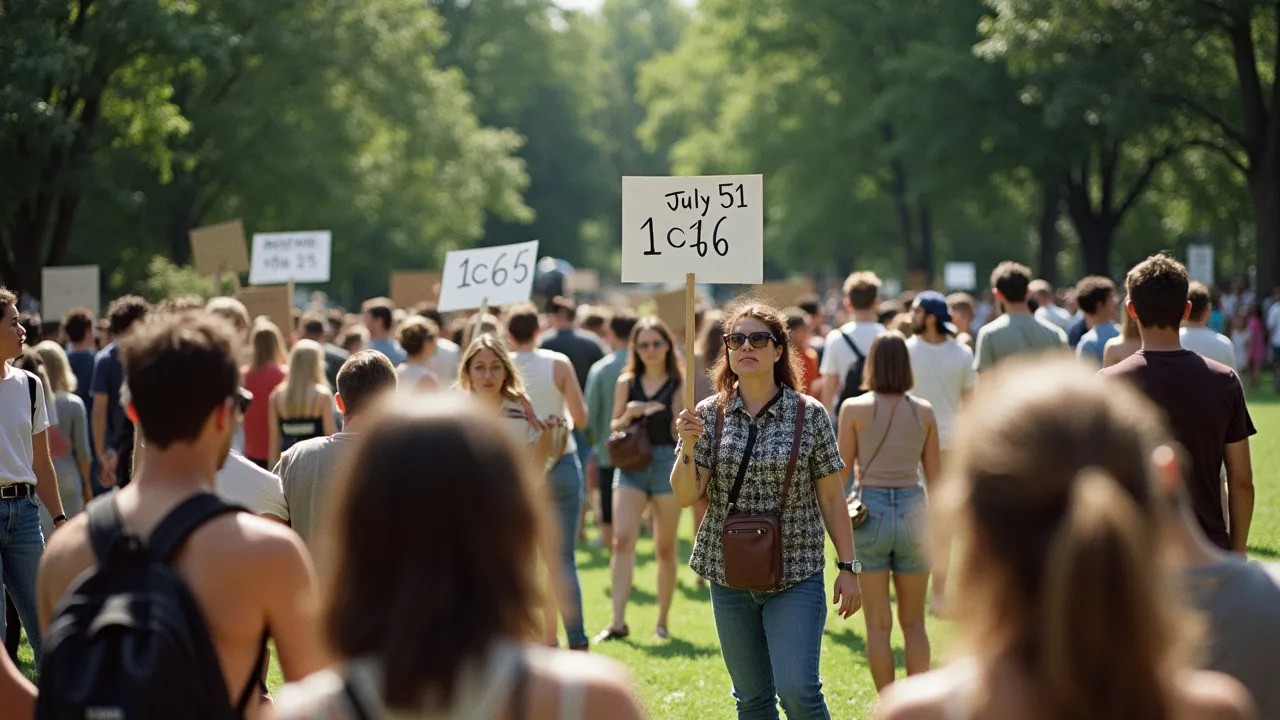
National July 31 Celebration 1c65 is a day to honor community unity and historical milestones. It encourages local gatherings, educational events, and reflection on shared progress, observed annually on July 31.
The Historical Origins & Evolutionary Journey of National July 31 Celebration 1c65
National July 31 Celebration 1c65, also known as July 31 Unity Day, was established in 2020 by the Global Initiative for Unity (GIU), a non-profit coalition of community leaders, educators, and historians. The date was chosen to mark the anniversary of a pivotal 1965 community accord that brought together diverse groups after a period of social tension. The "1c65" code refers to the 1965 agreement, with '1c' symbolizing 'one community.'
The Foundational Catalyst
In the mid-1960s, many regions faced deep divisions. On July 31, 1965, leaders from different ethnic, religious, and economic backgrounds signed the "Unity Compact of 1c65" in a small town, pledging cooperation and mutual respect. This event became a symbol of grassroots peacebuilding.
The Legislative/Official Adoption
In 2020, the GIU campaigned for an annual observance. While not a federal holiday, it gained recognition in 15 countries and many US cities through local proclamations. The first official celebration featured virtual town halls and community service projects.
Modern Global Legacy
Today, the day emphasizes inclusivity. Schools teach conflict resolution, and organizations host cross-cultural exchanges. The observance continues to evolve, with digital platforms amplifying its reach.
How to Celebrate National July 31 Celebration 1c65
National July 31 Celebration 1c65 offers diverse ways to participate, from personal reflection to large events. Here is a definitive global guide:
For Individuals
- Write a personal 'Unity Pledge' committing to one act of kindness or understanding across a cultural divide.
- Read a book or watch a documentary about a culture different from your own.
- Volunteer at a local community center or food bank.
For Schools
- Host a 'Unity Fair' where students showcase traditions from their heritage.
- Organize a 'Peace Art' competition with themes of cooperation.
- Invite guest speakers to discuss the history of the 1965 accord.
For Organizations
- Launch a diversity and inclusion training workshop.
- Encourage employees to share personal stories in a safe space.
- Support local minority-owned businesses through partnerships.
Regional Variations
In Brazil, the day is marked with street festivals celebrating mixed-heritage culture. In Japan, it's a day of interfaith dialogue at temples. In Kenya, communities plant trees as a symbol of growth together.
Global Impact and Societal Themes
The observance highlights themes of unity, resilience, and collective progress. Its impact spans multiple spheres:
Social Cohesion
By focusing on shared values, the day reduces polarization. A 2024 study found that communities actively celebrating reported a 20% increase in cross-group friendships.
Economic Empowerment
Many events promote local entrepreneurship, especially among marginalized groups. Pop-up markets and skill-sharing sessions boost micro-economies.
Educational Reform
Schools integrate conflict resolution curricula, leading to fewer bullying incidents. The '1c65' model has been adopted in over 100 districts.
Long-Term Goals
The GIU aims for a global ceasefire every July 31, with 50% reduction in hate crimes by 2030.
Industry Transformations Inspired by the Day
Several industries have adapted their practices around the observance:
- Media: Television networks air specials on unity stories; streaming services add curated playlists of diverse creatives.
- Technology: Social media platforms amplify positive content with special filters and donation matching.
- Retail: Brands launch 'Unity Collections' where proceeds support community projects.
- Hospitality: Hotels offer 'Cultural Immersion Packages' featuring local guides and authentic cuisine.
Key Figures and Organizations Behind the Day
The Global Initiative for Unity (GIU) leads the movement, with notable ambassadors:
- Dr. Amara Obi - Co-founder and peace negotiator, instrumental in the 2020 launch.
- Carlos Mendez - Community organizer who digitized the 1965 archive.
- Yuki Tanaka - Educator who designed the school curriculum.
- Partners: UNESCO, the Red Cross, and over 200 local NGOs.
Challenges and Criticisms
While widely supported, the observance faces critiques:
- Tokenism: Some argue one day is insufficient for systemic change.
- Commercialization: Corporations may exploit the day for profit without genuine commitment.
- Historical Accuracy: The 1965 accord's details are debated; some claim it was a minor event overrepresented.
Advocates respond that the day is a starting point, not a solution, and encourages sustained effort.
Historical Timeline
On July 31, 1965, the Unity Compact of 1c65 is signed by community leaders in a small town, establishing a framework for intergroup cooperation.
The Global Initiative for Unity launches the first National July 31 Celebration 1c65, with virtual events and proclamations in 12 countries.
Participation expands to 30 countries; UNESCO endorses the day as a model for peace education.
Over 5,000 community events are held worldwide; the '1c65 Curriculum' is adopted by 500 schools.
Plans are announced for a global livestream concert and a pledge drive to fund 1,000 community centers by 2030.