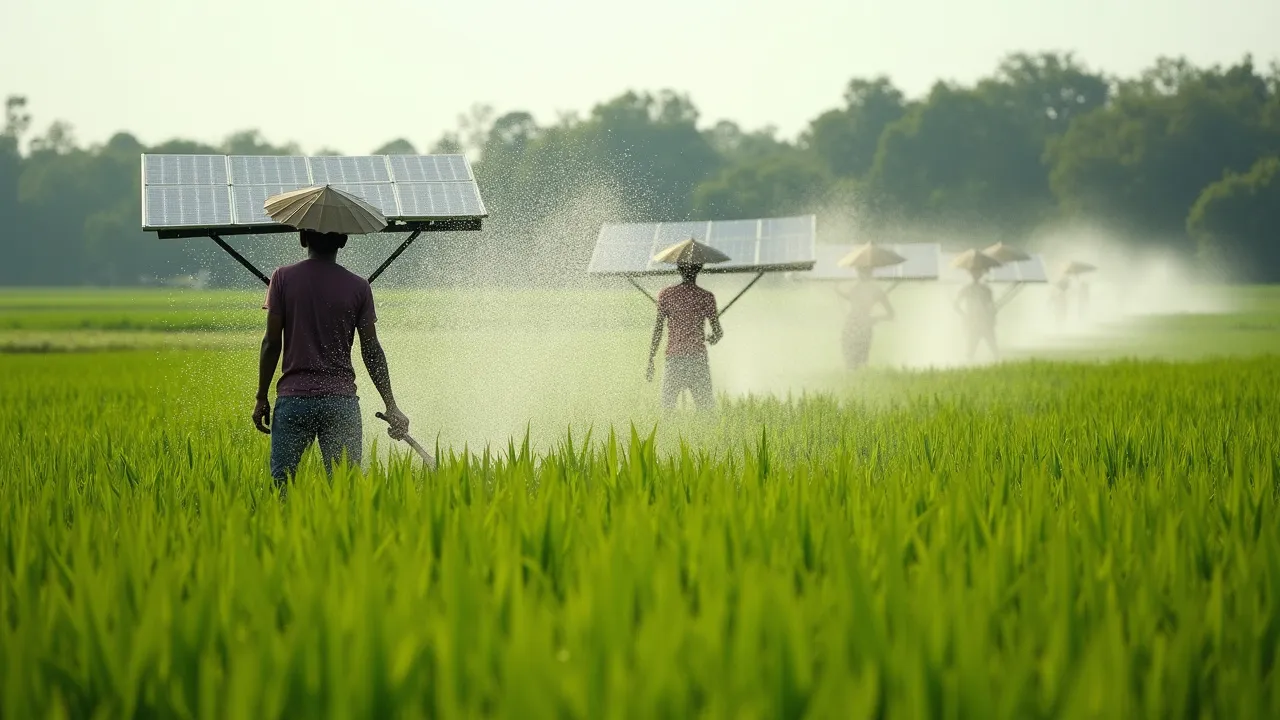
National July 21 Celebration 0ea0 honors the global movement towards zero-emission agriculture, inspiring sustainable farming practices and reducing carbon footprint. Join the revolution for a greener planet.
The Historical Origins & Evolutionary Journey
National July 21 Celebration 0ea0, also known as Zero-Emission Agriculture Day, emerged from a global recognition of agriculture's significant contribution to greenhouse gas emissions. The observance traces its roots to the 2019 IPCC Special Report on Climate Change and Land, which highlighted that agricultural practices account for nearly 24% of global emissions. This sparked urgent calls for transformative change.
The Foundational Catalyst
The early 2020s saw a convergence of environmental activism, technological innovation, and policy shifts. Key milestones include:
- 2019: IPCC report underscores the need for emission reductions in agriculture.
- 2021: Formation of the Global Sustainable Agriculture Alliance (GSAA), a coalition of NGOs, governments, and agri-tech firms.
- 2022: Pilot programs for zero-emission farming launch in five continents.
The Legislative/Official Adoption
In 2023, the GSAA officially proclaimed July 21st as a day of recognition, chosen to coincide with the peak growing season in the Northern Hemisphere and to maximize impact. The date was ratified by 45 countries during a UN Food Systems Summit side event. Key provisions included:
- Commitment to reduce agricultural emissions by 30% by 2030.
- Funding for research into methane inhibitors and carbon capture.
- Public awareness campaigns about sustainable diets.
Modern Global Legacy
Today, National July 21 Celebration 0ea0 is observed in over 80 countries. It has catalyzed significant changes: from widespread adoption of solar-powered irrigation in India to precision fermentation adoption in Europe. The day serves as a rallying point for farmers, scientists, and consumers to collaborate on a greener future.
How to Celebrate National July 21 Celebration 0ea0
Whether you're an individual, farmer, or corporation, participating in this day can drive meaningful action. Here are proven strategies categorized by audience:
For Individuals
- Adopt a plant-rich diet: Reduce meat consumption to lower your carbon footprint.
- Start a home compost bin: Cut food waste and enrich soil naturally.
- Support local regenerative farms: Buy from farmers using cover cropping and no-till methods.
For Schools and Communities
- Organize a 'Farm-to-Table' event highlighting local zero-emission producers.
- Host a workshop on building small-scale solar dryers or biogas systems.
- Plant a school garden using permaculture principles.
For Organizations and Corporations
- Announce supply chain commitments to zero-deforestation and renewable energy.
- Fund research into alternative proteins or carbon-sequestering biochar.
- Conduct employee training on sustainable agriculture practices.
Global variations: In Brazil, celebrations involve tree-planting drives in the Amazon; in Kenya, farmers showcase biodigesters; in Japan, companies host 'sustainable lunch' competitions. The day is increasingly used to launch policy pledges and corporate sustainability reports.
Global Impact of Zero-Emission Agriculture
The push for zero-emission agriculture is reshaping economies, ecosystems, and international relations. The observance has accelerated progress in several key areas.
Environmental Gains
- Soil carbon sequestration: Improved grazing and agroforestry methods are storing millions of tons of carbon annually.
- Reduced fertilizer runoff: Precision agriculture and controlled-release fertilizers cut nitrous oxide emissions by up to 40%.
- Water conservation: Drip irrigation and rainwater harvesting reduce water use by 30-50%.
Economic Benefits
Farmers adopting zero-emission practices often see lower input costs and premium prices for sustainably labeled goods. The global market for agricultural carbon credits is projected to reach $50 billion by 2030, offering new revenue streams.
Social Equity
The movement emphasizes inclusivity: programs in Sub-Saharan Africa train women smallholders in solar-powered processing; Latin American cooperatives secure land rights through sustainable certification. Local food systems strengthen community resilience.
Core Societal Themes and Cultural Shifts
National July 21 Celebration 0ea0 reflects deeper societal trends toward environmental consciousness and technological integration.
Intergenerational Justice
Young activists, like those in the Fridays for Future movement, have been instrumental in demanding fossil-fuel-free food systems. The day serves as a platform for youth-led initiatives, such as mapping local carbon footprints.
Cultural Revival of Indigenous Practices
Indigenous communities contribute valuable knowledge: controlled burns in Australia, milpa farming in Mesoamerica, and rotational grazing in Mongolia. The observance honors these traditions while integrating modern science.
Consumer Activism
Buycotts (intentional purchasing) of low-carbon products are rising. Apps that score foods by environmental impact have been downloaded millions of times, signaling a shift in consumer values.
Industry Transformations and Technological Innovations
The zero-emission agriculture movement is driving rapid innovation across multiple sectors.
Agri-Tech Breakthroughs
- Vertical farming: Aeroponic towers reduce land use by 99% and eliminate field emissions.
- Electric farm machinery: Tractors and harvesters powered by renewable energy are entering mass production.
- Biological alternatives: Nitrogen-fixing bacteria replace synthetic fertilizers; biopesticides cut chemical runoff.
Corporate Adoption
Major food companies, such as Nestlé and Unilever, have set net-zero targets for their supply chains. They invest in regenerative agriculture projects and carbon insetting. Banks are launching green bonds specifically for sustainable farming.
Policy Developments
Governments are implementing carbon taxes on agricultural emissions (e.g., Denmark's 2025 tax) and offering subsidies for renewable energy on farms. The EU's Common Agricultural Policy now ties payments to environmental performance.
Future Outlook and Challenges
While progress is encouraging, significant hurdles remain. Achieving zero-emission agriculture by 2050 requires scaling solutions globally.
Key Challenges
- Financing gap: Smallholder farmers lack capital for transition; climate finance must reach them better.
- Data scarcity: Accurate measurement of farm emissions is still too expensive.
- Political resistance: Lobbying by industrial agriculture slows policy action.
Path Forward
Increased public-private partnerships, open-source technology sharing, and consumer education are critical. The annual observance on July 21st serves as a benchmark to assess progress and recommit to a sustainable, zero-emission food future.
Historical Timeline
IPCC Special Report on Climate Change and Land highlights agriculture's role in global emissions, sparking international dialogue.
Global Sustainable Agriculture Alliance (GSAA) formed by 30 organizations to coordinate zero-emission farming initiatives.
First official observance of National July 21 Celebration 0ea0, recognized by 45 countries at the UN Food Systems Summit.
Pilot programs for solar-powered irrigation and precision fermentation achieve 20% emission reductions in participating regions.
Major food companies like Nestlé and Unilever commit to net-zero agriculture supply chains, citing the observance as a catalyst.