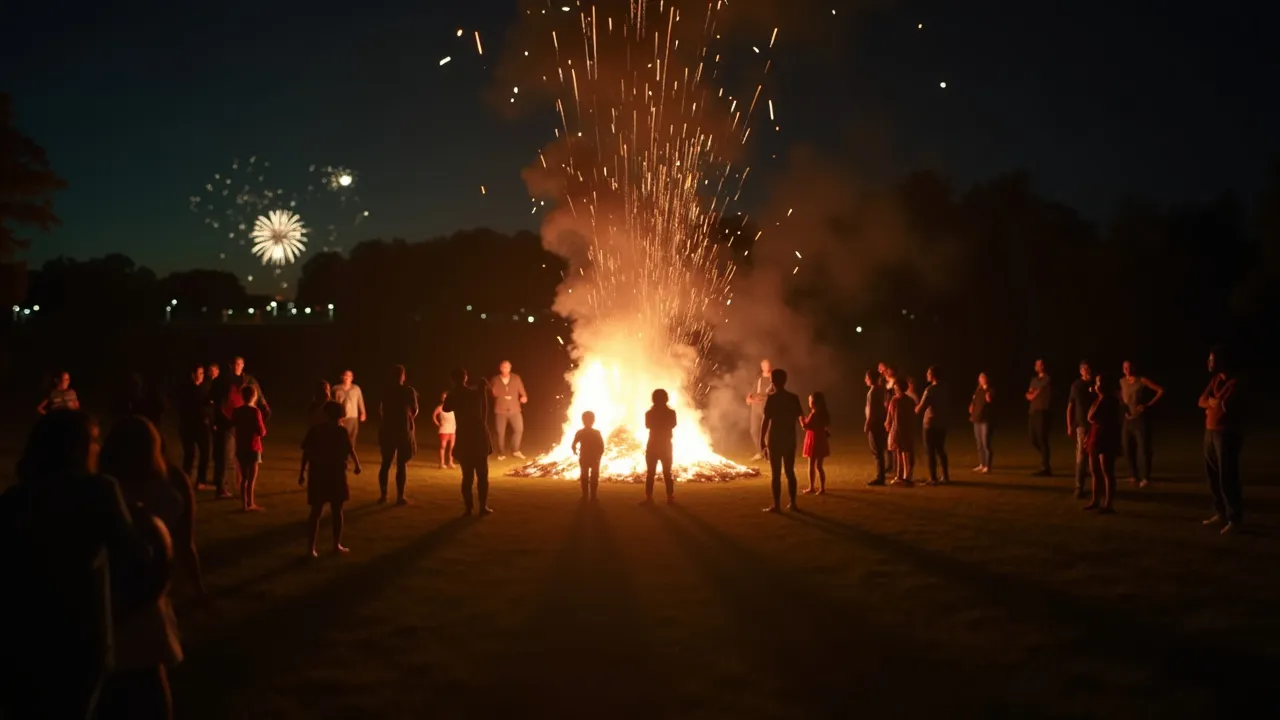
National Gunpowder Day, observed on November 5th, commemorates the failed Gunpowder Plot of 1605. It is celebrated with bonfires, fireworks, and the burning of effigies, primarily in the United Kingdom and Commonwealth nations.
The Historical Origins & Evolutionary Journey
National Gunpowder Day, observed annually on November 5th, traces its origins to the infamous Gunpowder Plot of 1605 in England. The plot was a failed assassination attempt by a group of provincial English Catholics led by Robert Catesby to blow up the House of Lords during the state opening of Parliament, killing King James I and the entire government. The conspirator Guy Fawkes, acting as the explosives expert, was discovered and arrested on the night of November 4-5, 1605, while guarding 36 barrels of gunpowder hidden in a cellar beneath the Parliament building.
The Foundational Catalyst
Following the plot's discovery, the British Parliament declared November 5th as a day of public thanksgiving and celebration. The Observance of 5th November Act 1606 mandated annual church services and public festivities. Over time, the day evolved from a religious and political observance into a secular celebration featuring bonfires, fireworks, and the ritual burning of effigies—most commonly of Guy Fawkes. The tradition spread throughout the British Empire and remains a staple in the UK, New Zealand, Canada, South Africa, and other former colonies.
The Legislative/Official Adoption
The original 1606 act remained in force until 1859 when the Thanksgiving for Deliverance from the Gunpowder Plot Act was repealed. However, the tradition had become so deeply ingrained in British culture that it continued without legal requirement. In the 20th century, the day became known as Bonfire Night or Guy Fawkes Night, with community-organised events and private celebrations. Modern celebrations often include large public firework displays and bonfire parties.
Modern Global Legacy
Today, National Gunpowder Day is observed in various forms around the world. In the United Kingdom, it is a night of fireworks and bonfires, with traditional foods like toffee apples and parkin. In New Zealand, it is a popular occasion for family gatherings and fireworks, despite safety regulations. In Canada and South Africa, the day is marked by community events and fireworks. While the religious and political significance has faded, the day remains a vibrant cultural tradition that celebrates history through communal spectacle.
How to Celebrate National Gunpowder Day
Celebrating National Gunpowder Day involves a mix of traditional rituals and modern festivities. The key elements are bonfires, fireworks, and the effigy of Guy Fawkes. Below are detailed strategies for individuals, schools, and organizations to celebrate authentically and safely.
For Individuals and Families
- Attend a Public Bonfire: Many towns host organized bonfire nights with professional firework displays. Check local listings for events in your area.
- Host a Private Bonfire Party: If local laws permit, build a safe bonfire in a garden or designated area. Ensure a fire extinguisher and water source are nearby.
- Create a Guy Effigy: Traditional celebrations involve creating a dummy (the 'Guy') stuffed with old clothes and paper. Place it on top of the bonfire to burn.
- Enjoy Traditional Foods: Serve toffee apples, parkin (gingerbread cake), jacket potatoes, and hot chocolate or mulled wine.
- Set Off Fireworks Safely: Follow all safety guidelines: light fireworks at arm's length, never return to them once lit, and keep a bucket of water handy.
For Schools and Educational Institutions
- History Lessons: Teach students about the Gunpowder Plot and its impact on British history. Use interactive storytelling and reenactments.
- Art and Craft Activities: Have students create their own Guy effigies using recycled materials, or draw firework scenes.
- Safety Workshops: Conduct sessions on firework safety, including sparkler safety and the importance of adult supervision.
- Community Service: Organize a food drive or fundraise for a local charity under the banner of 'remember, remember the 5th of November'.
For Organizations and Communities
- Coordinate Public Events: Partner with local councils to organize a safe, licensed firework display with controlled bonfires.
- Incorporate Cultural Sensitivity: Recognize that some may object to the burning of effigies or the celebration of anti-Catholic history. Offer alternative activities like lantern parades or light shows.
- Promote Eco-Friendly Celebrations: Encourage the use of eco-friendly fireworks and ensure bonfire materials are sourced sustainably, avoiding treated wood or plastics.
Global Impact and Regional Variations
While National Gunpowder Day is most closely associated with the United Kingdom, its observance has taken on unique characteristics in different parts of the world. The following paragraphs detail regional variations and cultural adaptations.
United Kingdom
In England, Scotland, Wales, and Northern Ireland, Bonfire Night is a major event. Cities like Lewes in East Sussex host famous torchlight processions and multiple bonfires. The tradition of burning effigies extends beyond Guy Fawkes to include contemporary political figures, reflecting local sentiment. Firework displays are often synchronized to music, and public safety is paramount.
New Zealand
In New Zealand, Guy Fawkes Night is widely celebrated, though it occurs during late spring (November in the Southern Hemisphere). It is common for families to set off fireworks at home, leading to annual debates about safety and animal welfare. Some communities have shifted to public displays to reduce risks.
Canada
In Canada, the day is observed in some provinces, particularly Newfoundland and Labrador, where it is known as 'Bonfire Night' or 'Guy Fawkes Night'. Celebrations often include bonfires and fireworks, but not as uniformly as in the UK. In recent years, the event has been less commercialized, with more emphasis on community gatherings.
South Africa
In South Africa, Guy Fawkes Day is observed with fireworks and bonfires, particularly in areas with British heritage. However, it is not a public holiday and is often celebrated informally among friends and family. Safety concerns and noise complaints have led to stricter regulations in some municipalities.
United States
In the United States, National Gunpowder Day is not widely celebrated, but some communities with British roots hold small events. The date is more commonly associated with the 'V for Vendetta' mask and anti-establishment symbolism rather than historical tradition. However, it is not a mainstream observance.
Core Societal Themes and Contemporary Relevance
National Gunpowder Day, beyond its historical roots, engages with several enduring societal themes that resonate in modern times. These include themes of protest, identity, safety, and communal bonding.
Protest and Rebellion
The story of the Gunpowder Plot often serves as a symbol of resistance against tyranny. In literature and popular culture, Guy Fawkes is sometimes portrayed as a revolutionary figure. The iconic Guy Fawkes mask, popularized by the graphic novel 'V for Vendetta' and its film adaptation, has become a global symbol for anti-establishment movements, including Occupy and Anonymous. This reinterpretation adds a layer of contemporary significance to the day.
National Identity and Heritage
For many in the UK and Commonwealth, Bonfire Night is a cherished cultural heritage that reinforces national identity. It is a night of shared tradition, often passed down through generations. The rituals of building bonfires, setting off fireworks, and reciting the rhyme 'Remember, remember the 5th of November' evoke a sense of continuity and belonging.
Safety and Regulation
The day also highlights the ongoing tension between celebration and safety. Each year, there are reports of firework-related injuries and animal distress. This has led to calls for stricter regulations, such as banning private sales of fireworks or limiting their use to organized displays. The debate is particularly acute in New Zealand and the UK, where animal welfare groups urge people to attend public displays instead of setting off fireworks at home.
Environmental Considerations
Bonfires and fireworks produce air and noise pollution, contributing to environmental concerns. In response, some communities are exploring greener alternatives, such as laser light shows or silent fireworks. The trend towards eco-conscious celebrations is growing, reflecting broader societal shifts toward sustainability.
Industry Transformations and Economic Impact
The celebration of National Gunpowder Day has significant economic implications, particularly for the fireworks industry, retail sector, and tourism. Additionally, the day has spurred innovations in event management and safety technology.
Fireworks Industry
The fireworks industry sees a substantial boost from Bonfire Night. In the UK alone, consumer spending on fireworks for November 5th reaches tens of millions of pounds annually. Major companies like Standard Fireworks and Cheshire-based firms produce specialized products for the occasion. The industry has evolved with new safety standards and eco-friendly options, such as reduced-noise fireworks and biodegradable packaging.
Retail and Hospitality
Retailers capitalize on the day by selling costumes, sparklers, and party supplies. Supermarkets stock traditional foods like toffee apples and parkin. Pubs and restaurants host Bonfire Night specials, offering themed menus and beverages. Tourism boards promote local events, drawing visitors to cities known for their spectacular displays, such as Lewes, Edinburgh, and London.
Event Management
Professional event organizers and local councils invest large sums in organizing safe and spectacular displays. This includes hiring pyrotechnicians, securing venues, and implementing crowd control measures. The event management sector has developed best practices for firework safety, including the use of electronic firing systems and remote control devices to minimize manual handling.
Insurance and Liability
The day also has implications for insurance companies, as the risk of fire damage, injury, and property loss increases. Homeowners are advised to check their policies regarding bonfire accidents. Some insurers offer specific guidelines for celebrating safely, and claims for firework-related incidents peak around November 5th.
Technological and Media Influence
In the digital age, National Gunpowder Day has been shaped by technology and media. Social media platforms amplify celebrations, while streaming services offer themed content. Here are key aspects of this influence.
Social Media Campaigns
Hashtags like #BonfireNight, #GuyFawkes, and #RememberRemember trend on Twitter and Instagram, with users sharing photos and videos of displays. Brands engage with the audience by posting safety tips or running contests for the best firework photos. Social media also serves as a platform for advocacy, with animal rights groups urging responsible pet care during fireworks.
Virtual Celebrations
During the COVID-19 pandemic, many public events were canceled. In response, some organizers hosted virtual firework displays using computer-generated graphics or archived footage. This trend may persist as a way to reach audiences who cannot attend in person.
Educational Content
YouTube and educational websites produce documentaries and animations about the Gunpowder Plot, making history accessible to younger generations. Schools use these resources to teach about the event, often incorporating interactive quizzes and VR experiences.
Gaming and Entertainment
The date appears in video games and films. For example, the game 'Assassin's Creed Syndicate' features a mission set during the Gunpowder Plot. The film 'V for Vendetta' prominently features the November 5th date. These cultural references keep the story alive for new audiences.
Historical Timeline
November 5th: The Gunpowder Plot is foiled when Guy Fawkes is discovered guarding explosives beneath the Houses of Parliament. The plot was organized by Robert Catesby to assassinate King James I.
The Observance of 5th November Act is passed by Parliament, mandating annual church services and public celebrations to give thanks for the King's deliverance.
During the English Civil War, the observance is briefly suppressed by Puritan authorities, but it resumes after the Restoration in 1660.
The Thanksgiving for Deliverance from the Gunpowder Plot Act is repealed, but the tradition of Bonfire Night continues voluntarily throughout the UK.
Fireworks become widely available to the public, transforming celebrations from simple bonfires to elaborate pyrotechnic displays.
The tradition spreads to Commonwealth nations, with large public displays in New Zealand and Canada. The effigy of Guy Fawkes becomes a central symbol.
The 400th anniversary of the Gunpowder Plot is marked with major commemorative events in the UK, including a large-scale firework display in London.
The Guy Fawkes mask becomes a global symbol of protest, popularized by the film 'V for Vendetta'. It is used by movements like Anonymous and Occupy Wall Street.
Due to the COVID-19 pandemic, many public Bonfire Night events are canceled or turned into virtual celebrations. Safety concerns prompt increased regulation of private fireworks.
Current year: National Gunpowder Day continues to be observed with a mix of tradition and modern adaptation, emphasizing safety and environmental awareness.