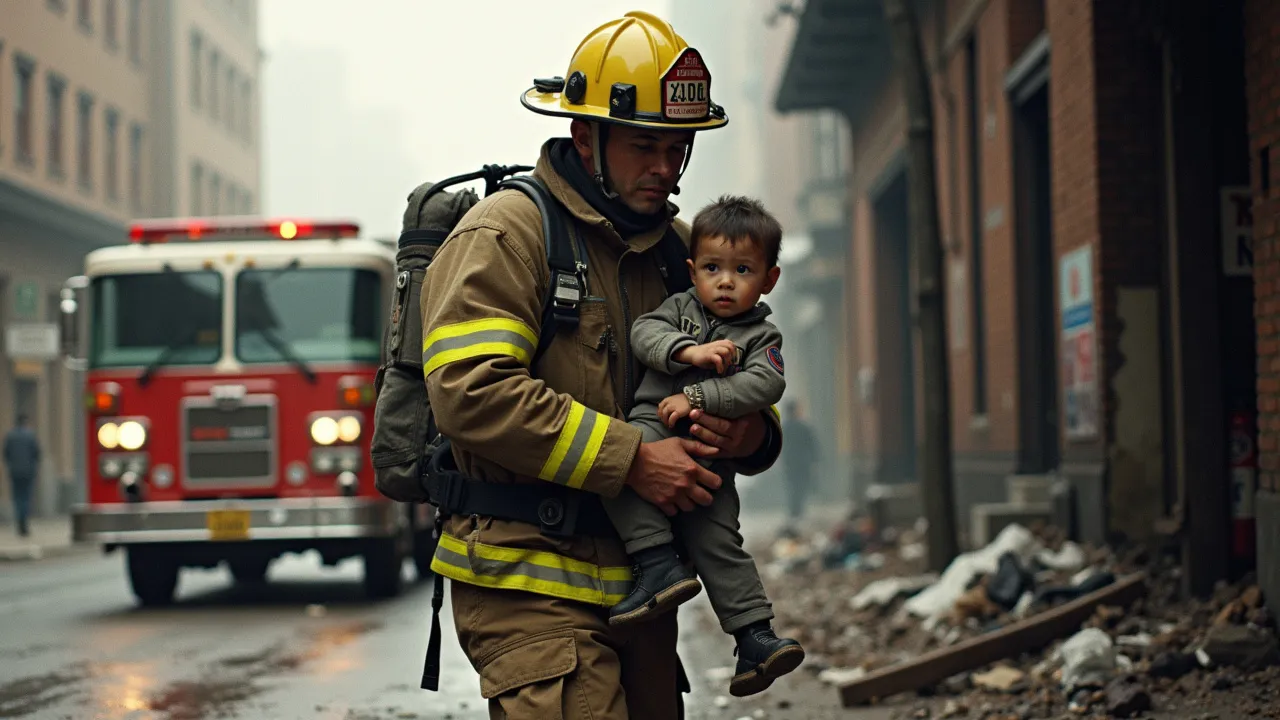
National Emergency Responder Day on September 11th honors the brave men and women who risk their lives to protect others. It commemorates the heroic first responders of 9/11 and promotes community appreciation and support for emergency services.
The Historical Origins & Evolutionary Journey of National Emergency Responder Day
National Emergency Responder Day, observed on September 11th, was established to honor the selfless dedication of emergency responders who serve on the front lines of crises. While the day draws deep meaning from the tragic events of September 11, 2001, it has evolved into a broader celebration of all first responders—firefighters, police officers, emergency medical technicians (EMTs), paramedics, and dispatchers.
The Foundational Catalyst: The 9/11 Attacks
The attacks on the World Trade Center and the Pentagon on September 11, 2001, saw over 400 first responders perish while saving thousands of lives. This profound sacrifice galvanized the nation to create a permanent day of recognition. The U.S. Congress passed legislation designating September 11th as Patriot Day in 2001, and later incorporated observances specifically honoring emergency responders.
Legislative & Official Adoption
In 2002, President George W. Bush signed Public Law 107-89, officially establishing September 11th as Patriot Day. Over the years, many state and local governments adopted National Emergency Responder Day proclamations to focus on first responder appreciation. Organizations such as the National Fallen Firefighters Foundation and National EMS Memorial Service championed the day to ensure that living responders and the families of the fallen receive continued support.
Modern Global Legacy
Though rooted in American tragedy, National Emergency Responder Day has inspired international observances. Countries like Canada, the United Kingdom, and Australia hold similar events on September 11th or their own designated days. The core message—gratitude, remembrance, and resilience—transcends borders, uniting communities in honoring their local heroes.
How to Celebrate National Emergency Responder Day
Celebrating National Emergency Responder Day is a meaningful way to express gratitude and strengthen community bonds. Below are actionable strategies for individuals, schools, and organizations to honor first responders effectively.
Personal Actions
- Write thank-you notes to local fire stations, police precincts, or EMS bases. Handwritten messages carry a personal touch that responders cherish.
- Donate to reputable foundations such as the National Fallen Firefighters Foundation or the First Responders Children's Foundation.
- Display a flag or blue/red light outside your home as a symbol of support (blue for law enforcement, red for fire/EMS).
- Volunteer with community emergency response teams (CERT) or local disaster relief organizations.
School & Community Events
- Invite responders to speak at assemblies or classrooms to educate students about their roles and safety.
- Organize a bake sale or fundraiser with proceeds going to a local emergency service fund.
- Host a moment of silence at 8:46 AM (the time of the first 9/11 plane impact) to remember fallen responders.
- Coordinate a community recognition ceremony at the town hall or a local park.
Corporate & Organizational Participation
Businesses can offer discounts or free meals to first responders on this day. Many restaurant chains, retail stores, and entertainment venues provide special deals. Companies can also implement a Heroes Appreciation Week and donate a portion of proceeds to emergency response charities.
The Role of Emergency Responders in Modern Society
Emergency responders are the backbone of public safety. They operate in high-stress environments, often risking their own lives to save others. The three primary branches—fire, EMS, and law enforcement—work in tandem to protect communities.
Firefighters
Firefighters handle structural fires, wildfires, hazardous materials incidents, and rescue operations. They undergo rigorous training in fire suppression, emergency medical care, and technical rescue. The National Fire Protection Association (NFPA) sets standards for their equipment and protocols.
Emergency Medical Services (EMS)
EMS personnel, including EMTs and paramedics, provide pre-hospital care. They are often the first to arrive at medical emergencies, traffic collisions, and natural disasters. The National EMS Scope of Practice Model outlines their skills, from basic life support to advanced cardiac life support.
Law Enforcement
Police officers maintain public order, enforce laws, and respond to crimes. They also provide crowd control during large events and collaborate with other responders in disaster scenarios. The International Association of Chiefs of Police (IACP) offers guidelines for community policing and crisis intervention.
Dispatchers & Support Staff
Often overlooked, emergency dispatchers are the critical link between the public and responders. They manage 911 calls, prioritize incidents, and provide pre-arrival instructions. Their role is essential for efficient emergency response.
Impact of 9/11 on Emergency Response Systems
The September 11 attacks fundamentally reshaped how emergency responders prepare for and respond to large-scale incidents. The lessons learned from that day led to systemic improvements across the United States and globally.
Enhanced Communication Interoperability
One major post-9/11 reform was the implementation of interoperable communication systems so that different agencies (fire, police, EMS) could talk to each other during crises. The Department of Homeland Security funded grants to upgrade radio networks.
Incident Command System (ICS) Adoption
Before 9/11, the Incident Command System was used primarily by wildland fire agencies. After the attacks, it became a standard requirement for all responder agencies. ICS provides a clear chain of command, resource tracking, and communication protocols.
Strengthened Training & Equipment
Post-9/11, billions were invested in training for terrorism response, hazardous materials handling, and mass casualty incidents. The National Incident Management System (NIMS) was created to standardize readiness across jurisdictions. Equipment such as personal protective gear, decontamination units, and mobile command centers became more widely available.
Health Monitoring & Support
The health impacts on 9/11 responders—including respiratory diseases, cancers, and PTSD—led to the establishment of the World Trade Center Health Program and 9/11 Victim Compensation Fund. These programs provide long-term medical care and financial support for responders.
Global Recognition and Regional Variations
While National Emergency Responder Day is primarily observed in the United States on September 11th, many other countries have their own days to honor first responders. Below is a list of notable international observances.
Canada
Canada celebrates National First Responders Day on September 11th as well, following the U.S. lead. Provinces hold ceremonies and community events to thank local responders.
United Kingdom
The UK observes Emergency Services Day (999 Day) on September 9th, a date that numerically matches the emergency number 999. The day honors police, fire, ambulance, and coastguard services.
Australia
Australia has National Emergency Services Day on September 20th, also tied to their emergency number 000. Events include open days at stations, memorial services, and awards ceremonies.
Europe
Many European countries have EMS Week or local appreciation days, but no single unified date. The International Association of Emergency Managers promotes global awareness through conferences and training exchanges.
Modern Challenges and Innovations in Emergency Response
Emergency responders face evolving threats such as climate change, cyberattacks, and pandemics. At the same time, technology and community partnerships are transforming their capabilities.
Climate Change & Natural Disasters
Increasingly severe wildfires, hurricanes, and floods require responders to adapt. Agencies now use predictive modeling and drones for early assessment. The National Wildfire Coordinating Group develops new tactics for fire suppression.
Cybersecurity & Cyberattacks
Dispatchers and communications systems are vulnerable to hacking. The Cybersecurity and Infrastructure Security Agency (CISA) provides resources to protect critical infrastructure. Responders are trained to handle cyber incidents alongside physical threats.
Pandemic Response
COVID-19 tested emergency services like never before. Responders had to manage infection control, vaccine distribution, and mental health support. The crisis accelerated the adoption of telemedicine and remote triage systems.
Mental Health & Resilience
First responders face high rates of PTSD and burnout. Programs like Critical Incident Stress Management (CISM) and peer support networks are now standard. Many departments have wellness officers dedicated to mental fitness.
Historical Timeline
On September 11, terrorist attacks kill 2,977 people, including 412 first responders (343 firefighters, 72 law enforcement officers, and 8 EMS personnel). This tragedy becomes the catalyst for National Emergency Responder Day.
President George W. Bush signs Public Law 107-89 designating September 11 as Patriot Day. Many states begin recognizing the day to honor first responders.
The National Fallen Firefighters Foundation holds the first official National Memorial Service for fallen firefighters on September 11, later becoming a key component of the observance.
President Barack Obama signs the Edward M. Kennedy Serve America Act, establishing September 11 as the National Day of Service and Remembrance, encouraging citizens to volunteer in honor of first responders.
The 9/11 Memorial Museum opens at the World Trade Center site, featuring tributes to first responders. The National EMS Memorial Service also holds its annual ceremony on September 11.
Congress officially recognizes the World Trade Center Health Program to provide medical care for responders suffering from 9/11-related illnesses.
The Never Forget the Heroes: James Zadroga, Ray Pfeifer, and Luis Alvarez Permanent Authorization Act secures funding for the 9/11 Victim Compensation Fund through 2092.
On the 20th anniversary, communities nationwide hold large-scale remembrance events, and the concept of National Emergency Responder Day gains widespread recognition on social media.