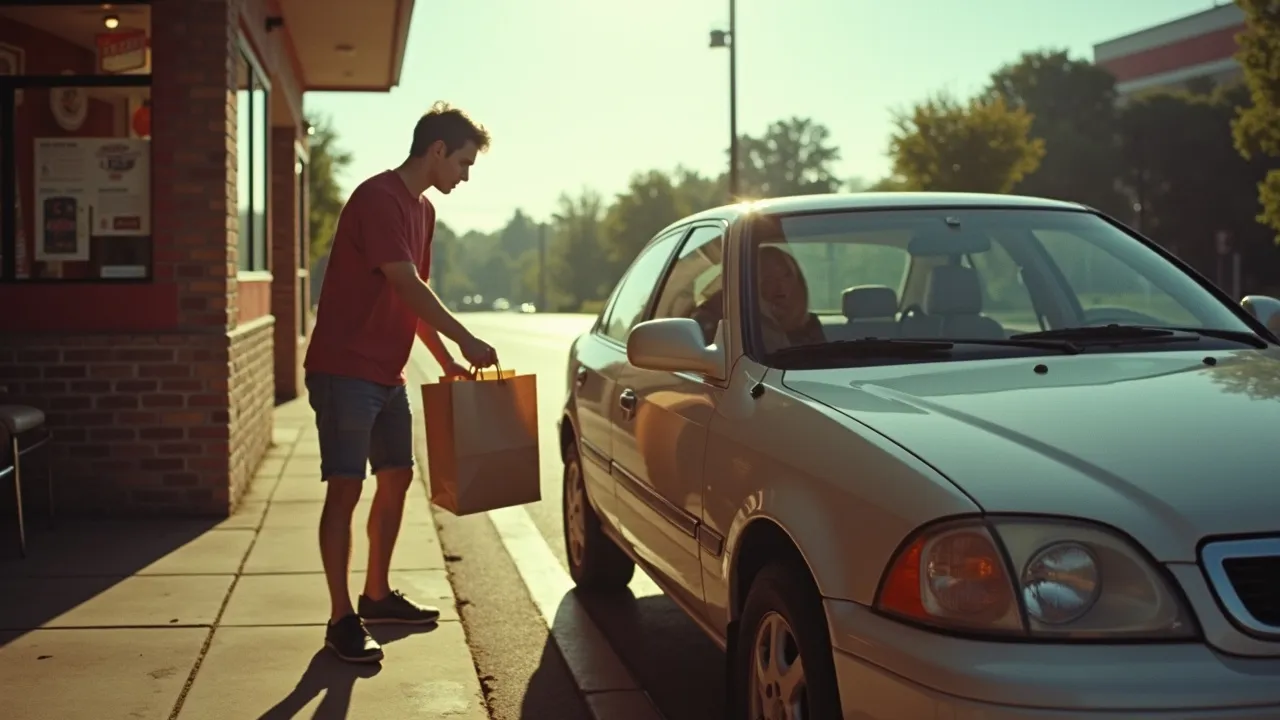
National Drive-Thru Day on July 24th celebrates the convenience of ordering and receiving food, banking, and more without leaving your car. Honor the innovation that changed consumer culture.
The Historical Origins & Evolutionary Journey
National Drive-Thru Day, observed annually on July 24th, honors a service model that revolutionized convenience and reshaped the global food and retail industries. The concept of drive-thru service dates back nearly a century, with its roots in the banking and fast-food sectors.
The Foundational Catalyst
The first documented drive-thru service was not for food but for banking. In 1928, the Exchange National Bank of Pittsburgh opened a drive-up window to serve customers in their cars. This innovation aimed to provide faster service for busy motorists, bypassing the need to park and walk inside. The concept proved so popular that it spread to other banks and, eventually, to restaurants.
The true catalyst for the modern drive-thru came from the fast-food industry. In 1948, In-N-Out Burger opened the first drive-thru burger stand in Baldwin Park, California, featuring a two-way speaker system. Patrons could order from their cars and receive their food at a window. This model minimized labor and maximized speed, laying the groundwork for the drive-thru explosion.
The Legislative/Official Adoption
Throughout the 1950s and 1960s, drive-thrus became synonymous with American car culture. McDonald's introduced its first drive-thru in 1975 in Sierra Vista, Arizona, after realizing that a significant portion of their business came from car-bound customers. By the 1980s, most fast-food chains had adopted the drive-thru model, and it spread to coffee shops (Starbucks in the 1990s), pharmacies, and even grocery stores.
National Drive-Thru Day itself was established in the late 2000s, likely by the National Day Calendar, to celebrate this convenience. The date July 24th was chosen to fall in summer, when road trips and drive-thru usage peak. While not officially recognized by the U.S. government, the day has been embraced by fast-food chains and consumers alike.
Modern Global Legacy
Today, drive-thrus account for over 70% of fast-food sales in the United States, and the model has expanded globally. From Japan's efficient drive-thrus to Brazil's full-service drive-thru bakeries, the concept has adapted to local cultures. The COVID-19 pandemic further cemented the drive-thru's importance as a safe, contactless way to obtain essentials and comfort food.
How to Celebrate National Drive-Thru Day
National Drive-Thru Day offers endless ways to participate, whether you're an individual, a family, or a business. Below are actionable strategies to make the most of this convenient holiday.
For Individuals & Families
- Visit your favorite drive-thru: Order a meal from a local fast-food joint or coffee shop. Many chains offer special deals or limited-time items on July 24th.
- Try a new drive-thru experience: Explore non-food options like drive-thru car washes, pharmacies, or even wedding chapels in Las Vegas.
- Host a drive-thru picnic: Gather the family in the car, order from multiple drive-thrus, and enjoy a meal at a park or scenic overlook.
- Document your drive-thru run: Post a photo or video on social media with the hashtag #NationalDriveThruDay to join the global celebration.
For Schools & Organizations
- Organize a “drive-thru history” lesson: Teach students about the evolution of drive-thru services and their impact on consumer behavior.
- Host a fundraising drive-thru: Set up a temporary drive-thru at a school or church to sell baked goods or coffee, with proceeds going to charity.
- Create a drive-thru themed event: Host a car parade where participants decorate their vehicles and pass through a makeshift drive-thru line handing out treats.
For Businesses
- Offer special promotions: Discounts, breakfast combos, or loyalty rewards for drive-thru customers on July 24th.
- Enhance drive-thru service: Implement digital menu boards, faster payment options, or add a second window to improve efficiency.
- Celebrate employees: Recognize drive-thru staff with bonuses or thank-you notes for their role in customer satisfaction.
Internationally, celebrations vary. In the United Kingdom, where drive-thrus are less common, supporters might host a “drive-in” movie night. In Japan, some convenience stores have drive-thru lanes, and fans can order bento boxes without leaving their cars. In Mexico, drive-thru taquerias are popular, offering authentic tacos al pastor served directly to the window.
Global Impact & Regional Variations
While National Drive-Thru Day is primarily observed in the United States, the drive-thru concept has spread worldwide, each region adding its own twist. In Australia, drive-thru bottle shops (liquor stores) are common, and July 24th might see increased traffic. In Canada, drive-thru poutine and coffee shops dominate. European countries like Germany and France have embraced drive-thru burgers, though often with stricter zoning laws limiting widespread adoption.
Asia’s Unique Approach
In Japan, drive-thrus are prized for their efficiency and politeness. Many restaurants use conveyor belts or pneumatic tubes to deliver orders, and staff bow as cars depart. In South Korea, drive-thru coffee shops with double lanes have become a trend, while India is seeing a rise in drive-thru for chai and samosas in urban areas.
The Middle East and Africa
In the UAE, luxury drive-thrus offer gourmet coffee and dates, while in South Africa, drive-thru fast food is popular in major cities like Johannesburg and Cape Town. These regional adaptations highlight the drive-thru's versatility and cultural integration.
Technological Innovations in Drive-Thru Systems
The drive-thru experience has evolved far beyond a simple speaker and window. Modern innovations are transforming speed, accuracy, and customer interaction.
Digital Menu Boards
Dynamic digital displays change menus based on time of day, weather, or inventory, encouraging upsells and reducing wait times. Some use AI to suggest items based on previous orders.
Mobile Ordering Integration
Apps like the McDonald's app allow customers to pre-order and pay, then scan a code at the drive-thru to skip the order box entirely. This reduces transaction time by up to 30 seconds per car.
License Plate Recognition
Some chains now use cameras to identify returning customers, greeting them by name and pulling up their favorite orders. This personalizes the experience and speeds service.
Automated and Robotic Solutions
Experiments with robotic arms to hand out bags and automated voice systems are underway. In some locations, AI takes orders with natural language processing, improving order accuracy and reducing labor costs.
Cultural Significance & Consumer Behavior
The drive-thru is more than a convenience; it's a cultural icon representing speed, independence, and the car-centric lifestyle. Sociologically, it reflects the American emphasis on efficiency and instant gratification. The drive-thru also fosters a unique social interaction: a brief, transactional encounter with a unseen worker, often while listening to the car radio or planning the next errand.
During the COVID-19 pandemic, drive-thrus became essential for safe commerce, with grocery stores, liquor stores, and even testing sites adopting the model. This shift reinforced the drive-thru's role as a lifeline beyond fast food. Studies show that drive-thru customers often choose time savings over price, making it a premium service that many value highly.
Industry Transformations & Future Trends
The drive-thru industry continues to evolve, driven by consumer demand for speed and customization. Here are key transformations shaping the future:
Contactless Everything
Contactless payment, mobile pre-order, and even contactless truck-to-window delivery (pioneered by Domino's) are becoming standard. The pandemic accelerated these trends, making the drive-thru even more vital.
Healthier Options
In response to health trends, many chains now offer salads, fresh juices, and low-calorie items at the drive-thru. Some even provide nutritional information on digital boards.
Multiple Lanes and Express Service
To handle peak demand, new designs feature two lanes merging into one pickup window, or two separate windows for ordering and pickup. Some stores are testing dedicated mobile-order and delivery-driver lanes.
Sustainability Efforts
Chains are reducing idling by using efficient timers and encouraging app-based ordering. Some are replacing plastic bags with paper, and electric vehicle charging stations are being added to drive-thru lots.
Looking ahead, autonomous vehicles and drones may eventually replace human staff, but for now, the human touch remains vital. National Drive-Thru Day is a perfect moment to recognize both the past innovations and the future possibilities of this beloved convenience.
Historical Timeline
Exchange National Bank of Pittsburgh opens the first drive-up bank window, allowing customers to conduct transactions without leaving their cars.
In-N-Out Burger opens the first fast-food drive-thru in Baldwin Park, California, featuring a two-way speaker system.
McDonald's opens its first drive-thru in Sierra Vista, Arizona, after recognizing the growing demand for car-based service.
Drive-thrus become standard across major fast-food chains, including Burger King, Wendy's, and Taco Bell, fueling the fast-food boom.
Starbucks opens its first drive-thru in Denver, Colorado, expanding the concept to the specialty coffee industry.
National Drive-Thru Day is first observed on July 24th, celebrating the convenience and cultural impact of drive-thru services.
The COVID-19 pandemic causes a surge in drive-thru usage as contactless service becomes essential, with many restaurants reporting record sales through drive-thrus.
Major chains like Taco Bell and KFC begin testing AI-powered voice ordering systems to improve speed and accuracy in drive-thru lanes.