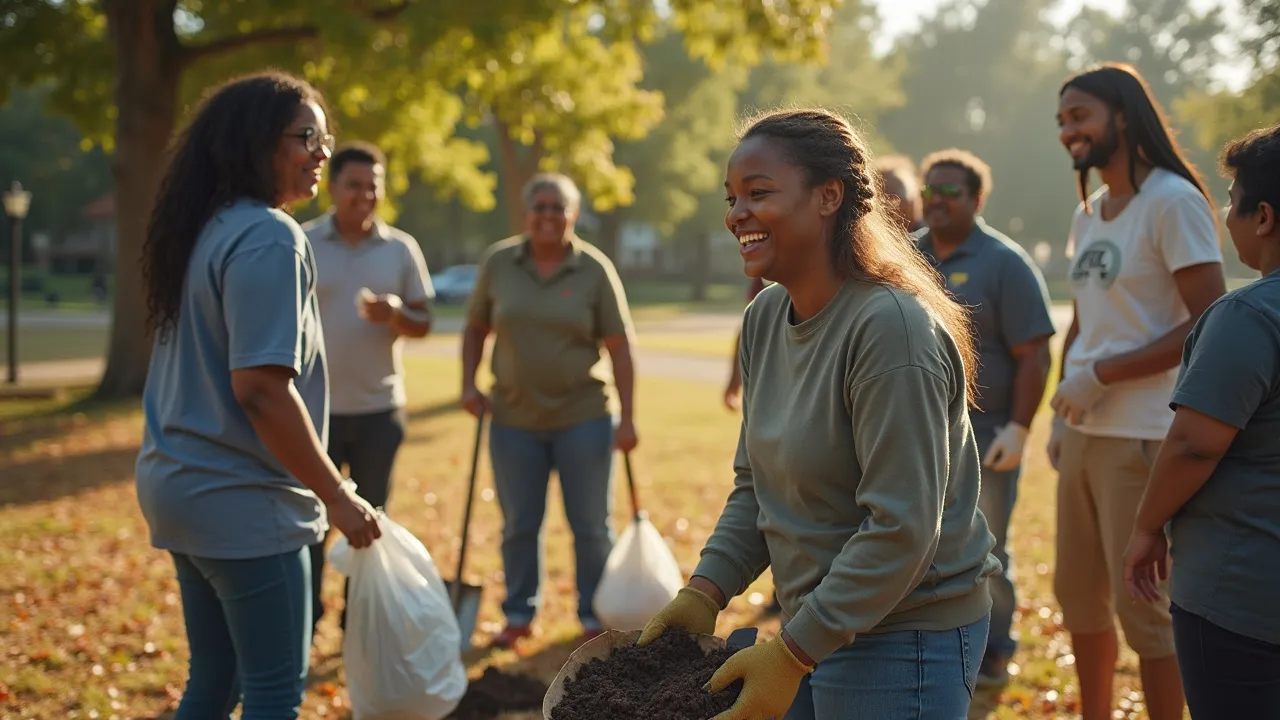
Observed annually on September 11th, this day honors the victims of the 2001 attacks and unites Americans through volunteer service. It is a federally designated day of remembrance and charitable action.
The Historical Origins & Evolutionary Journey
The Foundational Catalyst: September 11, 2001
The National Day of Service and Remembrance traces its roots to the tragic events of September 11, 2001, when coordinated terrorist attacks claimed nearly 3,000 lives at the World Trade Center, the Pentagon, and aboard United Airlines Flight 93 in Shanksville, Pennsylvania. In the immediate aftermath, spontaneous acts of heroism and volunteerism emerged across the nation. First responders, construction workers, and ordinary citizens rushed to aid, while blood donations and financial contributions surged. This spirit of unity became the foundation for the observance.
The Legislative/Official Adoption
In 2002, President George W. Bush proclaimed September 11 as Patriot Day. However, the transformation into a day of service gained momentum through the efforts of MyGoodDeed, a nonprofit founded by families of 9/11 victims. Their advocacy led to the Edward M. Kennedy Serve America Act, signed by President Barack Obama in 2009, which officially designated September 11 as the National Day of Service and Remembrance. The legislation formalized a call for all Americans to engage in charitable acts, turning a day of tragedy into one of hope and community rebuilding.
Modern Global Legacy
Since its official inception, the day has grown beyond U.S. borders. In 2011, the 9/11 Day organization partnered with the United Nations to encourage international service. Today, millions of people in over 30 countries participate in volunteer projects, food drives, and educational programs. The observance serves as a powerful reminder of the resilience of the human spirit and the enduring importance of civic engagement.
How to Celebrate National Day of Service and Remembrance
Celebrating this day is about turning grief into action. Below are comprehensive strategies for individuals, schools, and organizations to meaningfully observe September 11th.
For Individuals and Families
- Volunteer locally: Serve at a food bank, animal shelter, or senior center. Use platforms like 911day.org to find opportunities.
- Participate in a moment of silence: At 8:46 AM ET (the time the first plane struck), pause to remember victims.
- Write thank-you letters: Send notes to first responders, military personnel, or healthcare workers.
For Schools and Universities
- Host a service-learning project that connects 9/11 history with acts of kindness.
- Organize a food drive or blood drive in partnership with the American Red Cross.
- Screen documentaries about the day’s heroism and hold reflective discussions.
For Corporations and Nonprofits
- Launch a company-wide volunteer day with paid time off for staff.
- Donate to 9/11-related charities, such as the Tunnel to Towers Foundation or Voices Center for Resilience.
- Encourage employees to share their service stories on social media using #911Day.
Global Celebrations
While the day is primarily American, countries like Canada, the UK, and Australia have adopted similar observances. In Japan, some groups mark September 11 by promoting disaster preparedness. The key is to emphasize universal values of compassion and community service.
The Global Impact: Spreading a Culture of Service
The National Day of Service and Remembrance has inspired a worldwide movement. In 2011, the 9/11 Day organization launched the Global Day of Service, which has since mobilized over 50 million volunteers. Key impacts include:
- Infrastructure projects: Schools rebuilt in Haiti after the 2010 earthquake.
- Disaster relief: Volunteer teams deployed to hurricanes, wildfires, and floods.
- Youth engagement:
Generation Impact
Millennials and Gen Z increasingly view service as integral to their identity.
Studies show that participation in this day leads to sustained volunteerism, with 40% of first-time volunteers continuing to serve annually.
Core Societal Themes: Unity, Resilience, and Remembrance
This observance embodies three core themes:
1. Unity After Tragedy
The attacks fractured the nation but also revealed a deep well of solidarity. The day of service channels that unity into concrete action, bridging political and social divides.
2. Resilience Through Action
Service is a form of healing. By helping others, participants transform grief into purpose. Research shows volunteerism reduces symptoms of PTSD and depression among those directly affected by 9/11.
3. Remembrance as a Living Memorial
Unlike static monuments, this day is a living tribute. Each act of service honors the legacy of those lost and the heroism of first responders.
Industry Transformations: Nonprofit and Emergency Response Sectors
The day has spurred innovations in multiple sectors:
- Nonprofit fundraising: The creation of Giving Tuesday was partly inspired by the success of 9/11 Day. Many nonprofits now use September 11 as a key fundraising driver.
- Emergency management: Volunteer coordination platforms like VolunteerMatch and All for Good (now part of Points of Light) were amplified by the day’s infrastructure.
- Corporate social responsibility (CSR): Over 60% of Fortune 500 companies now host 9/11 service events, integrating them into annual CSR reports.
Technology’s Role
Apps like GivePulse and JustServe simplify finding service opportunities. Social media campaigns on September 11 generate millions of impressions, reaching audiences far beyond the initial target.
Educational Resources and Curriculum Integration
Teachers can integrate the day into lesson plans across subjects:
History and Social Studies
- Analyze primary sources, including 9/11 Commission Report excerpts.
- Discuss the role of civic duty in a democracy.
English Language Arts
- Read memoirs like "The Only Plane in the Sky" by Garrett Graff.
- Write reflective essays on service and resilience.
STEM
- Study the engineering of the Twin Towers and their collapse.
- Explore emergency response technologies.
The 9/11 Memorial & Museum offers free virtual field trips and lesson plans aligned with standards.
Historical Timeline
Terrorist attacks on the World Trade Center and Pentagon; nearly 3,000 killed. Spontaneous volunteerism emerges.
President George W. Bush proclaims September 11 as Patriot Day. Many Americans begin commemorating with service.
MyGoodDeed nonprofit is founded by 9/11 family members to promote a national day of service.
President Obama signs the Edward M. Kennedy Serve America Act, officially designating September 11 as the National Day of Service and Remembrance.
10th anniversary; first Global Day of Service launched; over 30 million participants worldwide.
The 9/11 Day organization partners with the UN to promote international service. More than 50 countries now observe.
20th anniversary; record participation with over 50 million volunteers in the US alone.
The day continues to evolve, with increasing focus on climate resilience and mental health volunteerism.