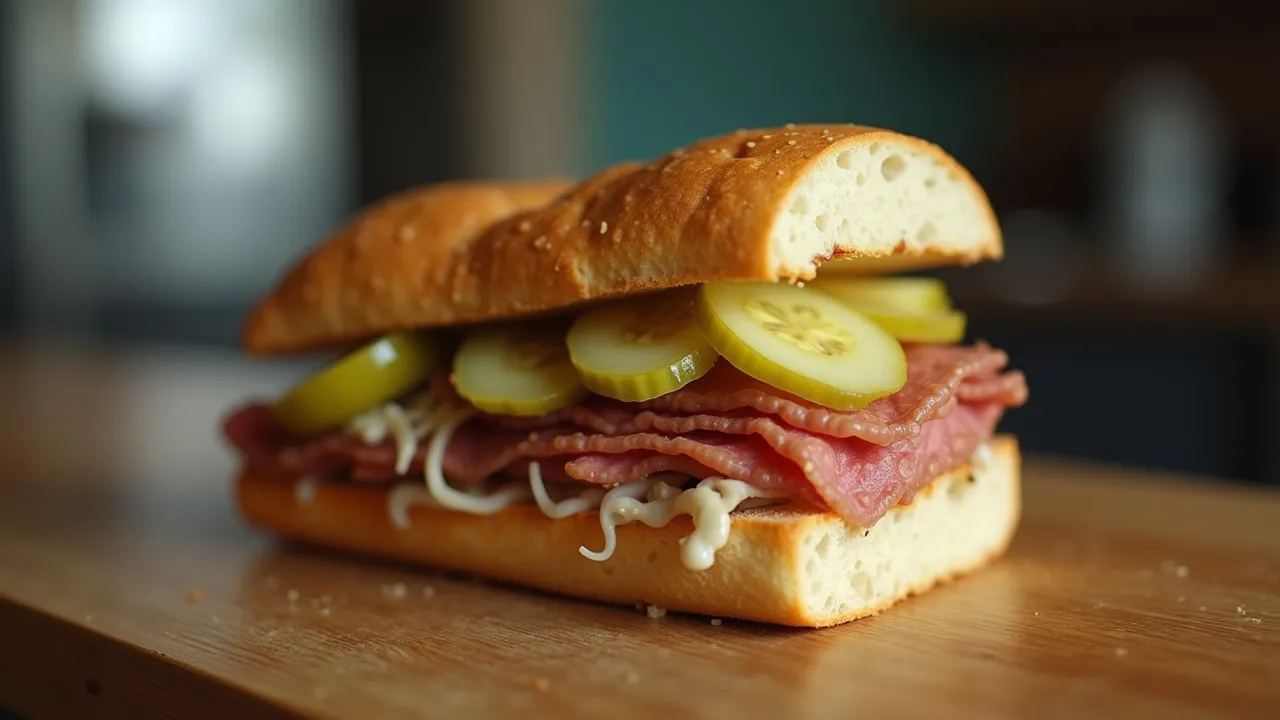
National Cuban Sandwich Day on August 23rd honors the legendary Cuban sandwich (Cubano), a pressed delight of roast pork, ham, Swiss, pickles, and mustard. Originating from Tampa's Ybor City, this day celebrates the sandwich's rich heritage and cultural impact.
The Historical Origins & Evolutionary Journey
The Cuban sandwich, known as the Cubano, is a culinary icon with deep roots in the immigrant communities of Tampa, Florida. Its story begins in the late 19th century when Cuban, Spanish, and Italian cigar workers flocked to Ybor City and West Tampa. These workers needed affordable, portable meals that could be eaten quickly during breaks. The Cuban sandwich emerged as a fusion of their culinary traditions: roasted pork from Cuba, ham and Swiss cheese from Europe, pickles and mustard from American delis, all pressed in Cuban bread.
The Foundational Catalyst: Ybor City and the Cigar Workers
By the 1890s, Ybor City was a bustling cigar manufacturing hub. Cafeterias and street vendors began serving sandwiches made with Cuban bread, a light and crispy loaf with a palmetto leaf pressed down the center. The sandwich was assembled with layers of roast pork, ham, Swiss cheese, pickles, and yellow mustard, then pressed in a hot griddle until the cheese melted and the bread became crisp. This method created a compact, portable meal that was hearty and flavorful. The first documented reference to the Cuban sandwich appears in the 1930s, but oral histories place it earlier.
The Legislative/Official Adoption
For decades, the Cuban sandwich remained a local Tampa specialty. However, as Cuban exiles fled to Miami after the 1959 revolution, they brought the sandwich with them, sparking a debate over authenticity. In 2012, the Tampa Cuban Sandwich Festival was established to celebrate the sandwich's heritage. Two years later, the festival declared August 23rd as National Cuban Sandwich Day, a date chosen to coincide with the festival's annual event. In 2015, the city of Tampa officially recognized the day, solidifying its place in the national food calendar.
Modern Global Legacy
Today, National Cuban Sandwich Day is celebrated across the United States and beyond. Food bloggers, restaurants, and home cooks share their versions of the Cubano, from traditional to deconstructed. The day also highlights the broader influence of Cuban-American culture on American cuisine. Despite regional variations, the core elements remain: roast pork, ham, Swiss, pickles, and mustard on press-grilled Cuban bread.
How to Celebrate National Cuban Sandwich Day
Celebrating National Cuban Sandwich Day is all about honoring the perfect pressed sandwich. Whether you're in Tampa, Miami, or anywhere else, there are countless ways to participate. Below are actionable traditions and ideas for individuals, schools, and organizations.
For Individuals and Families
- Cook an Authentic Cubano at Home: Source Cuban bread from a local bakery or substitute with a soft Italian loaf. Layer sliced roast pork (preferably mojo-marinated), ham, Swiss cheese, dill pickles, and yellow mustard on the bread. Press the sandwich in a panini press or heavy skillet until the bread is golden and cheese melts.
- Visit a Historic Cuban Restaurant: In Tampa, head to the Columbia Restaurant in Ybor City, which has served Cubanos since 1905. In Miami, try Enriqueta's Sandwich Shop or Versailles. Respect the tradition by ordering a classic Cubano with a side of mariquitas (plantain chips).
- Host a Sandwich Tasting Party: Invite friends to bring their versions of the Cuban sandwich. Compare Tampa-style (with salami) vs. Miami-style (without). Offer a blind taste test to find the ultimate Cubano.
For Schools and Educational Institutions
- Teach the History: Use the day to explore the immigrant story behind the Cuban sandwich. Assign students to research the cigar industry in Ybor City and its role in shaping Tampa's food culture.
- Conduct a Sandwich-Making Lab: In culinary classes, demonstrate the proper pressing technique. Discuss the importance of each ingredient and its cultural origin.
For Organizations and Businesses
- Offer a Special Menu: Restaurants can create a limited-time Cuban sandwich using premium ingredients. Pair it with a Cuban coffee or a mojito for a complete experience.
- Donate to Community Causes: Partner with local food banks to provide Cubano-style meals to those in need, honoring the sandwich's working-class roots.
No matter how you celebrate, the key is to appreciate the sandwich's cultural significance and spread the joy of this pressed masterpiece.
The Anatomy of a True Cuban Sandwich
A genuine Cuban sandwich is defined by its precise assembly and pressing technique. Understanding its components is essential for authenticity and appreciation.
Essential Ingredients
- Cuban Bread: A soft, white bread with a slightly crisp crust. It should be baked with a strip of palmetto leaf on top, which gives it a distinctive line when removed. The bread's texture is crucial—it must be airy enough to absorb the sandwich's fats but sturdy enough to hold the press.
- Roast Pork: The heart of the Cubano. Traditionally, the pork is marinated in mojo (a garlic, sour orange, and oregano mixture) and slow-roasted until tender. It is then sliced thin.
- Ham: Usually boiled ham, sliced medium-thick. The salty flavor complements the roast pork.
- Swiss Cheese: Mild, nutty Swiss cheese melts beautifully under the press, binding the ingredients.
- Dill Pickles: Sliced dill pickles add acidity and crunch, cutting through the richness of the meats and cheese.
- Yellow Mustard: A generous spread of bright yellow mustard brings tang and heat.
The Pressing Process
The sandwich is assembled on a split Cuban bread roll. First, the bread is buttered lightly on the outside. Then, layers of ham, Swiss, roast pork, pickles, and mustard are added. The sandwich is closed and placed in a preheated sandwich press or a heavy pan. Pressing compresses the sandwich, toasts the bread, and melts the cheese. The final product is flat, warm, and oozing with flavor.
Regional Variations
In Tampa, salami is often added, a legacy of the Italian immigrants who worked alongside Cubans. In Miami, salami is absent. Other variations may include using mayonnaise or different pickling spices, but purists insist on the original six ingredients.
Cultural Significance of the Cuban Sandwich
The Cuban sandwich is more than a meal; it is a symbol of cultural fusion, resilience, and community. It reflects the blending of Cuban, Spanish, and Italian cultures in late 19th-century Florida, and its journey mirrors the larger story of immigration and assimilation in the United States.
A Culinary Melting Pot
The sandwich embodies the concept of 'criollo' cooking, where ingredients from different cultures come together to create something new. The use of Cuban bread, Swiss cheese from European immigrants, and mustard from American traditions illustrates how immigrant communities adapted to their new home while preserving their culinary identity. This fusion predates the modern 'fusion cuisine' trend by nearly a century.
Economic and Social Impact
In Tampa, the sandwich was a staple for cigar workers, who were often underpaid and overworked. The Cubano provided cheap, quick nourishment. Today, it has become a point of pride for Tampa and Miami, driving tourism and local economies. Annual festivals, like the Tampa Cuban Sandwich Festival, draw thousands of visitors and generate significant revenue for the region.
Identity and Belonging
For Cuban-Americans, the sandwich represents a connection to their heritage. It is a taste of home that has adapted to American life. On National Cuban Sandwich Day, the sandwich becomes a way to share that heritage with a broader audience, fostering understanding and appreciation of Cuban-American culture.
The Tampa vs. Miami Debate
One of the most heated culinary arguments in Florida revolves around the true Cuban sandwich: Tampa-style or Miami-style. This debate is a central theme of National Cuban Sandwich Day.
Origins of the Rivalry
Tampa claims the sandwich was invented in Ybor City in the late 1800s. Miami claims that after the Cuban exodus of the 1960s, the sandwich was perfected in Little Havana. The key difference: Tampa adds Genoa salami, while Miami does not. Tampa adherents argue that salami was added by Italian immigrants and is essential. Miami purists say it dilutes the pork flavor.
Evidence and Arguments
- Tampa: The earliest known written accounts of the Cuban sandwich appear in 1930s Tampa newspapers. The sandwich is often served with salami, though even in Tampa, some old-school versions omit it. Supporters point to the historic Columbia Restaurant as the birthplace of the modern Cubano.
- Miami: While the sandwich arrived later, Miami's large Cuban population popularized it nationally. Miami's version is simpler, focusing on the pork and ham. Many Miamians consider the salami an unwelcome addition that makes the sandwich too heavy.
Resolution?
There is no definitive answer. The food website 'Serious Eats' conducted a blind taste test, and the Tampa version won among their panel. However, the Miami version is more widely recognized outside Florida. National Cuban Sandwich Day does not take sides; it celebrates both interpretations. The debate itself is part of the sandwich's charm, sparking conversations and friendly competition.
Global Variations and Fusion Innovations
As the Cuban sandwich has spread worldwide, chefs have created innovative twists while respecting its roots. From food trucks to fine dining, the Cubano has become a platform for culinary creativity.
International Adaptations
- Cuban Sandwich in Spain: Some tapas bars serve a mini-Cubano called 'Cubanito' on a smaller roll, often with Spanish chorizo replacing salami.
- Asian Fusion: In cities like San Francisco, chefs add sriracha or pickled daikon for a spicy kick.
- Vegetarian and Vegan Versions: Using marinated jackfruit or seitan as a pork substitute, with vegan cheese and mustard, these versions maintain the pressed texture.
High-End Interpretations
At upscale restaurants, the Cubano is elevated with ingredients like prosciutto, Manchego cheese, or artisan pickles. Some chefs deconstruct the sandwich, serving the components separately. But purists argue that the beauty of the Cubano lies in its simplicity and equality—all ingredients are accessible and combined perfectly.
The Future of the Cubano
As global palates evolve, the Cuban sandwich continues to inspire. National Cuban Sandwich Day encourages innovation while honoring tradition. Whether you prefer classic or modern, the day is an invitation to explore the endless possibilities of the pressed sandwich.
Historical Timeline
Cuban, Spanish, and Italian immigrants arrive in Tampa's Ybor City and West Tampa for cigar manufacturing. The Cuban sandwich begins as a portable meal for cigar workers.
The Columbia Restaurant opens in Ybor City, later claiming to be the birthplace of the Cuban sandwich.
First documented newspaper references to the Cuban sandwich appear in Tampa publications.
After the Cuban Revolution, many Cubans flee to Miami, bringing the Cuban sandwich and sparking the Tampa vs. Miami debate.
The Cuban sandwich gains national attention through food blogs and TV shows, leading to wider recognition.
First Tampa Cuban Sandwich Festival is held in Ybor City, drawing thousands and establishing a platform for the observance.
August 23rd officially declared National Cuban Sandwich Day by the festival organizers. Tampa city council later supports the date.
National Cuban Sandwich Day is celebrated in cities beyond Florida, with restaurants nationwide offering specials.
The Cuban sandwich is named 'Best Sandwich in America' by a national food magazine, further boosting the day's popularity.