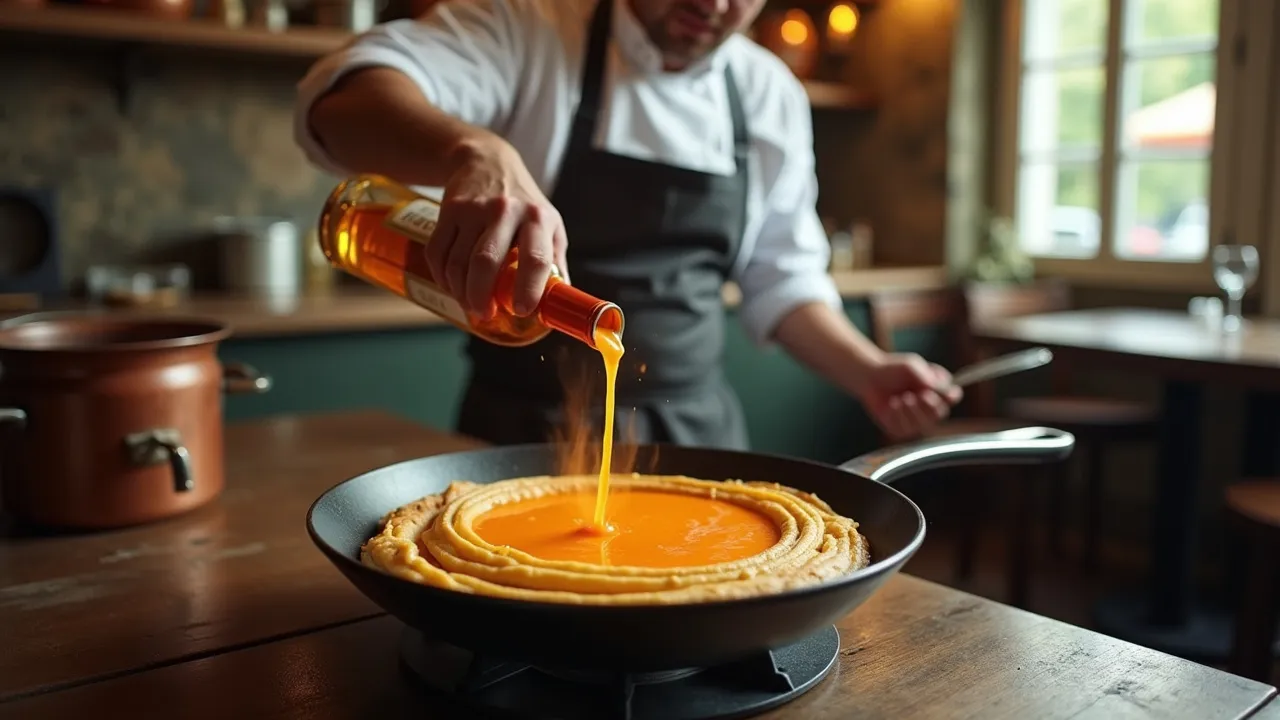
National Crepes Suzette Day on May 6th celebrates the classic French dessert of delicate crepes in a caramelized orange butter sauce, flambéed with liqueur. Learn its royal origins, how to make and enjoy this iconic dish.
The Historical Origins & Evolutionary Journey
National Crepes Suzette Day, observed annually on May 6th, honors one of France’s most iconic desserts: Crepes Suzette. This dish—a delicate crepe bathed in a caramelized sauce of butter, sugar, orange juice, and zest, then flambéed with orange liqueur (usually Grand Marnier or Cointreau)—has a storied past dating back to the Belle Époque.
The Foundational Catalyst: A Happy Accident (1895)
The most widely accepted legend credits a 14-year-old assistant waiter named Henri Charpentier at the Café de Paris in Monte Carlo. In 1895, while preparing a dessert for the Prince of Wales (the future King Edward VII), Charpentier accidentally set a pan of crepes on fire when the liqueur ignited. Instead of discarding the dish, he tasted it and found the caramelization delightful. The Prince and his party loved it, and Charpentier named it after a young female companion of the Prince—a girl named Suzette. Charpentier later recounted this story in his autobiography, though some culinary historians debate the exact details. Regardless, this serendipitous moment launched a global phenomenon.
The Legislative/Official Adoption: From Royal Tables to National Holiday
Crepes Suzette quickly spread through European high society. By the early 20th century, it became a staple of luxury French restaurants and ocean liner dining (notably on the SS Normandie). However, the establishment of an official National Crepes Suzette Day in the United States is less formal. It appears on food holiday calendars from the early 2000s, likely promoted by culinary organizations, food bloggers, and enthusiasts wanting to preserve classic French techniques. No single act of Congress or royal decree founded it; rather, it emerged organically from America’s love of themed food days.
Modern Global Legacy
Today, Crepes Suzette remains a symbol of elegance and theatrical cooking. The ritual of flambéing the sauce tableside still wows diners. Despite the rise of modern desserts, Crepes Suzette endures in top French brasseries and home kitchens alike. National Crepes Suzette Day encourages both chefs and home cooks to master this technique and celebrate the rich history behind each bite.
How to Celebrate National Crepes Suzette Day
Whether you are a seasoned chef or a curious home cook, celebrating National Crepes Suzette Day on May 6th offers endless possibilities. Below is a definitive global guide, structured for individuals, restaurants, schools, and organizations.
For Individuals & Families
- Master the Classic Recipe: Gather ingredients: crepes, butter, sugar, fresh oranges, Grand Marnier (or orange juice concentrate with a splash of brandy for a non-alcoholic version). Practice the flambé safely—use a long lighter and tilt the pan away from you.
- Host a Crepes Suzette Brunch: Invite friends and prepare the dish tableside. Pair with sparkling wine or coffee.
- Explore Variations: Try gluten-free crepes (using rice flour) or vegan versions with plant-based butter and a flambé of orange juice and vanilla.
- Create a Special Menu: Feature Crepes Suzette as a dessert special, perhaps with a modern twist (e.g., matcha crepes or coconut cream).
- Offer Flambé Classes: Host a small workshop showing guests how to flambé safely at home.
- Partner with Local Orange Growers: Highlight the seasonal citrus and promote farm-to-table freshness.
- History Lesson: Teach the story of Henri Charpentier and the Prince of Wales as part of a module on classic French cuisine.
- Hands-On Lab: Students prepare crepe batter, perfect the thin flipping technique, and practice flambéing under supervision.
- Cultural Exchange: Tie the celebration to French language and culture—learn phrases like “flambé” and “Suzette”.
- France: Typically served as a dessert after a grand dinner, often with a side of orange sorbet.
- United States: More casual—brunches, birthday parties, and social media challenges (#CrepesSuzetteDay).
- Japan: Adapted to thinner crepes and sometimes served with matcha ice cream.
- Australia: Barbecue-style Crepes Suzette with citrus from local orchards.
For Restaurants & Bars
For Schools & Culinary Academies
Global Traditions: Regional Variations
The Art of Flambé: Technique & Safety
Flambéing is the signature of Crepes Suzette, but it requires care. Understanding the process elevates both safety and showmanship.
The Science Behind the Flame
When alcohol is heated, its vapors ignite. The flame burns off the alcohol, leaving behind concentrated flavors. For Crepes Suzette, the liqueur (usually 40% ABV) is added to a hot pan of butter and sugar. A long-reach lighter is used to ignite the vapors. The flames caramelize the sugar and add a toasted dimension to the orange zest.
Safety Guidelines
- Always have a lid nearby to smother flames if needed.
- Never lean over the pan during ignition.
- Use a pan with high sides to contain the fire.
- Keep flammable objects away.
- For a non-alcoholic version, substitute orange juice and a dash of vanilla extract; skip the flambé.
Pairing Wines & Beverages with Crepes Suzette
A perfectly executed Crepes Suzette deserves a complementary beverage. The citrus and caramel notes dictate the pairing.
Wine Pairings
- Late Harvest Riesling: The sweetness and acidity mirror the orange sauce.
- Muscat de Beaumes-de-Venise: A fortified wine with floral and citrus notes.
- Orange Muscat: Intense orange flavors that harmonize with the dessert.
Spirits & Non-Alcoholic Options
- Grand Marnier: A classic digestif that echoes the liqueur used in the dish.
- Earl Grey Tea: The bergamot complements citrus.
- Sparkling Water with Orange Slice: A refreshing palate cleanser.
Crepes Suzette in Pop Culture & Media
Beyond the kitchen, Crepes Suzette has left its mark on film, literature, and art.
Film & Television
- In the 1995 film French Kiss, characters share a moment over Crepes Suzette.
- The dish appears in Julie & Julia as part of Julia Child’s repertoire.
- On The Great British Bake Off, Crepes Suzette is sometimes featured in technical challenges.
Literature
In Ernest Hemingway’s A Moveable Feast, he writes of enjoying Crepes Suzette at a Parisian café. The dessert symbolizes the decadence of the Lost Generation era.
Culinary Competitions
Top Chef and MasterChef often test contestants on the flambé technique, making Crepes Suzette a rite of passage for aspiring chefs.
Nutritional Profile & Modern Adaptations
Traditional Crepes Suzette is high in sugar and butter, but modern adaptations cater to various diets.
Classic Nutritional Breakdown (per serving)
- Calories: ~400-500
- Fat: 20-25g
- Carbohydrates: 50-60g
- Sugar: 30-40g
Health-Conscious Variations
- Gluten-Free: Replace wheat flour with buckwheat or rice flour.
- Vegan: Use plant-based butter and a flambé of orange juice + sugar (alcohol optional).
- Low-Sugar: Substitute sugar with erythritol or stevia; use fresh orange juice concentrate.
While not a health food, enjoying Crepes Suzette in moderation on its special day can be part of a balanced lifestyle.
Historical Timeline
Henri Charpentier accidentally invents Crepes Suzette at the Café de Paris in Monte Carlo while serving the Prince of Wales (future Edward VII). He names it after the Prince's companion, Suzette.
Crepes Suzette becomes a signature dish on luxury ocean liners like the SS Normandie, popularizing flambé cooking among the elite.
French chef Auguste Escoffier includes a refined version of Crepes Suzette in his culinary guide, cementing its place in classical cuisine.
Julia Child demonstrates Crepes Suzette on her TV show, introducing the dish to American home cooks.
National Crepes Suzette Day appears on US food holiday calendars, initially promoted by food bloggers and culinary websites.
Social media campaigns boost the day's popularity, with hashtags like #CrepesSuzetteDay trending on Instagram and TikTok.