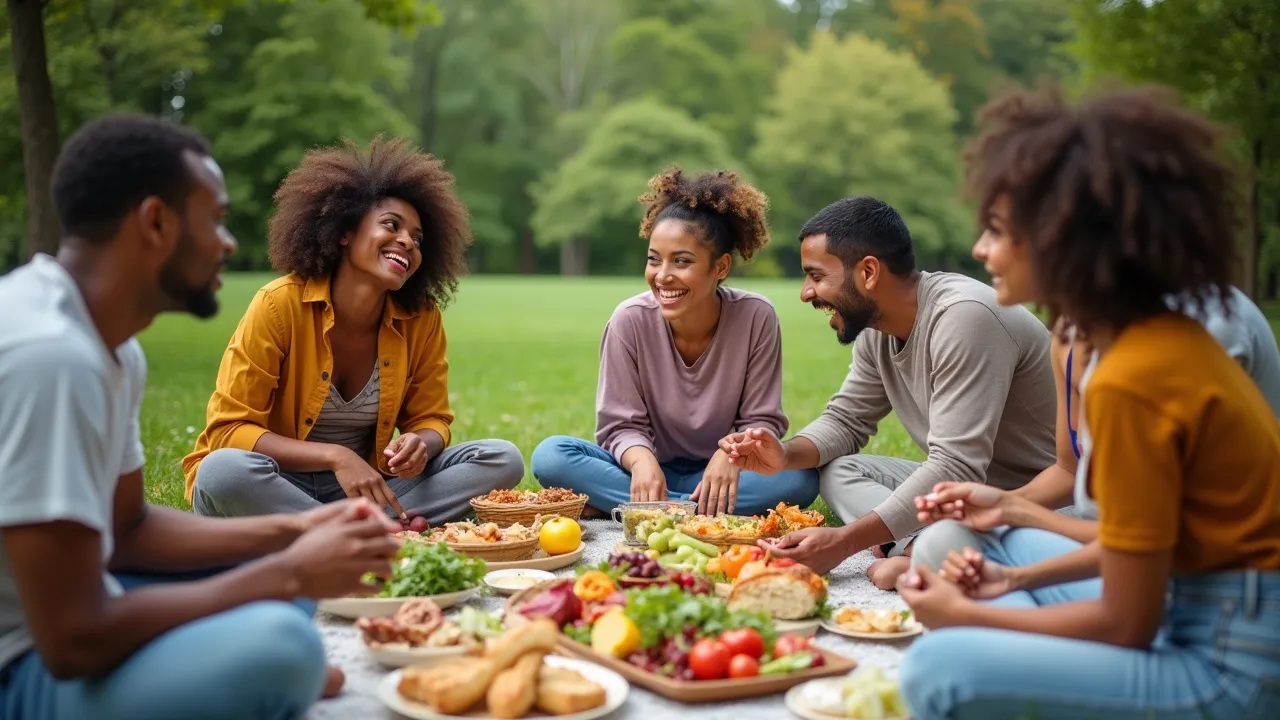
International No Diet Day, observed on May 6th, promotes body acceptance and challenges harmful diet culture. Established in 1992 by Mary Evans Young, it encourages intuitive eating and self-love.
The Historical Origins & Evolutionary Journey
International No Diet Day (INDD) was first observed on May 6, 1992, as a radical response to the pervasive diet culture that had taken hold of Western societies. The day was founded by Mary Evans Young, a British feminist and activist who had personally struggled with eating disorders and body image issues. Young's own journey of recovery led her to challenge the multi-billion dollar diet industry, which she saw as profiting from people's insecurities and promoting unhealthy standards.
The Foundational Catalyst
In the late 1980s and early 1990s, dieting had become a cultural obsession. The rise of aerobics, weight-loss clinics, and celebrity-endorsed diet plans created a toxic environment where thinness was equated with success and moral virtue. Mary Evans Young, drawing from her personal experiences and feminist principles, decided to take a stand. She organized the first No Diet Day in the UK, with the slogan "Celebrate Your Body – Reject Diet Culture." The event included public discussions, body-positive rallies, and the symbolic act of participants discarding diet books and scales.
The Legislative/Official Adoption
While International No Diet Day remains a grassroots observance rather than an officially recognized government holiday, it quickly spread through activism and media coverage. In the years following its inception, it garnered support from health professionals, eating disorder organizations, and body positivity advocates worldwide. The day has been endorsed by groups like the National Eating Disorders Association (NEDA) and the Body Positive movement. In 1998, the event was officially adopted by the International Association of Eating Disorders Professionals (IAEDP) as an awareness day.
Modern Global Legacy
Today, International No Diet Day is celebrated across the globe, particularly in the United States, Canada, Australia, and parts of Europe. The day has evolved to include a broader focus on Health at Every Size (HAES), intuitive eating, and fat acceptance. Social media plays a huge role, with hashtags like #NoDietDay and #BodyPositive trending annually. While the core message remains the same—freeing people from the tyranny of dieting—the day now also addresses issues like weight stigma in healthcare, discrimination in the workplace, and the need for inclusive representation in media.
How to Celebrate International No Diet Day
International No Diet Day is about rejecting diet culture and embracing body diversity. Here are actionable ways to celebrate, whether as an individual, family, school, or organization.
Individual Actions
- Ditch the scale: Put away your bathroom scale for the day. Remind yourself that weight does not determine your worth.
- Eat intuitively: Listen to your body's hunger and fullness cues. Enjoy foods without guilt. Try a new recipe or indulge in a favorite treat.
- Practice self-compassion: Look in the mirror and say three things you appreciate about your body that are not related to appearance.
- Unfollow toxic accounts: Clean up your social media by unfollowing accounts that promote dieting or unrealistic body standards. Follow body-positive activists instead.
Group and Community Activities
- Organize a body-positive picnic: Invite friends to share a meal where all foods are welcome. Encourage conversation about body image and self-love.
- Host a book swap: Collect diet books from your community and exchange them for books on body acceptance, like "Health at Every Size" by Linda Bacon.
- Screen a documentary: Show films like "Embrace" or "The Illusionists" to spark dialogue about media's impact on body image.
- Create a community art project: Have participants paint or draw their bodies in a celebratory way, highlighting unique features.
School and Educational Settings
- Curriculum integration: Teachers can discuss the history of diet culture and its effects on mental health. Include lessons on media literacy.
- Mindfulness activities: Lead a guided meditation focused on body gratitude. Encourage students to share positive affirmations.
Workplace and Corporate Rituals
- Wellness policy review: Use the day to assess if workplace wellness programs emphasize health rather than weight loss.
- Lunch-and-learn: Invite a speaker on intuitive eating or fat acceptance. Provide catered lunch without calorie labels or diet talk.
Regional Celebrations
In the UK, events often include public street protests against weight discrimination. In the US, universities host body-positive fairs with free health screenings that do not weigh participants. In Australia, community groups organize 'No Diet Day' walks that celebrate mobility rather than calorie-burning. In Brazil, the day is tied to the 'Movimento Corpo Livre' (Free Body Movement) with dance parties and workshops.
The Impact on Diet Culture and Body Positivity
International No Diet Day has catalyzed a broader cultural shift against dieting and weight obsession. Over three decades, it has influenced public discourse, health policies, and the media's portrayal of bodies.
Challenging the Diet Industry
The global diet industry is worth over $200 billion annually, yet long-term weight loss success rates are dismal. INDD highlights the ineffectiveness and harm of restrictive diets, including yo-yo weight cycling, metabolic damage, and increased risk of eating disorders. By advocating for Health at Every Size, the day encourages outcomes like improved blood pressure and cholesterol regardless of weight change.
Mental Health Benefits
Studies show that body dissatisfaction is a major risk factor for depression, anxiety, and eating disorders. INDD promotes self-acceptance, which correlates with higher self-esteem and lower stress. Social media campaigns on No Diet Day have helped normalize diverse body types and reduce weight stigma.
Influence on Healthcare
Weight bias in medical settings leads to misdiagnosis and delayed care. INDD advocates for size-inclusive healthcare, where patients are treated without assumptions about their health based on size. Medical schools are increasingly incorporating fat acceptance and trauma-informed care into curricula, partly due to activism on days like this.
Media Representation
The body positivity movement, amplified by INDD, has pushed for more diverse representation in fashion, advertising, and film. While progress is slow, more brands now feature models of all sizes, and terms like "plus-size" are being questioned. The day reminds us that representation alone is not enough; it must be accompanied by anti-discrimination efforts.
The Role of Social Media and Digital Activism
International No Diet Day has found a natural home on social media, where hashtags and viral challenges spread the message globally. This digital activism has both amplified the reach and introduced new controversies.
Hashtag Movements
Every year on May 6th, #NoDietDay trends on platforms like Instagram, Twitter, and TikTok. Users share before-and-not-after photos (focusing on non-appearance achievements), list foods they're grateful for, and call out diet products. The hashtag #BodyPositivity also spikes, though it sometimes becomes co-opted by commercial interests selling 'wellness' products.
Challenges and Critiques
Critics argue that social media can undermine the day's message by promoting a new standard of 'positive' bodies (e.g., slim but curvy) that exclude others. Some activists use No Diet Day to push for more radical fat liberation, challenging the idea that health should be a focus at all. The platform algorithms also tend to suppress posts about larger bodies, limiting visibility. Despite these issues, social media remains a powerful tool for community building and education.
Digital Campaigns and Events
Organizations like the National Eating Disorders Association host virtual panels and webinars. Influencers collaborate on 'No Diet Day' challenge videos where they model intuitive eating. Some creators go 'off-code' by posting unfiltered photos to combat the culture of perfection. The day also sees a spike in sign-ups for body-positive online courses and reading lists.
Intuitive Eating and Health at Every Size: Core Principles
International No Diet Day is closely tied to two evidence-based frameworks: Intuitive Eating (IE) and Health at Every Size (HAES). These provide a practical alternative to dieting.
Understanding Intuitive Eating
Intuitive Eating, developed by dietitians Evelyn Tribole and Elyse Resch, is a set of ten principles that guide people back to their innate eating wisdom. Key principles include:
- Reject the diet mentality: Stop believing there's a quick fix or perfect diet.
- Honor your hunger: Eat when you're hungry, not when you're bored or emotional.
- Make peace with food: Give yourself unconditional permission to eat all foods without guilt.
- Respect your fullness: Listen to body signals to stop eating when comfortably full.
- Discover the satisfaction factor: Enjoy food as a pleasurable experience, not just fuel.
Health at Every Size (HAES)
The HAES movement, rooted in the work of Dr. Linda Bacon, argues that health is not determined by weight and that weight-focused wellness efforts are often harmful. Key HAES tenets include:
- Weight inclusivity: Accept and respect diverse body sizes without idealizing thinness.
- Health enhancement: Encourage policies that improve access to care and remove barriers for larger bodies.
- Eating for well-being: Promote flexible, mindful eating rather than rigid diet rules.
- Life-enhancing movement: Encourage physical activity that is joyful and accessible, not driven by weight loss.
Global Perspectives and Cultural Adaptations
While International No Diet Day began in the UK, it has been adapted across different cultures to address local body image issues and diet-related concerns.
North America
In the United States and Canada, the day is often used to critique the multibillion-dollar weight loss industry. Activists highlight how diet culture disproportionately affects women, people of color, and the LGBTQ+ community. Events include 'Shred the Scale' ceremonies and anti-diet fashion shows. Some Canadian universities host 'Fat Studies' symposiums.
Europe
In its birthplace, the UK, the day retains a political edge with protests against workplace weight discrimination. In France, where thinness is highly prized, 'No Diet Day' is celebrated with 'grossophobie' (fatphobia) awareness campaigns. In Germany, the day focuses on criticizing 'clean eating' trends that can mask disordered eating.
Latin America
Countries like Brazil and Argentina have strong body-positive movements. INDD is linked to the 'gordo-ativismo' (fat activism) movement, which challenges the medicalization of fatness. Events include 'body love' street parties and workshops on 'cultura gorda' (fat culture).
Asia-Pacific
In Japan, where social pressure to be thin is intense, INDD is relatively unknown but growing via social media. Activists promote 'body neutrality' rather than positivity. In Australia, the day is marked by public health campaigns against weight stigma in schools and sports. The Maori and Aboriginal communities often link body acceptance to decolonization and rejecting Western beauty ideals.
Despite cultural variations, the core message remains: you are more than a number on a scale, and your body deserves respect regardless of size.
Criticisms and Controversies
As with any movement, International No Diet Day has faced criticisms. Understanding these can strengthen the observance.
Criticism from Health Professionals
Some doctors and dietitians argue that INDD ignores the health risks of obesity, such as type 2 diabetes and cardiovascular disease. They worry that dismissing all dieting could lead to unhealthy eating habits. However, HAES proponents counter that weight loss diets rarely improve long-term health and often cause harm. They emphasize that health behaviors, not weight, should be the focus.
Accusations of Promoting Unhealthy Lifestyles
Critics claim that the day encourages a 'free for all' attitude that may trigger overeating or neglect of medical conditions. In response, organizers clarify that INDD does not advocate for neglect; instead, it promotes self-care without obsession. Intuitive eating is not about eating whatever but listening to your body's needs.
Fragmentation within the Movement
Within the body positivity community, there are debates about who is included. Some argue that the movement has been co-opted by mainstream brands and now centers on 'conventionally attractive' plus-size bodies, leaving out people with disabilities, chronic illnesses, or extreme sizes. Fat activists call for a more radical 'body liberation' approach that challenges systemic oppression.
These controversies are healthy for the evolution of the day, prompting ongoing dialogue and refinement of its goals.
Historical Timeline
Mary Evans Young organizes the first International No Diet Day on May 6 in the UK, urging participants to drop diet books and scales.
The event gains media attention in the US after being featured on talk shows like Oprah. Activists begin promoting the day on college campuses.
The Body Positive movement adopts INDD as a key awareness day, focusing on weight stigma in healthcare.
The International Association of Eating Disorders Professionals officially endorses International No Diet Day.
The Health at Every Size (HAES) framework becomes formally linked with INDD, shifting focus from weight loss to health behaviors.
Social media amplifies the day; #NoDietDay trends on Twitter for the first time.
The National Eating Disorders Association launches a 'No Diet Day' campaign with resources for schools.
During the COVID-19 pandemic, INDD focuses on mental health and the dangerous rise of 'quarantine diet' culture.
A record number of businesses and influencers participate, but critics call out dilution of the message.
INDD sees increased global participation, especially in Latin America and Asia, with virtual events breaking geographic barriers.