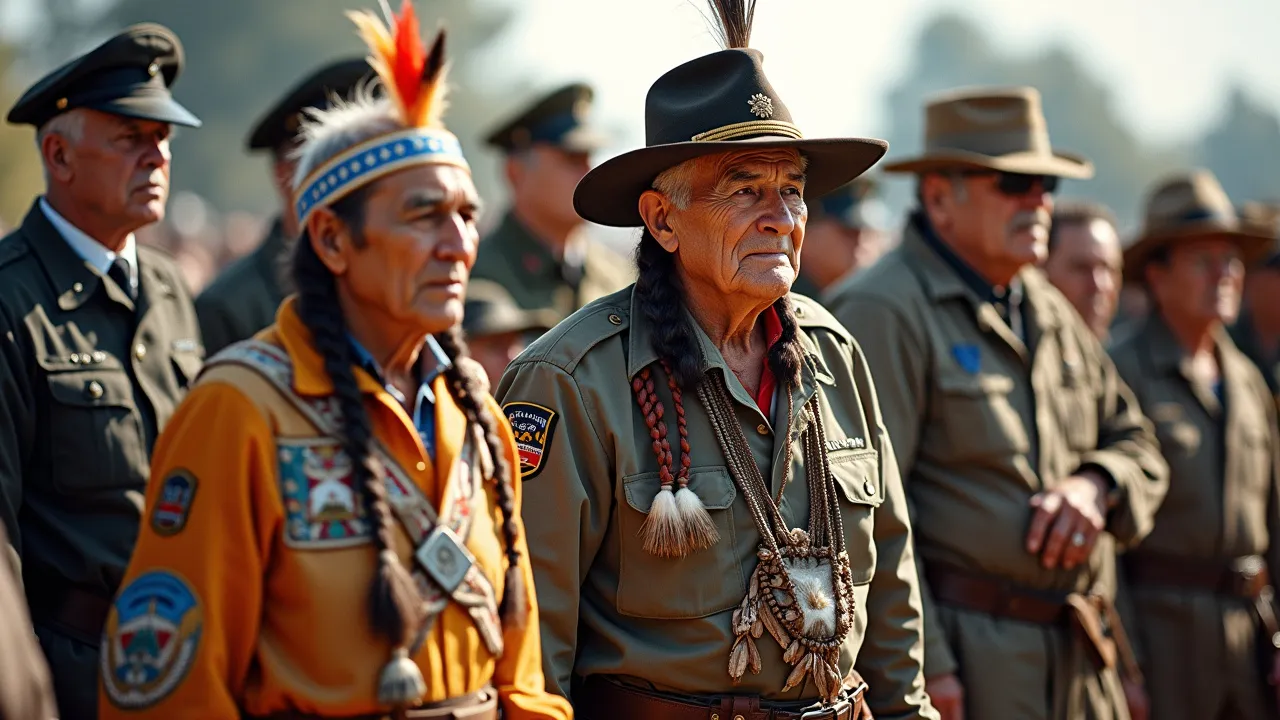
National Code Talkers Day on August 14 honors the Native American code talkers who used their indigenous languages to create unbreakable military codes. Their bravery and linguistic skills were vital to Allied victories in World Wars I and II.
The History of National Code Talkers Day
National Code Talkers Day, observed annually on August 14th, commemorates the extraordinary contributions of Native American code talkers who used their ancestral languages to develop unbreakable military codes. This day honors all tribes that served, including the Navajo, Comanche, Choctaw, Hopi, and many others. The origins of code talking date back to World War I, but the day itself was formalized through a series of legislative actions and presidential proclamations.
The Foundational Catalyst: World War I and the Birth of Code Talkers
The first documented use of Native American languages in warfare occurred during World War I. In 1918, the U.S. Army recruited Choctaw soldiers in the 36th Infantry Division to transmit messages in their native tongue. The Germans were unable to decipher the language, leading to successful Allied offensives. This experiment laid the groundwork for a more systematic program in World War II.
During World War II, the U.S. Marine Corps formally established a code talker program, initially recruiting Navajo men. The Navajo language, with its complex syntax and tonal qualities, proved ideal for creating an unbreakable code. Over 400 Navajo code talkers served in the Pacific Theater, using a code of over 600 terms and a phonetic alphabet. Other tribes, such as the Comanche and Hopi, also participated.
The Legislative/Official Adoption: From Navajo Day to National Recognition
The first official recognition came on August 14, 1982, when President Ronald Reagan proclaimed Navajo Code Talkers Day. This date was chosen to commemorate the anniversary of the end of World War II. Years later, efforts to expand recognition to all code talker tribes gained momentum. In 2014, the U.S. Congress passed a resolution designating August 14 as National Code Talkers Day, signed into law by President Barack Obama. This legislation formally acknowledged the contributions of every Native American code talker from all tribes.
Modern Global Legacy: Preserving and Honoring the Code Talkers
Today, National Code Talkers Day serves as a platform for cultural preservation and education. Museums, schools, and Native communities organize events to share the stories of these unsung heroes. The day also highlights the importance of preserving indigenous languages, many of which are endangered. Through these efforts, the legacy of the code talkers continues to inspire new generations.
How to Celebrate National Code Talkers Day
Celebrating National Code Talkers Day involves learning, honoring, and giving back. Below are actionable ways to observe the day meaningfully, adapted for individuals, schools, and organizations.
For Individuals
- Read books or watch documentaries about code talkers, such as Code Talker by Chester Nez or the PBS documentary The Navajo Code Talkers.
- Visit a museum or memorial dedicated to Native American veterans, such as the National Museum of the American Indian in Washington, D.C.
- Attend a local event organized by Native American communities, such as a powwow or cultural festival that honors veterans.
- Donate to language preservation programs that support indigenous languages like Navajo, Comanche, or Choctaw.
For Schools
- Host a classroom lesson on the history of code talkers, including interactive activities like creating a simple code based on a student's native language.
- Invite a Native speaker or veteran to speak about the cultural significance of code talking.
- Organize a school-wide assembly with presentations and displays about code talker history.
For Organizations and Businesses
- Share content on social media using hashtags like #NationalCodeTalkersDay and #NativeAmericanHeritage.
- Sponsor a scholarship for Native American students pursuing linguistics or military history.
Across the United States, communities also hold flag-raising ceremonies and moments of silence. In Arizona and New Mexico, larger events include parades and intertribal gatherings. The day is also recognized in Canada, where Indigenous code talkers served in World War II, though on different dates.
The Strategic Impact of Code Talkers in World War II
The contributions of code talkers were strategically critical to Allied success in World War II. Their codes were never broken by the enemy, providing a secure means of communication that saved countless lives.
Key Battles and Operations
- Battle of Iwo Jima (1945): Navajo code talkers transmitted over 800 messages in 48 hours during the assault, relaying troop movements and enemy positions. Major Howard Connor, signal officer, said, "Were it not for the Navajos, the Marines would never have taken Iwo Jima."
- Solomon Islands Campaign (1942-1945): Comanche code talkers in the 4th Signal Company provided crucial communications during the capture of Guadalcanal.
- Normandy Invasion (1944): Although less known, code talkers from the Choctaw and other tribes were involved in the European Theater, supporting logistics and troop coordination.
Why the Codes Were Unbreakable
The codes were based on rare, unwritten languages. The Navajo code, for example, used a phonetic alphabet where words replaced letters (e.g., "ant" for A). Even if a native speaker was captured, the code terms were not literal translations—they were created specifically for military use. This dual layer of encryption made decryption virtually impossible for Axis forces.
The success of code talkers also inspired postwar cryptography research and highlighted the value of linguistic diversity in national security.
Preserving Native Languages and Cultural Heritage
National Code Talkers Day underscores the urgent need to preserve Native American languages, many of which are endangered. According to UNESCO, over 150 indigenous languages in the United States are at risk of extinction. Code talkers themselves were often forced to attend boarding schools where they were punished for speaking their native languages, making their wartime service a powerful act of cultural reclamation.
Revitalization Programs
- Navajo Language Academy: Offers courses and resources to teach the Navajo language, preserving it for future generations.
- Endangered Language Fund: Supports community-driven projects to document and revitalize languages like Comanche and Hopi.
- National Museum of the American Indian: Hosts workshops and digital archives of language recordings from code talker descendants.
The Role of Schools and Technology
Tribal schools increasingly incorporate language immersion programs. Apps like Duolingo now offer Navajo lessons, and online dictionaries provide accessible learning tools. By celebrating National Code Talkers Day, we honor not only the warriors but also the languages they defended.
Recognition and Commemoration Efforts
Over the decades, code talkers have received numerous honors, though recognition came slowly. The timeline of commemoration reflects a growing awareness of their sacrifices.
Major Awards and Monuments
- Congressional Gold Medal (2001): The original 29 Navajo code talkers were awarded the Congressional Gold Medal by President George W. Bush. Later, other tribes received silver medals.
- Code Talkers Memorial (2013): A monument in Window Rock, Arizona, lists names of all Native American code talkers.
- National Code Talkers Day (2014): Official designation by Congress expanded recognition to all tribes.
Ongoing Efforts
Legislation continues to provide benefits for surviving code talkers and their families. The Code Talkers Recognition Act of 2018 ensured that every recognized code talker receives a medal. These acts ensure their legacy is preserved for history.
The Legacy and Modern Significance
National Code Talkers Day is not just a historical observance; it carries contemporary relevance. The bravery of code talkers serves as a model for integrating cultural heritage into national service.
Inspiration for Cryptography and Linguistics
The success of code talkers highlighted the strategic value of linguistic diversity. Today, the U.S. government funds advanced language programs for national security, including indigenous languages. The concept of using rare languages for encryption has been studied in cybersecurity.
Cultural Pride and Identity
For Native American communities, the day fosters pride and raises awareness of their contributions. It challenges stereotypes and amplifies voices that were historically marginalized. Schools across the country now include code talker history in curricula, promoting inclusion and understanding.
As we observe August 14th each year, we reaffirm our commitment to honoring these heroes and preserving the languages that made the unbreakable codes possible.
Historical Timeline
Choctaw soldiers in the 36th Infantry Division are used as code talkers in World War I, marking the first known use of Native American languages in military communications.
The U.S. Marine Corps initiates the Navajo Code Talker program, recruiting 29 original Navajo members who develop the unbreakable code.
Navajo code talkers play a crucial role in the Battle of Iwo Jima, transmitting hundreds of messages without error under heavy combat.
President Ronald Reagan proclaims August 14 as Navajo Code Talkers Day, honoring the contributions of Navajo veterans.
The original 29 Navajo code talkers are awarded the Congressional Gold Medal by President George W. Bush.
The U.S. Congress designates August 14 as National Code Talkers Day, expanding recognition to all Native American code talkers.
The Code Talkers Recognition Act ensures that all recognized code talkers from various tribes receive a Congressional Gold Medal.