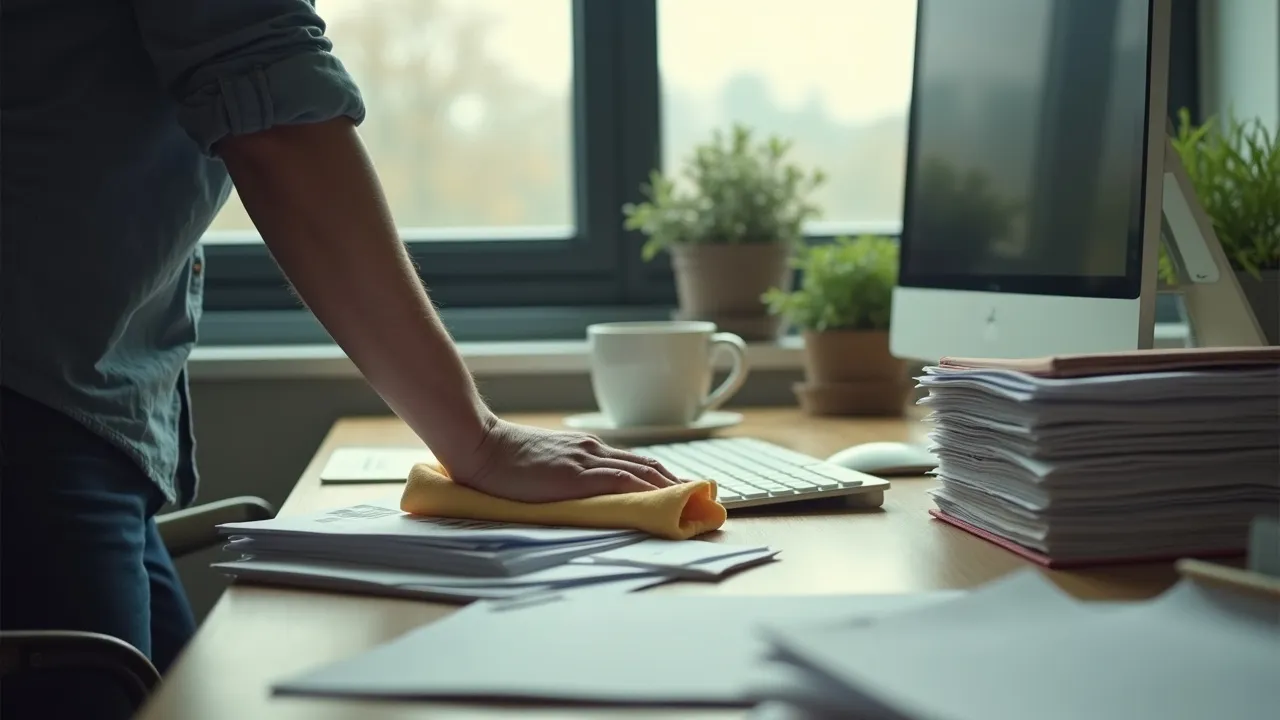
Observed on the second Monday of January, National Clean Your Desk Day promotes decluttering workspaces to boost productivity, reduce stress, and foster a positive work environment. It's a day to organize, sanitize, and refresh your desk.
The Historical Origins & Evolutionary Journey
National Clean Your Desk Day, also known as National Clean Off Your Desk Day, was first established in 1983 by Monarch Marking Systems, a company specializing in labeling and organizational products. The day was conceived as a way to encourage office workers to start the new year with a clean, organized workspace. Over the decades, it has evolved into a widely recognized observance in the United States, promoted by professional organizers, workplace wellness advocates, and productivity experts.
The Foundational Catalyst
The late 20th century saw a surge in office clutter due to the proliferation of paper, filing cabinets, and desk accessories. Monarch Marking Systems recognized the need for a dedicated day to address this issue. They launched National Clean Your Desk Day to coincide with the post-holiday season, a time when many people are motivated to declutter their homes and offices. The initial campaign focused on simple steps: clearing surfaces, organizing papers, and discarding unnecessary items.
The Legislative/Official Adoption
While the day has never been officially recognized by the U.S. government, it gained traction through corporate and media support. In the 1990s, the National Association of Professional Organizers (NAPO) began endorsing the day, integrating it into their annual awareness campaigns. By the 2000s, it was included in many desk calendars and online event listings. Today, it is celebrated in offices, schools, and home workspaces across the country.
Modern Global Legacy
Although primarily a U.S. observance, National Clean Your Desk Day has inspired similar initiatives worldwide. In countries like Canada, the United Kingdom, and Australia, it is observed on the same date, often promoted by professional organizing associations. The day has also expanded beyond physical desktops to include digital decluttering, such as organizing files on computers and smartphones. This evolution reflects the changing nature of work in the digital age.
How to Celebrate National Clean Your Desk Day
Celebrating National Clean Your Desk Day involves more than just wiping down surfaces. It's a comprehensive process to create an organized, efficient workspace. Below are best practices for individuals, schools, and organizations, as well as specific traditions from different cultures.
Step-by-Step Desk Cleanup Guide
- Clear Everything Off: Remove all items from your desk surface, including papers, pens, gadgets, and personal items. This gives you a blank slate to work with.
- Sort and Categorize: Divide items into piles: keep, discard, recycle, or relocate. Use a labeling system to streamline the process.
- Clean the Surface: Wipe down your desk with an appropriate cleaner. Disinfect high-touch areas like the keyboard, mouse, and phone.
- Organize Supplies: Use drawer dividers, pen holders, and trays to keep supplies accessible. Invest in a filing system for documents.
- Go Digital: Delete unnecessary files, organize folders, and empty your email inbox. Use cloud storage for important documents.
- Add Personal Touches: Place a plant, a photo, or a motivational item back on your desk to create a pleasant environment.
Celebration Ideas for Schools and Offices
- Desk Declutter Contest: Encourage friendly competition to see who can create the most organized workspace. Offer a prize for the best transformation.
- Group Cleaning Session: Set aside an hour where everyone cleans their desk simultaneously. Play upbeat music to make it fun.
- Throw Away Day: Provide large recycling bins and shredders for confidential documents. Encourage employees to discard unnecessary paperwork.
- Workshop on Organization: Invite a professional organizer to give a talk on efficient desk management and productivity techniques.
Global and Cultural Variations
In Japan, a similar concept called "5S" (Sort, Set in Order, Shine, Standardize, Sustain) is applied to workspaces year-round, but some companies observe a desk-cleaning day in January. In Germany, "Schreibtisch aufräumen" (desk cleaning) is often done before the start of the new quarter. While the date differs, the principles remain the same. Overall, National Clean Your Desk Day is a universal opportunity to refresh your workspace.
Benefits of a Clean Desk: Productivity and Well-being
A clean desk is not just aesthetically pleasing; it has profound effects on productivity, mental health, and professional image. Research shows that clutter can increase stress and reduce focus. Here are key benefits supported by studies.
Enhanced Focus and Efficiency
According to a Princeton University study, physical clutter competes for your attention, resulting in decreased performance and increased stress. A clean desk eliminates visual distractions, allowing you to concentrate on tasks more effectively. Studies also show that organized workers are up to 30% more productive.
Improved Mental Health
A cluttered workspace can contribute to feelings of overwhelm and anxiety. Cleaning your desk can give you a sense of control and accomplishment. In a survey by the National Association of Professional Organizers, 78% of respondents reported feeling less stressed after organizing their office space.
Professional Image and Health
A tidy desk conveys professionalism to clients and colleagues. It also promotes better hygiene; desks harbor more bacteria than toilet seats if not cleaned regularly. National Clean Your Desk Day encourages disinfecting surfaces, which can reduce sick days. Additionally, an organized desk can lead to better time management and a more positive work environment.
Organizational Strategies and Tools
To maintain a clean desk throughout the year, it's essential to adopt organizational strategies and use the right tools. Below are expert-recommended methods.
The KonMari Method for Desks
Marie Kondo's principle of keeping only items that "spark joy" can be applied to your workspace. Remove everything that doesn't serve a purpose or bring you happiness. For example, keep only the pens you actually use and mementos that inspire you.
Paper Management Systems
- In/Out Trays: Use stacked trays for incoming and outgoing documents. Process items daily to avoid pile-ups.
- File Folders: Label folders by project or category. Store files in a drawer or cabinet, not on your desk.
- Scanner and Shredder: Digitize documents when possible to reduce paper clutter. Shred sensitive information immediately.
Digital Tools for Decluttering
Your computer desktop also needs cleaning. Use folders, rename files clearly, and uninstall unused apps. Email management: set up filters, unsubscribe from newsletters, and archive old emails. Tools like Microsoft OneNote or Evernote can help keep notes organized digitally.
Global Impact and Cultural Shifts
While National Clean Your Desk Day is rooted in the U.S., its influence has spread globally, with different cultures adopting the practice in unique ways. The day also reflects broader trends in workplace psychology and design.
Adoption in Corporate Cultures
Major corporations like Google and Apple have implemented clean desk policies, encouraging employees to clear their desks daily. National Clean Your Desk Day reinforces these policies annually. In 2020, with the rise of remote work, the day gained new significance as home offices required deliberate organization.
Psychological Impact of Workspace Order
Psychologists have linked clean workspaces to reduced cognitive load. A study by the University of Minnesota found that people in clean rooms made healthier choices and were more generous. The day promotes a mindset of order that can extend to other areas of life.
Environmental Considerations
Decluttering also has environmental benefits. By recycling paper and donating unused office supplies, participants reduce waste. Many offices use the day to initiate green initiatives, such as digitizing records to save paper. Some organizations tie the day to sustainability goals, emphasizing the reuse of furniture and electronics.
Common Myths and Misconceptions
Despite its benefits, there are myths about desk cleaning that can hinder effective organization. Let's debunk them.
Myth: A Messy Desk Means a Creative Mind
While some creative geniuses had messy desks, research shows that clutter actually impairs creativity by overloading the senses. A moderate amount of personal items can stimulate creativity, but excessive clutter causes distraction. The key is balance.
Myth: You Only Need to Clean Once a Year
National Clean Your Desk Day is a starting point, not a one-time event. Maintenance is crucial. Spend 5 minutes at the end of each day tidying up. A regular decluttering habit prevents buildup and reduces the stress of a major cleanup.
Myth: Digital Files Don't Need Organizing
A cluttered computer desktop can be as overwhelming as a physical one. Digital files should be organized into folders with clear naming conventions. National Clean Your Desk Day now includes digital decluttering, so don't neglect your virtual workspace.
Historical Timeline
National Clean Your Desk Day is first established by Monarch Marking Systems to encourage office workers to start the year with an organized workspace.
The National Association of Professional Organizers (NAPO) endorses the day, promoting it as part of their annual awareness campaigns.
The day gains wider recognition through inclusion in popular desk calendars and online event listings, often listed as 'Clean Off Your Desk Day'.
With the rise of digital tools, the observance expands to include digital decluttering, such as organizing email inboxes and computer files.
The COVID-19 pandemic shifts many workspaces to home offices, making desk cleanliness a key part of remote work wellness. National Clean Your Desk Day sees increased online participation.
The observance is celebrated with virtual events, webinars on organization, and social media campaigns under the hashtag #CleanYourDeskDay.